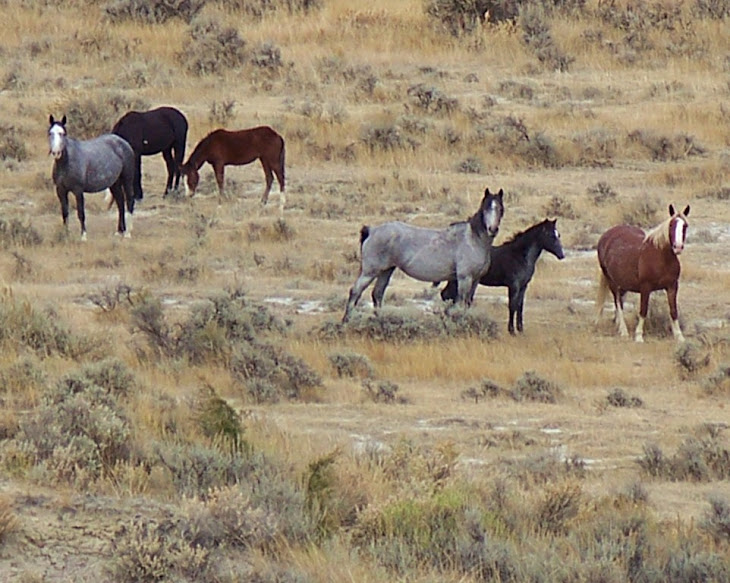
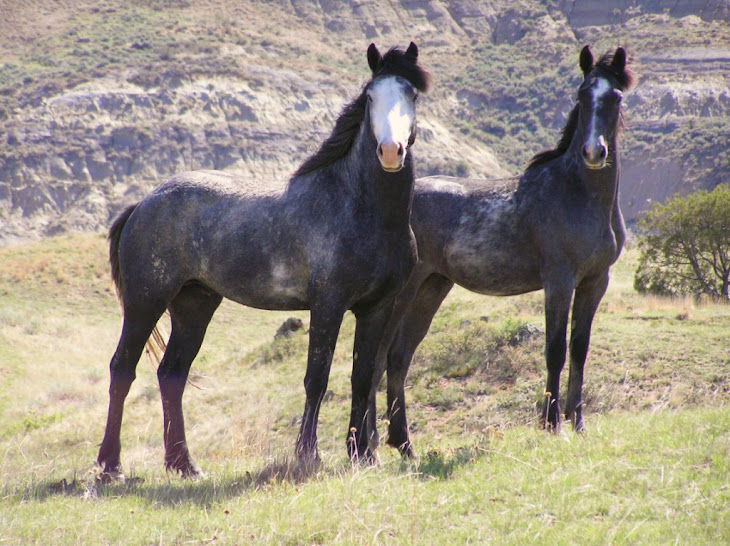
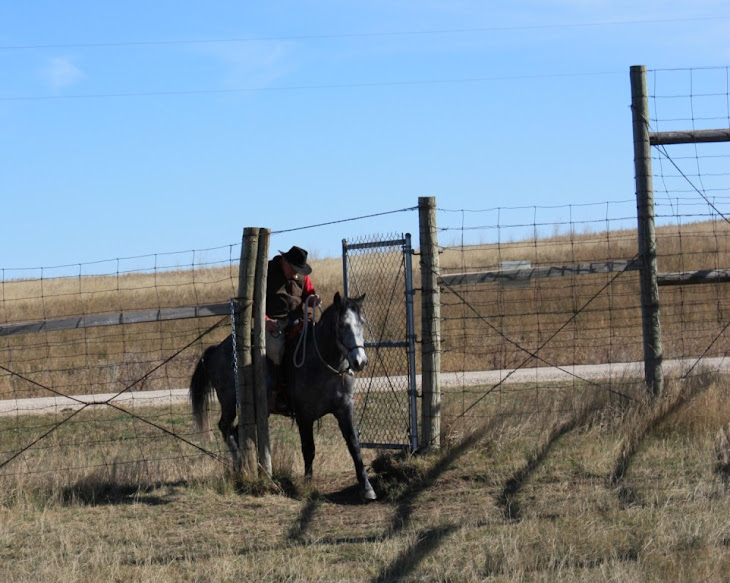
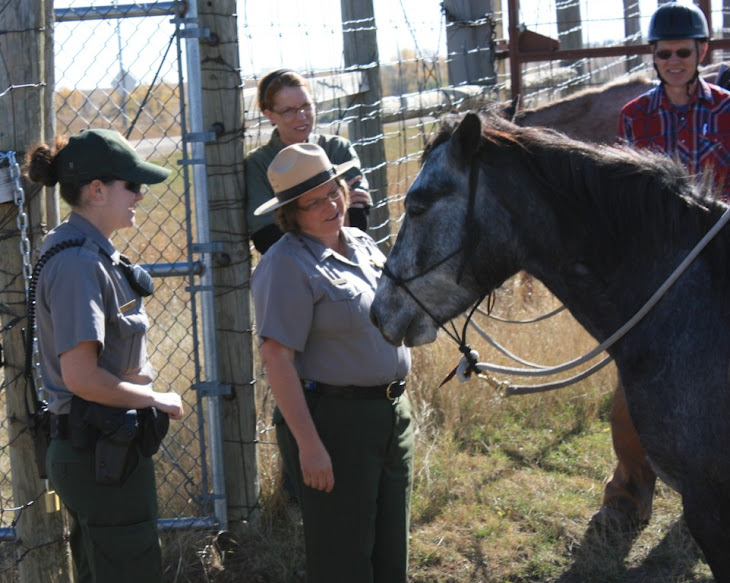
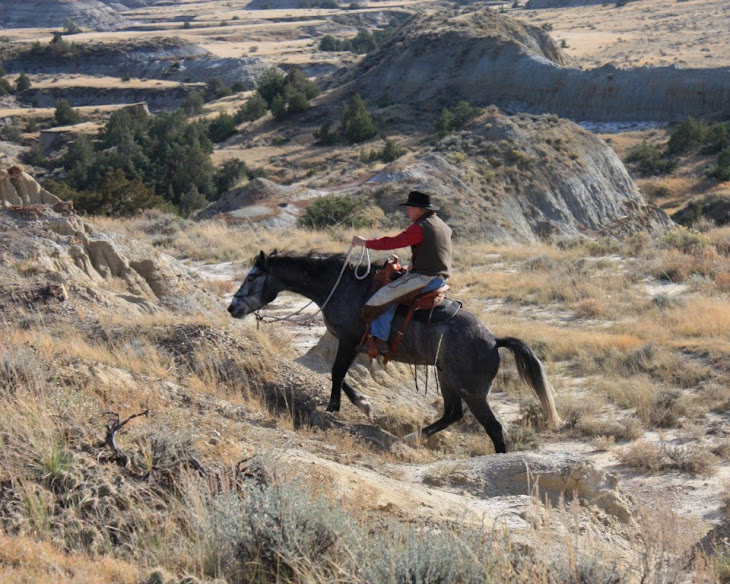
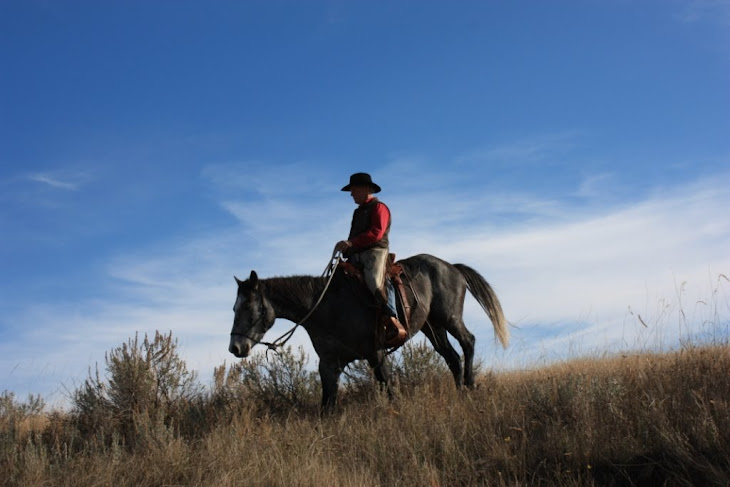
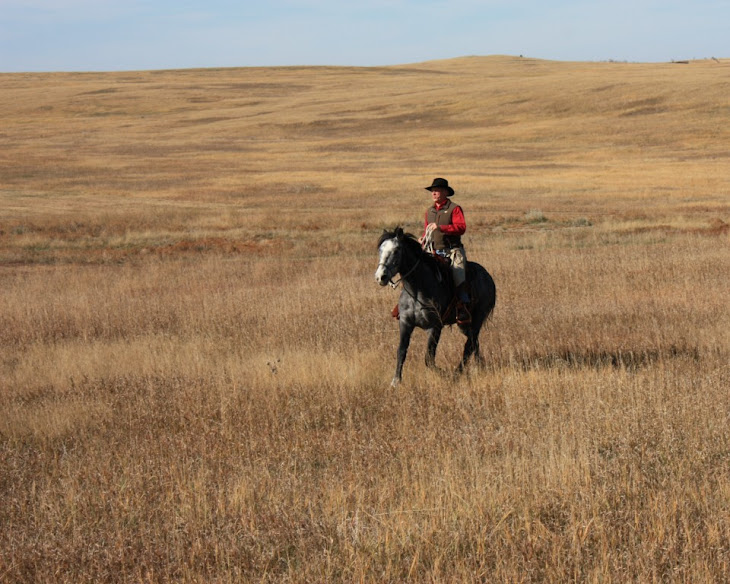
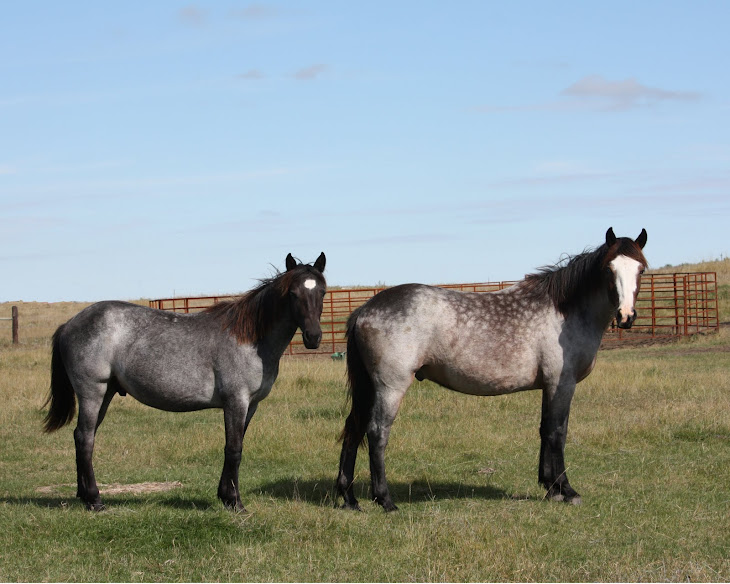
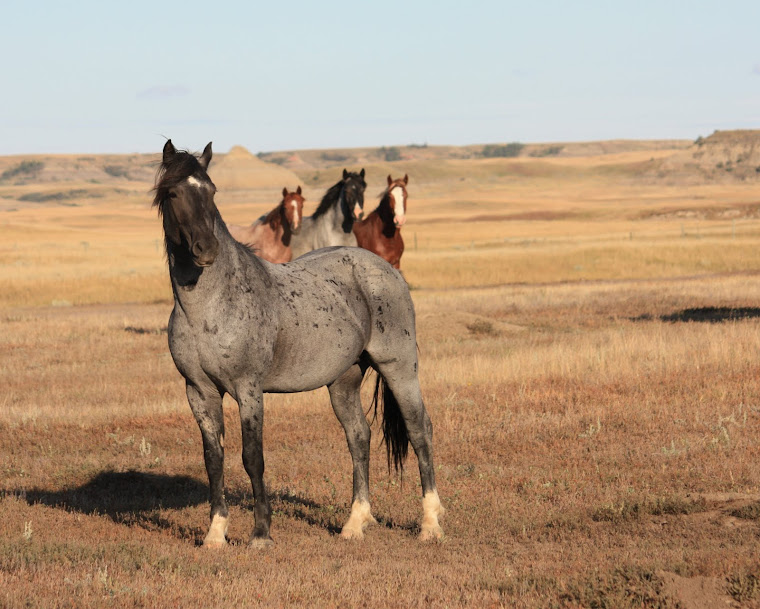
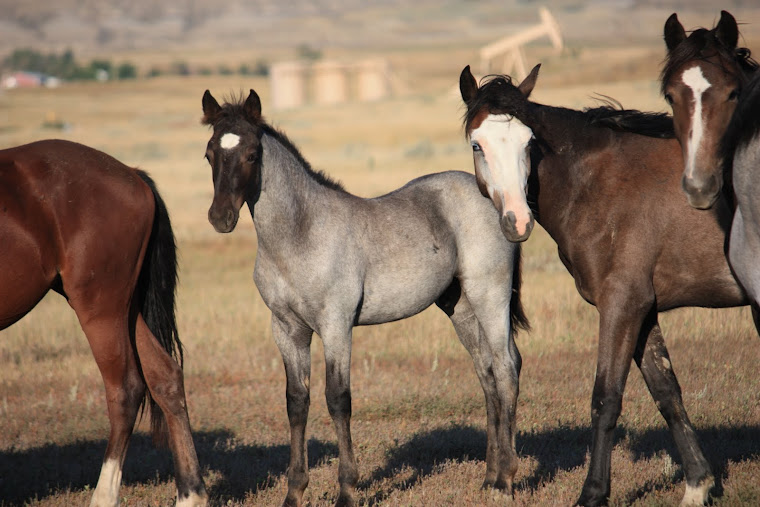
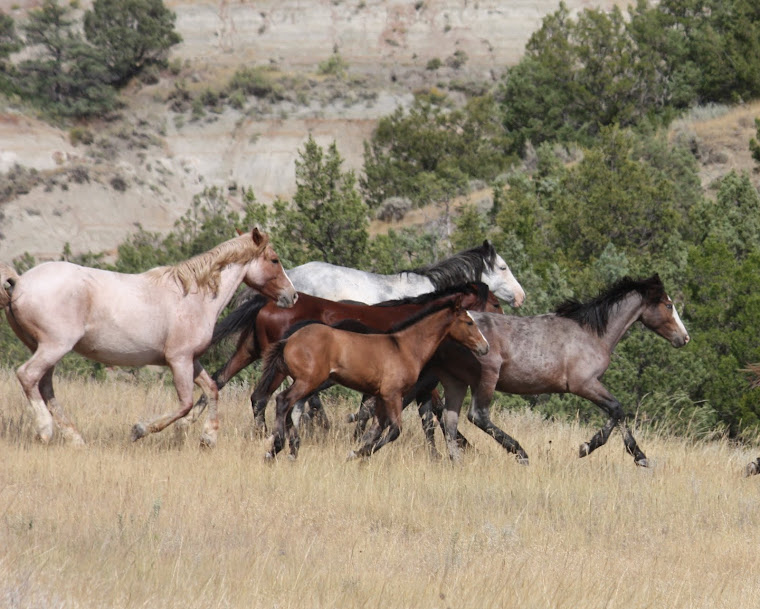
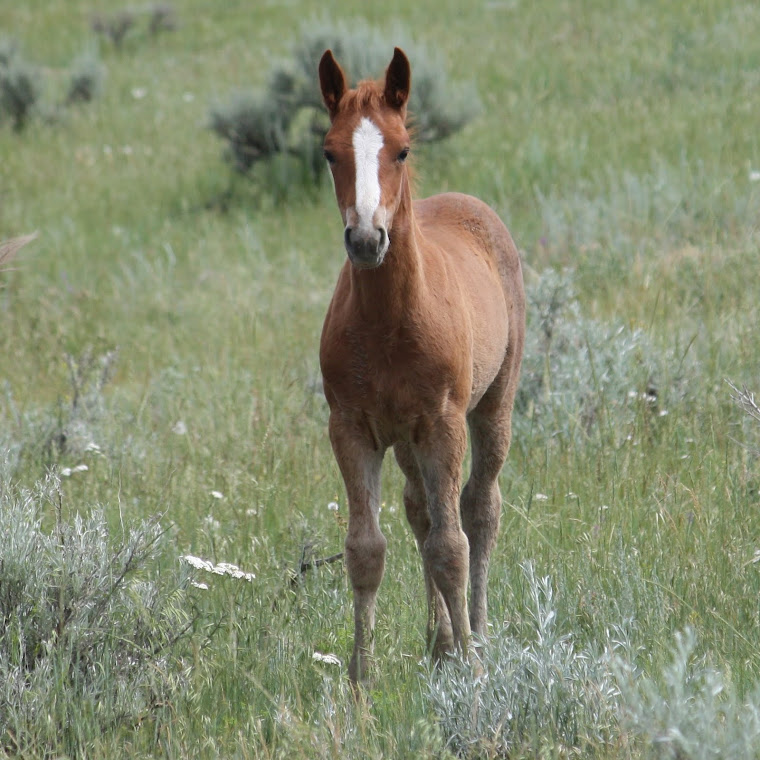
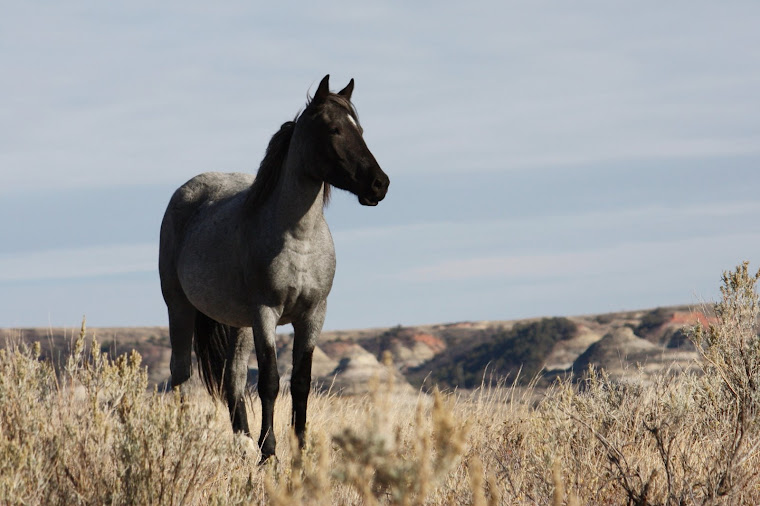
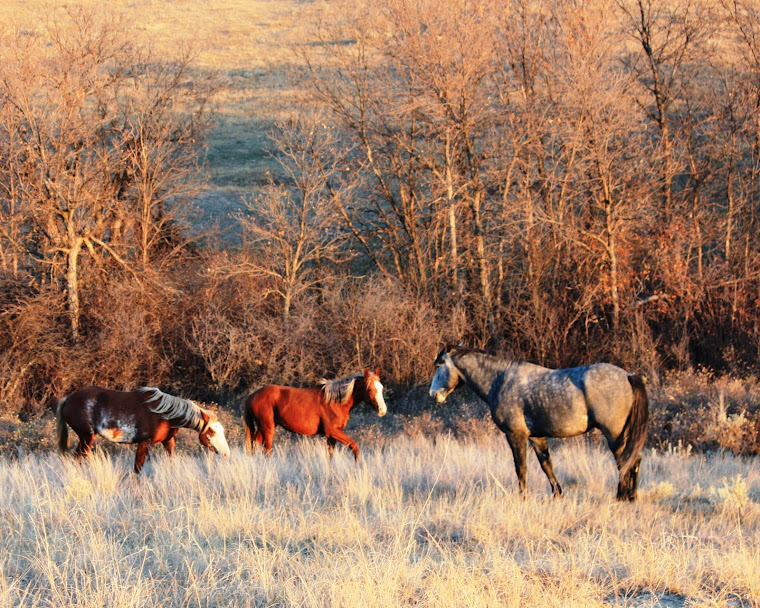
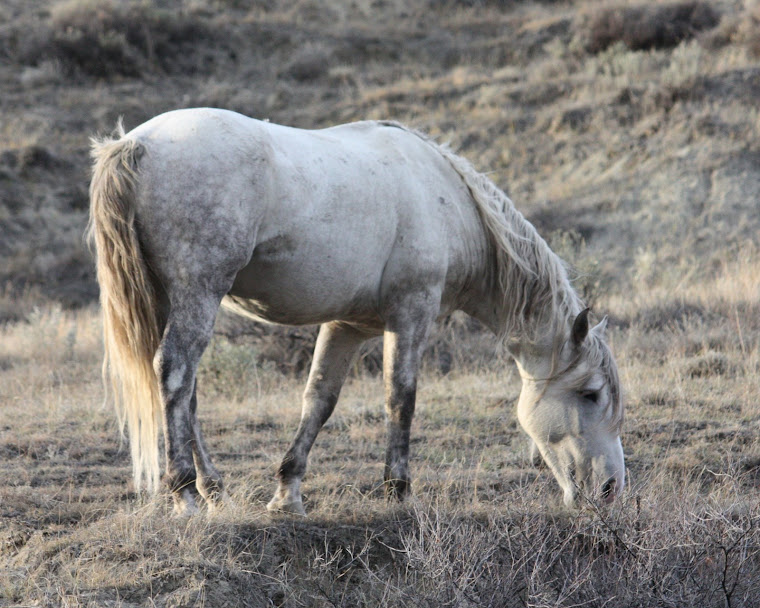
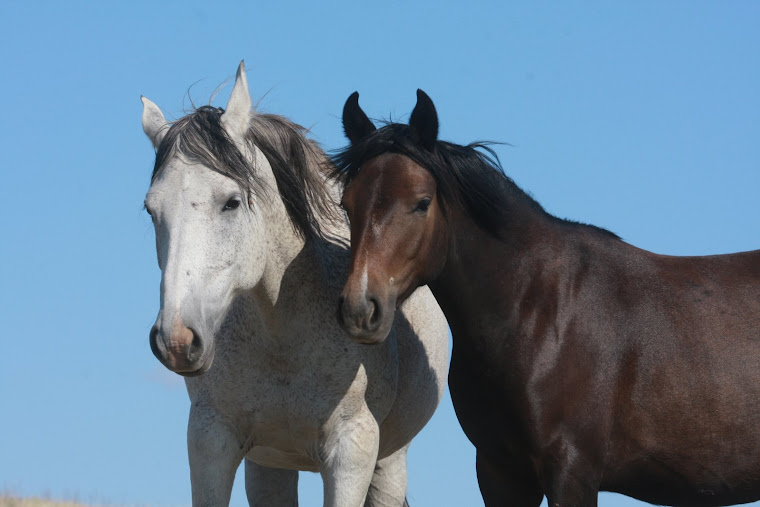
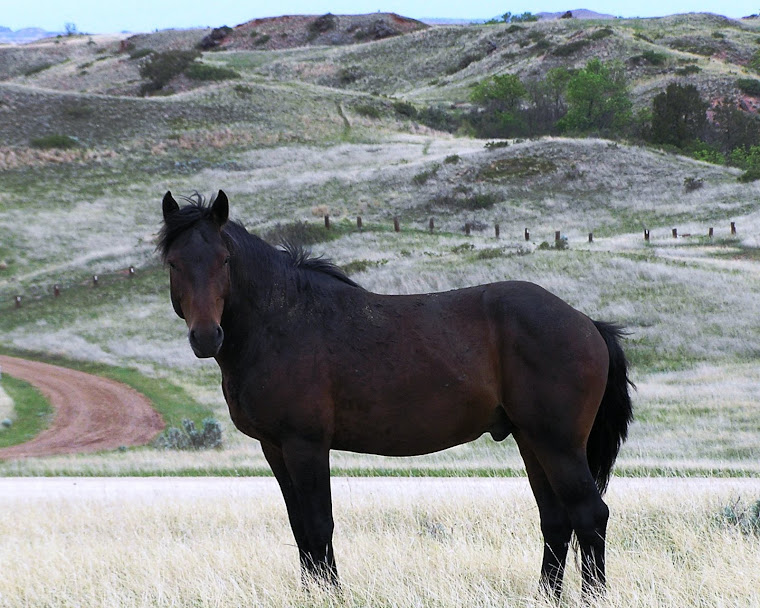
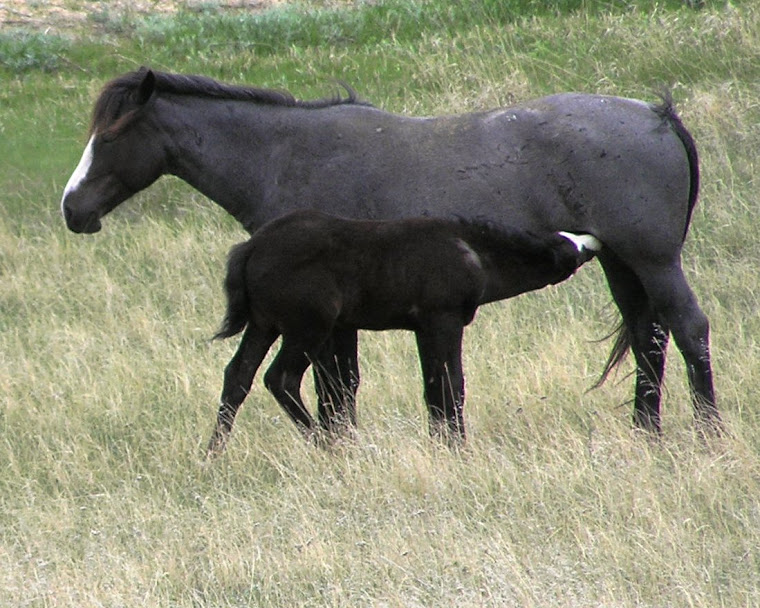
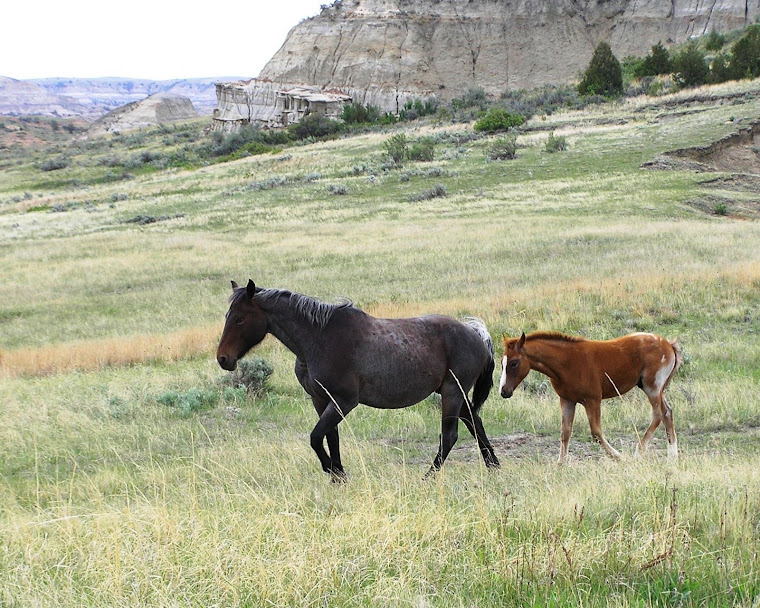
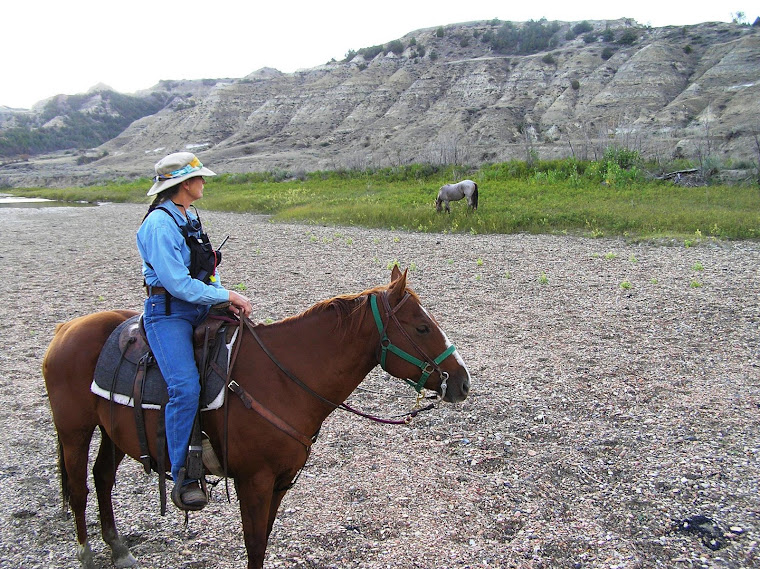
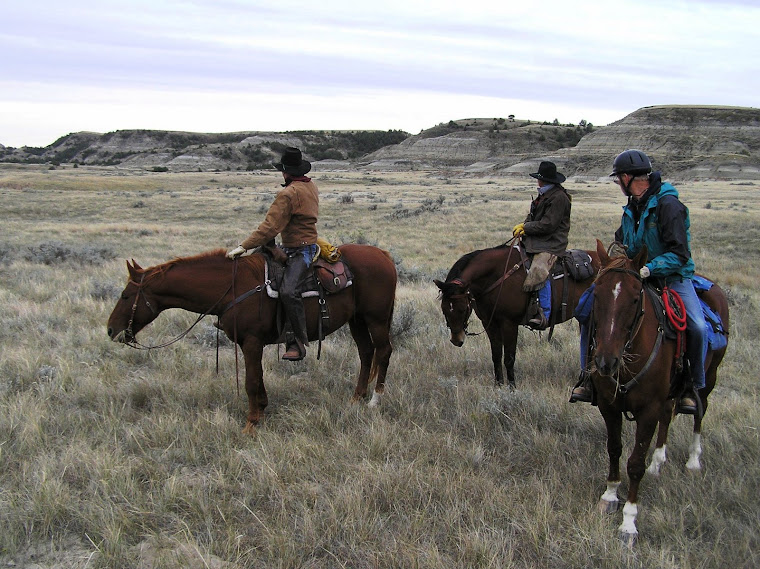
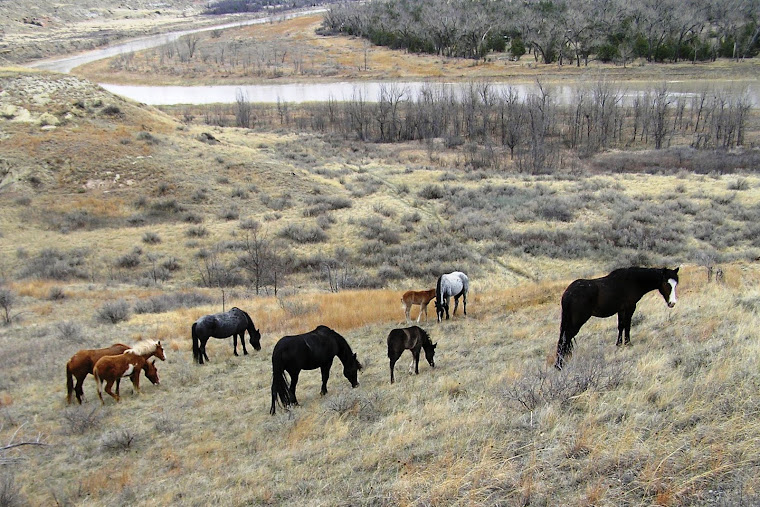
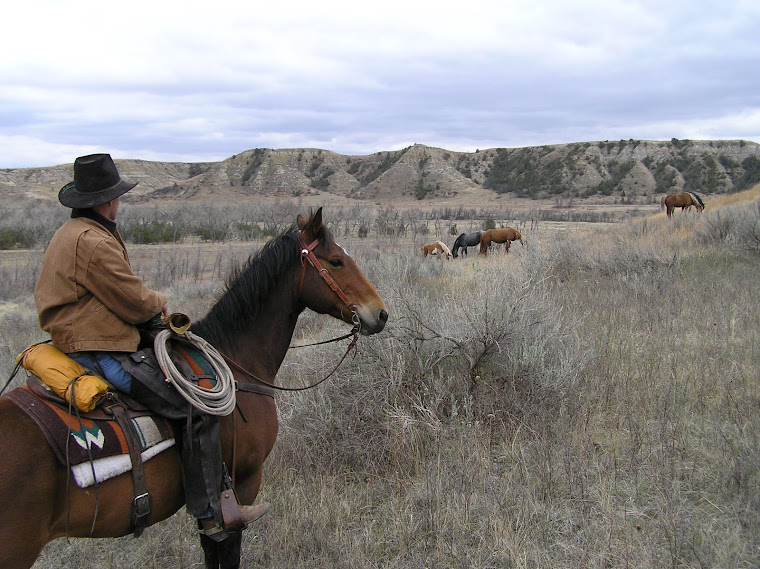
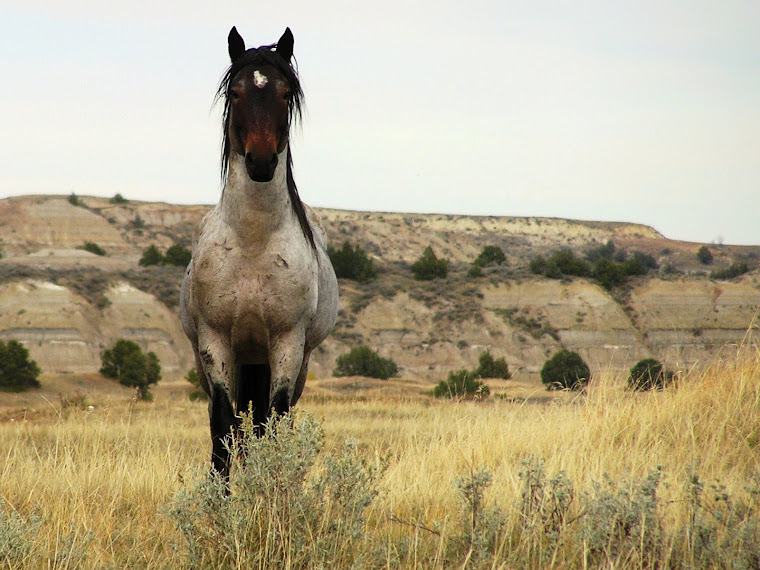
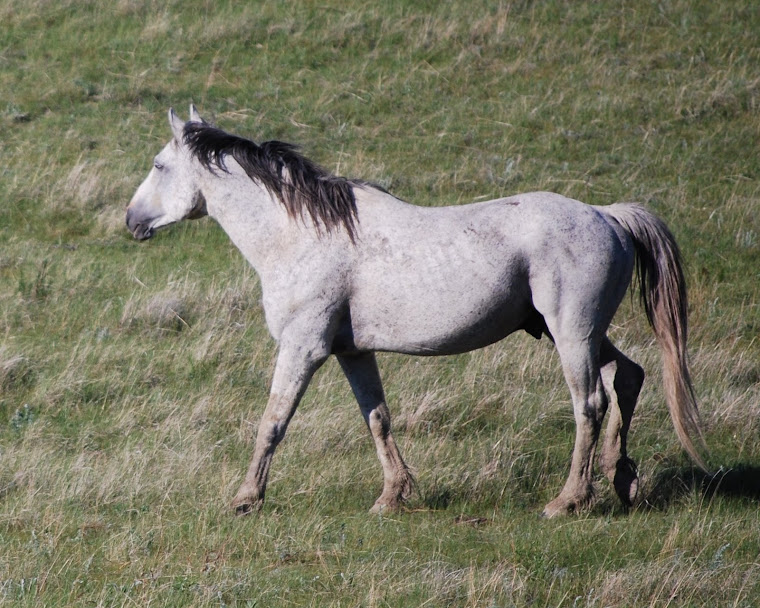
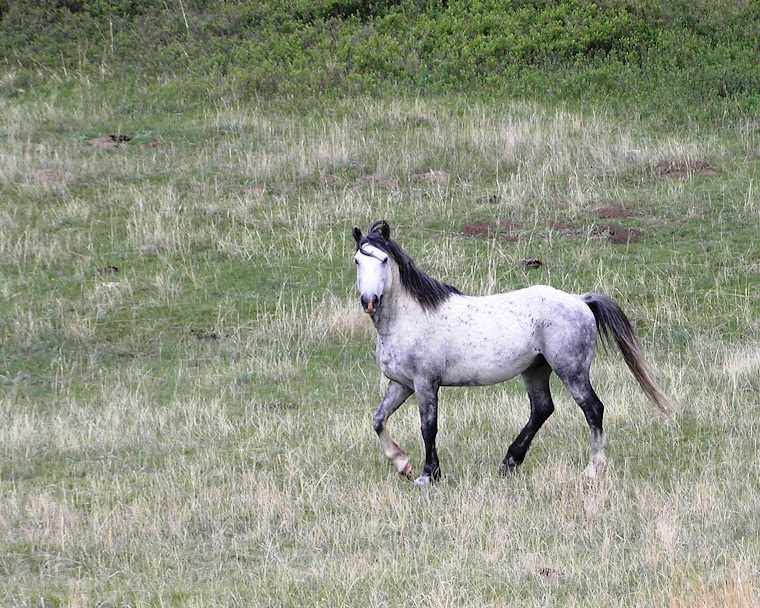
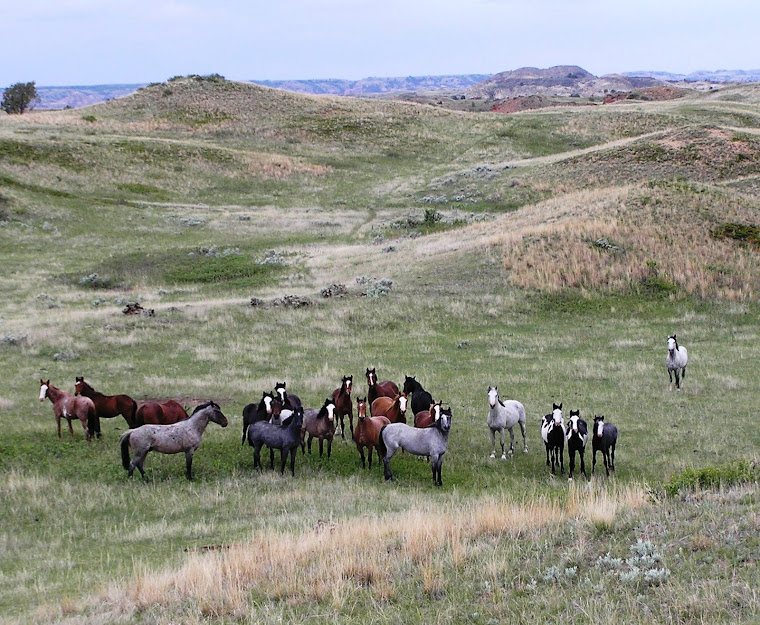
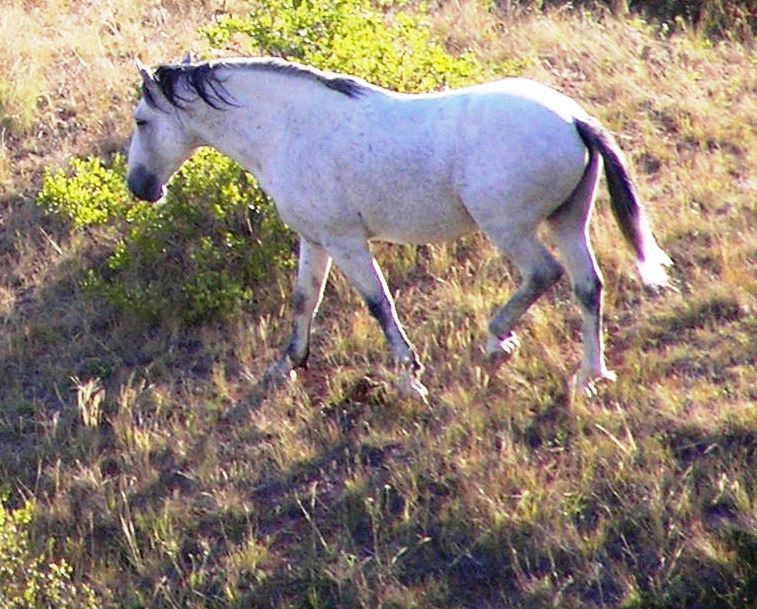
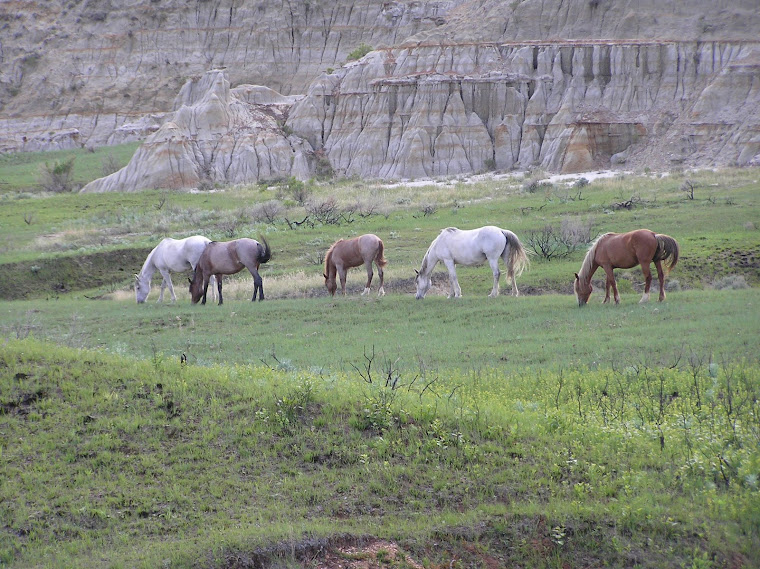
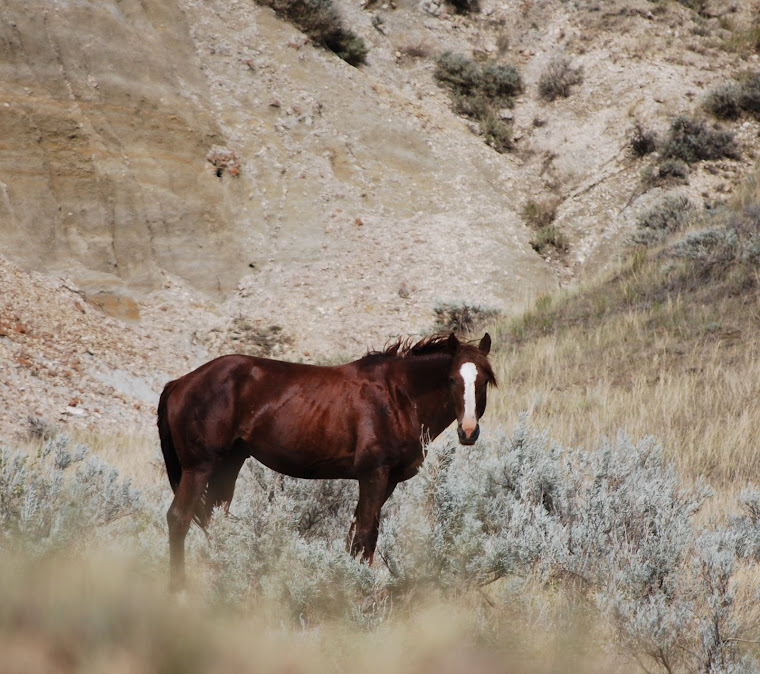
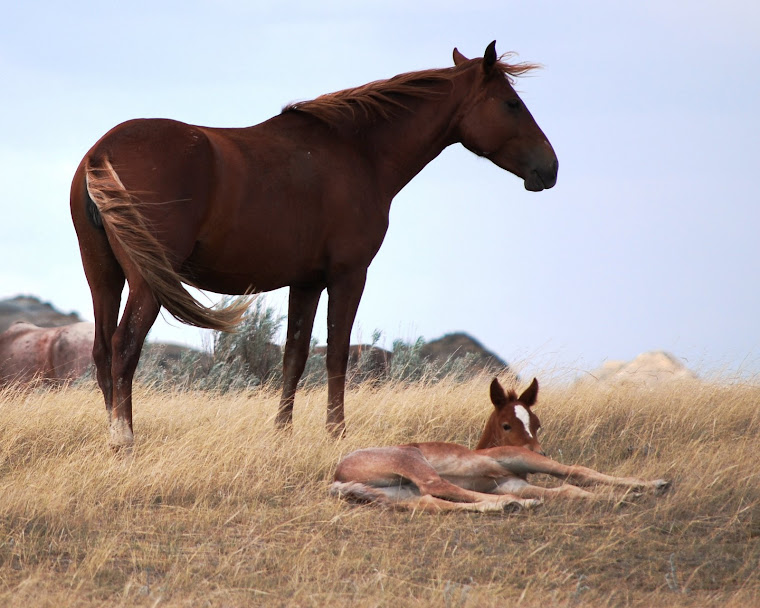
Monday, October 19th dawned cold and overcast with the threat of rain for the afternoon. Stomping our feet to keep them warm, the 50+ NPS employees and feral horse study team gathered for the 7:00 am briefing. It was emphasized that the task at hand needed everyone's full attention, with an emphasis on safety. The goal was to capture and work as many of the 164 horses as possible while remaining calm, quiet, and respectful toward them and one another.
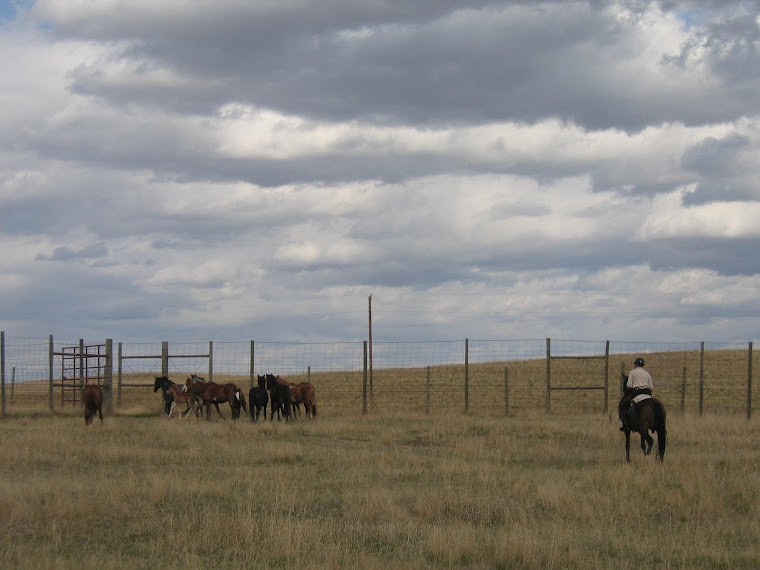
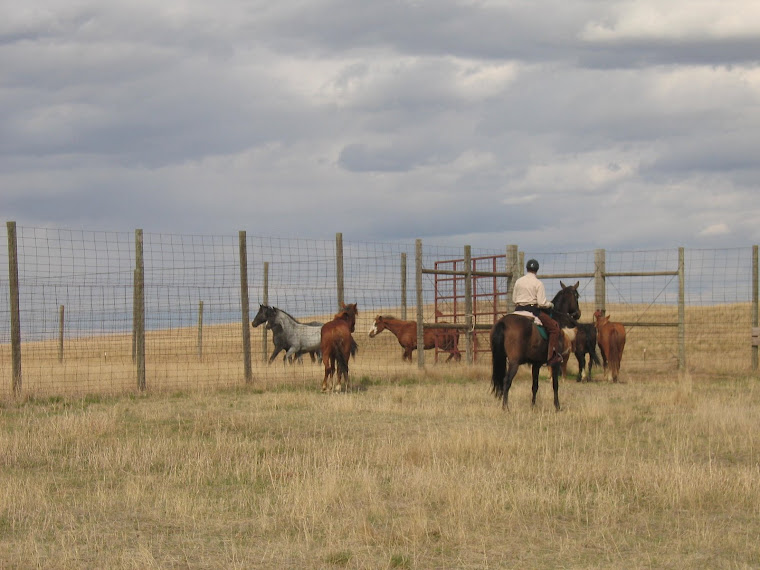
As the briefing broke up, all eyed turned upward to the windsock high above our heads. Slight winds and a high enough ceiling meant the gather was on. Mike intended to bring the horses in band by band as much as possible with no more than 20 being brought at one time. With a pulsing roar the two choppers took to the sky. Mike was in one and another NPS man in the other. A student of the low stress livestock handling method, Mike was determined to use that method throughout the operation.
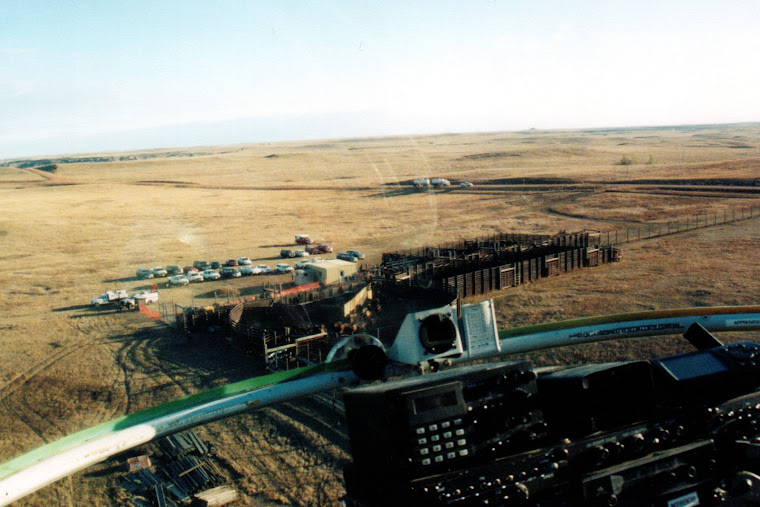
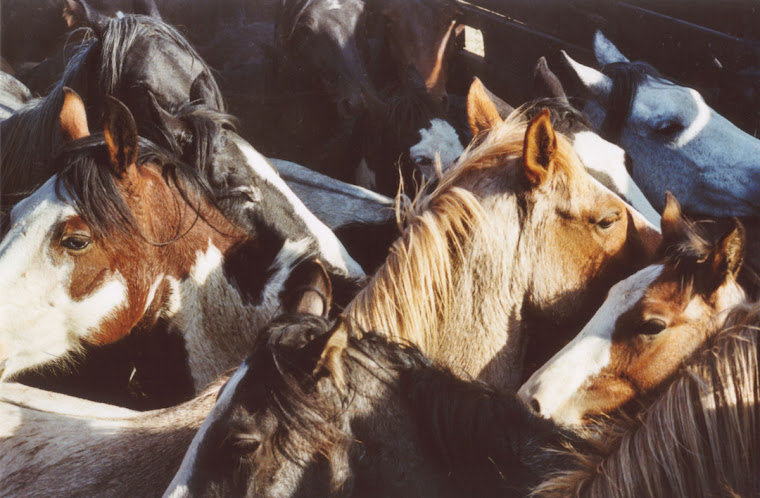
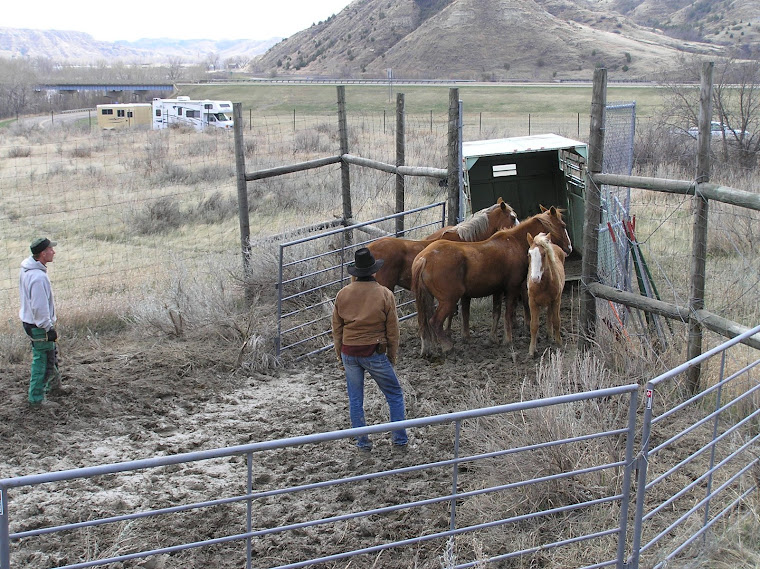
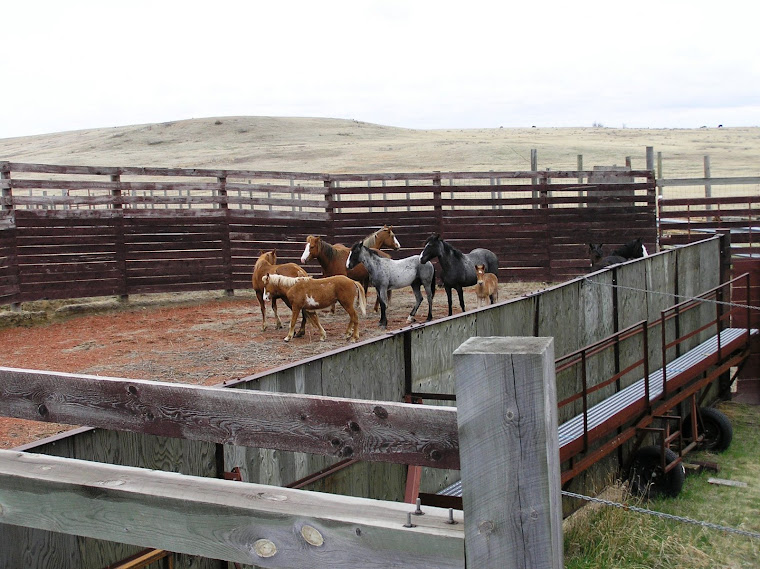
Everything was ready at the handling facility on the far east side of the Park when we heard the throbbing of the chopper engines in the distance. Mike radioed that they had their first band of horses moving toward the capture pens about a half hour out. When the choppers rose above the buttes south of the wing fence, all personnel reported to the safety zone north of the high wooden pens. Only the gate keepers would be allowed out of that area until the helicopters left for another gather. Only after letting the horses settle in the fist large capture pen, did personnel walk into that grassy area and on foot bring the first band of horses into the corrals for processing. Henry's and my job was to identify each horse as it came in and follow it through the chutes so that no mistakes would be made as to which horse was getting which procedure.
Animals to be sold all had blood drawn for their Coggins test for EIA, a requirement to cross state lines. Project stallions had blood drawn and all mares had fecal samples, blood samples, palpation, and ultrasound to determine pregnancy. Most of the horses submitted amazingly well for wild animals. The Doc. was able to draw blood from little Talkington with just a hand on his neck. The Veterinarians did an amazing job of making the procedure as quickly and low stress as possible.
Since all the necessary procedures for the contraceptive study took a little longer, the choppers continued to fly, bringing horses into the pen slowly and carefully. Friends watching in the Park were amazed at how slowly the pilots brought the horses in, often at a walk. Because the horses were not so stressed when they came in, they came though the chutes much more relaxed. Less than a half dozen mares had to be sedated.
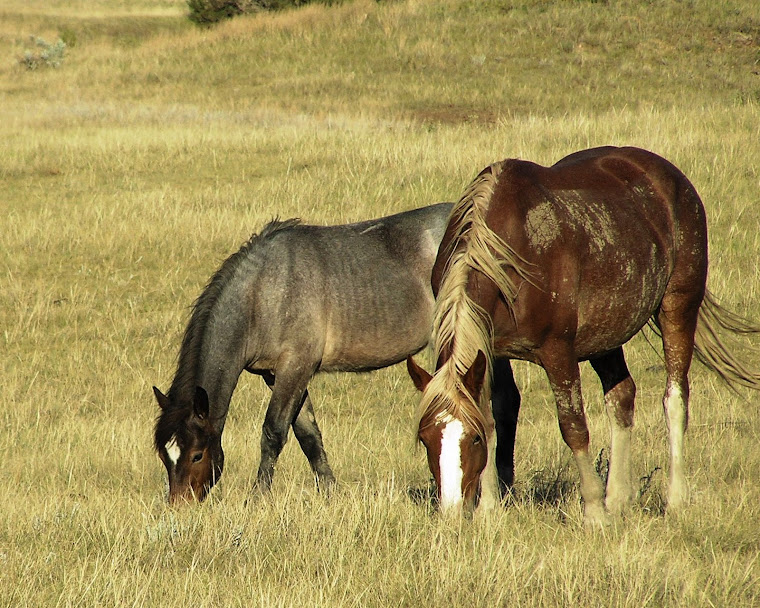
Over the two and a half days of the roundup, 154 of the 164 horses were brought in and processed. A kick to the front leg of a yearling filly was the only significant injury and she was moving well by the sale three days later. Sale horses were sorted by age and the older ones by sex so that they would not injure one another in the pens. The "keepers" were turned into another large grassy area to band up again before being released.
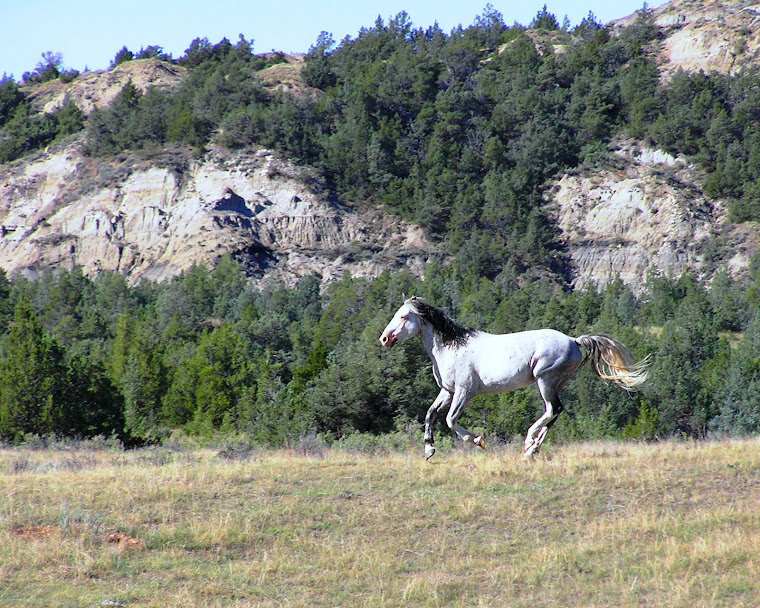
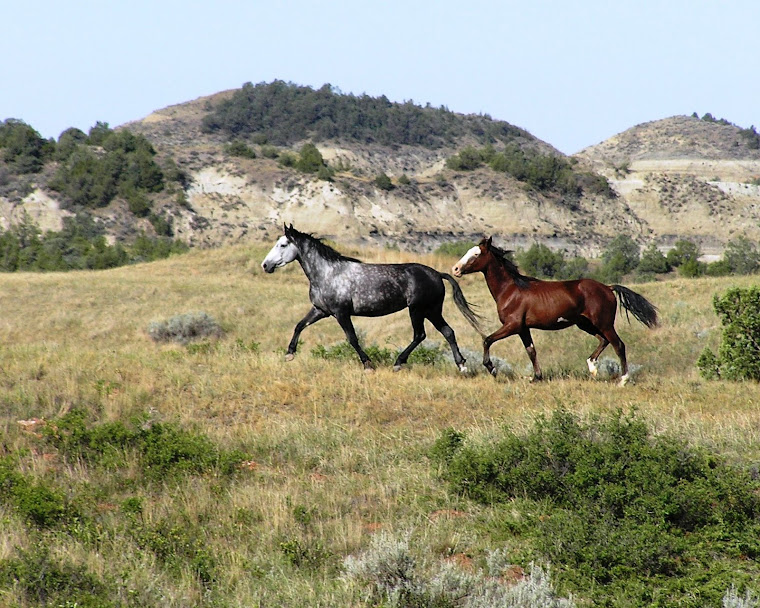
The afternoon of the last day, after a celebratory finishing briefing, everyone walked out to watch as a few people encouraged the horses to exit though a large gate into the Park. Dolly was the first one to find the open gate, but soon others, realizing the gate was open, walked out to freedom. They momentarily settled to eating just north of the handling facility while stallions fretted over their harems to make sure they would not be stolen by another band stallion. Quietly several stallions rounded up their mares and headed for their home range; topping the last hill they disappeared into the horizon.
Monday, October 26, 2009


Friday, October 16, 2009
WE'RE OFF
Tomorrow we leave to spend a week in the Park with our little dogs to keep us company and fight for our bed. The day will be spent tracking horses with a good friend. It will be one last weekend of relaxation and quiet before the roundup begins on Monday.
We covet your prayers for safety for all the people involved in the roundup and for the horses. Every precaution is being made to see that the horses are brought in and handled safely and that personnel are well trained to work with care and respect for these beautiful animals.
For the last two years, we have worked to make potential buyers aware of the horses, their strength, beauty, intelligence, and value as trainable companions and mounts. There are a good number of people coming from all over- California, Washington, Illinois, Minnesota, Texas, Canada, and who knows where else, to purchase the horses and take them home. It will be one of the best attended sales of the TRNP horses.
I want to thank everyone in advance for helping spread the word and coming to purchase horses. You will be bringing home a little bit of the history of the west.
Congratulations and God bless!
Watch for new stories about the roundup, the sale, and the families the horses find.
Tuesday, October 6, 2009
THE ROUNDUP AND SALE ARE COMING

I am interrupting my visit to each of the bands to make an appeal to all the wild horse lovers reading this, to get the word out about these wonderful horses needing homes. I know some of you would rather have none of the horses coming out. You love the wild horses and do not see why they cannot be left alone to run free as their ancestors did. However, there are others who would tell the Park personnel that horses are not wild animals and therefore have no place in a national park. The Park personnel have to try to keep a balance between both of the extremes while dealing with numbers of species who live in the Park.
This blog is not a forum for arguing the various views on wild horses and national park policy. Having gotten to know some of the Park people well, I have come to understand the dilemma of dealing with the abundance of animals and all the emotion that their management evokes in the public. The people who have to make these decisions, do so with great care and consideration.
It is the hope of the Park and those of us who know the wild horses of TRNP, that the day will come when numbers can be kept under control without roundups. The study which will be going on for the next few years is a huge step in that direction, but until that day, they will still have to cull the herd to keep them from growing so large that they and the other species they share the Park with are in danger of overgrazing the Park and a future of starvation.
My position is not to argue about the decisions being made, but to appeal to horse lovers to help me find homes for these awesome horses who are going to be coming out. Over the years they have lived and survived in the Park; they have become strong and resilient. Well built, they have strong bones and feet and good teeth. The ones I am familiar with are quite mellow and have gentled easily with the right training. Their beautiful variety of colors make them unique in the wild horse world.
Park personnel are trying to make buying one of the horses as easy as possible. The Coggins testing will be done at the time of the roundup, so results should be back in time for the sale. Check with your state laws to see what other paperwork you may need to cross state lines. Dr. Rowe will be on sight to do any additional vetting you may need. Since this is a public auction, you can bid on any horse and take it home as soon as you have paid for it and gotten the necessary vetting done.
Please talk to your friends and neighbors to find enough buyers to give all the horses a home. Many who are handy at training will be buying horses to gentle and train and find homes for at a later date, so make that a consideration if you don't wish to keep them all. They will have a better chance of finding a forever home if they have been gentled. The sale is at
Stockmen's Livestock Exchange West in Dickinson, ND, October 23, at 2:00 MDT.
Look at little Jules at the top of the post; can you resist those eyes?
I don't think so!
Sunday, August 9, 2009
HORSES FOR SALE
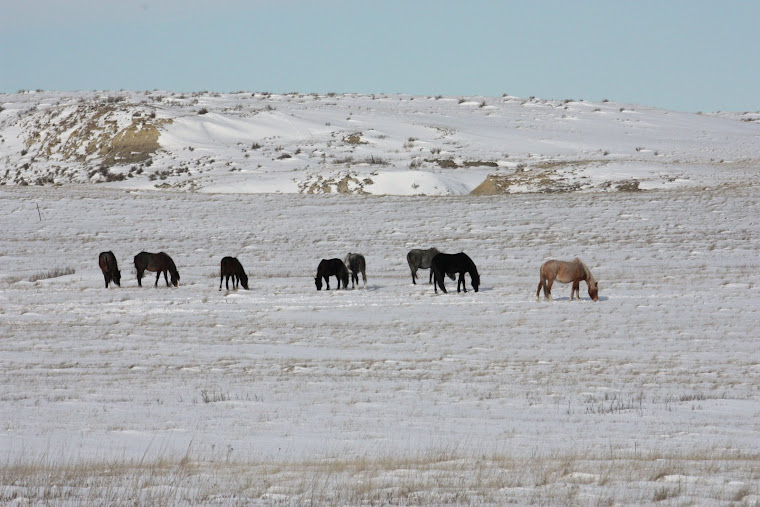
During the spring and summer of 2009 there have been 31 foals born in the Park that have survived. Over the past six years, new foal crops have brought the total number of horses to about 164. Since the horses are designated as a demonstration herd to represent the wild bands that Theodore Roosevelt saw and wrote about when he lived in North Dakota, they too are kept from multiplying themselves out of a home. Bison, elk, dear, and pronghorn all share the vegetation in the Park and there are few natural predators for the larger species, so there has to be periodic reductions of the larger animals in order to keep a balance of species and not overgraze the Park Though Park personnel are dedicated to finding better methods of keeping the number of horses under control in the future, it is necessary to round them up this fall and sell off a number of individuals.
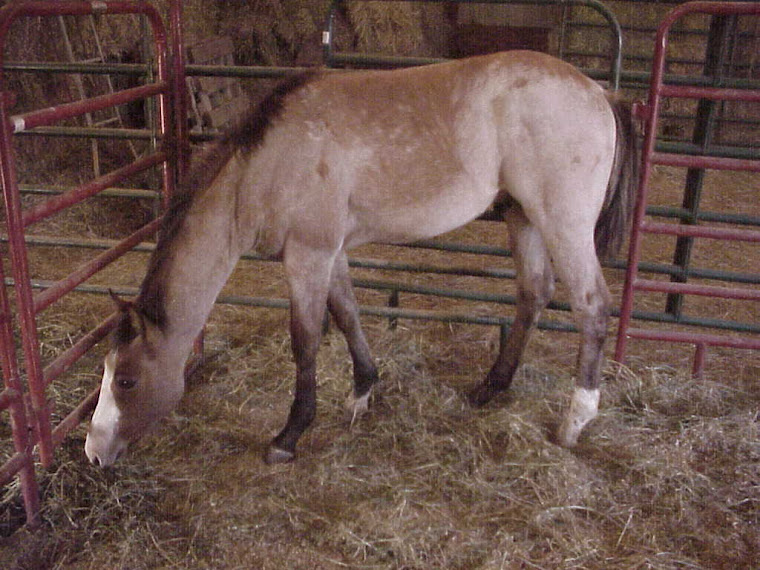
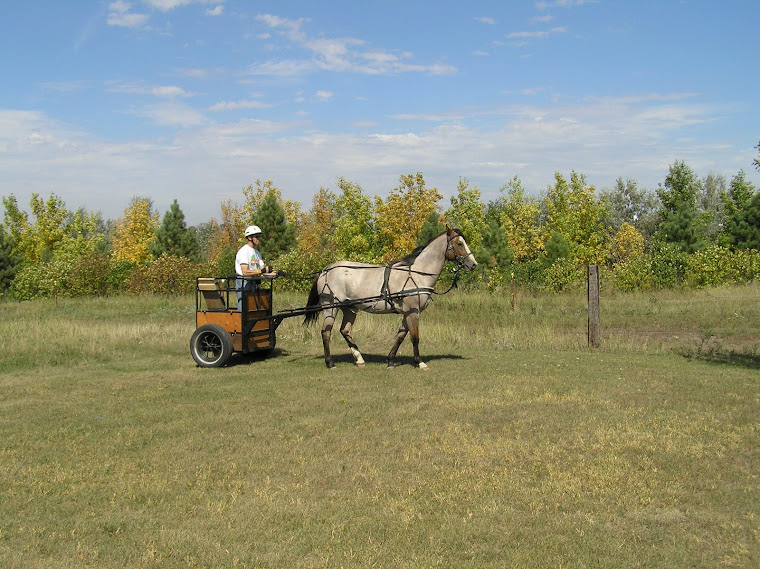
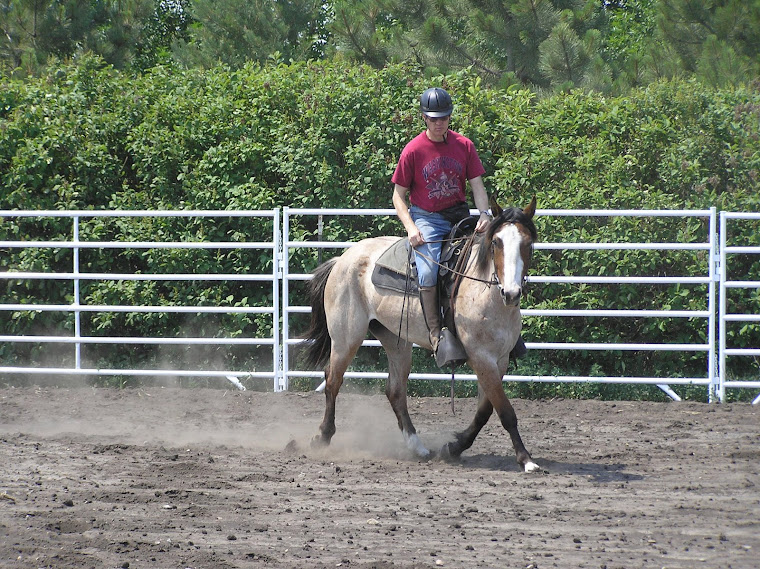
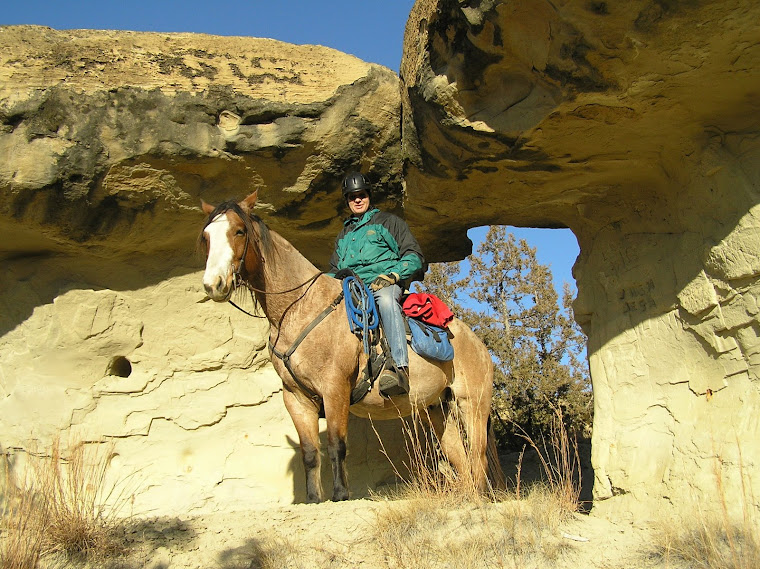
These horses have proven themselves to be great using horses for a great number of purposes. They are being used as ranch horses, driving horses, dressage and jumping horses, as well as just good family trail horses. Our experience has been that they are easy to gentle and train and that they like to be around people. They are sturdy, sure footed, strong, and tend to stay sound because of their long history of survival. Weak animals die off and do not reproduce, so those who make it are tough, with strong feet and legs.
In hope that every individual will find a home after the sale, most of the culled horses are going to be young. There will be horses of various colors and all ages from weanlings and yearlings to a few older studs that can still be started by skilled trainers. The horses will be sold at Stockmen's Livestock Exchange on the east side of Dickinson, North Dakota on October 23, 2009.
I will be featuring some of the horses in this blog over the next several weeks and months, but for those who are interested in buying a horse, I can tell you how to get the entire file by age at PhotoBucket. That is the best I can do until I firgure out how to get a link to them.
If you have experience with young, unbroken horses and have the facilities to keep a wild horse safe until it is gentled, then think about giving one of these special horses a home. There are also individuals who are willing to gentle a youngster for someone who is unable to do it himself.
Contact me at horsetracks@btinet.net for more information.
Thursday, August 6, 2009
HAZARDS, DID I MENTION HAZARDS
THURSDAY, AUGUST
6, 2009
This spring and summer, with the wild horse behavior study, has
been a learning experience in more than just learning more about the horses. We
have learned that one must be aware of what is brewing on the other side of the
butte.
In June, Henry and I had hiked to the flats where the Boicourts had built their farm. We were sitting among the remnants of a foundation, recording the behavior of the double band of Red Face and Singlefoot. Earlier, we had noticed a line of dark clouds forming behind the Boicourt Ridge behind us, but we felt lucky that the storm had blown past us to the south. We were about half way through the 20 minute study when we felt a few raindrops. Maybe we could hold out for the rest of the 10 minutes.........................maybe not. With no warning, it started to hail. We started running for cover like two old western cowboys dodging bullets. The hail was stinging the backs of our legs and any exposed skin. We were running for some kind of shelter from the hail and the lightning. The nearest gully would have to do, so I dashed into the first gully off the nearby ravine. It was full of Poison Ivy! Every inch of soil flourished with the tender, three leafed varmints that were just waiting to spread their venom all over our bodies. We leaped out of the gully and sprinted farther down the side of the ravine until we found a solid clay bank. It was good enough; we clamored over the lip and huddled against the clay for protection. It didn't really provide any protection from the hail, but it put us below the rest of the flat so we weren't puny moving targets for the lightning bolts.
We must have been laying in our fetal position in the clay for at least 20 minutes until the hail finally stopped and the rain let up some. While a light rain continued, the question came to me whether we should make a run for the vehicle a mile away or wait for the sun to come back out and finish the study. Turning over on my now muddy bank, I caught a look at Henry for the first time since our escape from certain death at the Boicourt homestead. His heavy blue jeans now encased in ice, he was shaking uncontrollably, like he had dunked himself in a lake in the middle of January. I guessed he didn't want to wait for the sun, even though I could now see blue sky over Boicourt Ridge. We drug ourselves out of our muddy sanctuary and slogged back to the protection of old Air Force Blue.
The sun did come out and we did dry eventually and complete more studies that day. But, it wasn't to be our last encounter with Mother Nature's wrath.
A few weeks later I was out with a tracking friend. Henry and Hedrick were also going out as a team so that we could get more bands observed. The friend had been in Medora for several weeks and still hadn't been able to track down Blaze to get any good photos of his band. I knew they had been hanging on the flats east of Buck Hill, so we headed for Buck Hill to see if we could spot them. There they were where I expected to find them, about a mile and a half down on the flats. It looked like a nice evening for a hike; it wasn't too hot anymore and the clouds we could see did not look threatening. We parked the truck on Buck Hill and headed for the horses. It was a pleasant walk that only took about 20 minutes and it was still early evening.
Blaze is always a lot of fun to photograph because he is pretty wary, so always gives us a good show. We wanted some photos of Little Brother's Girl's filly, Sheila, and Domino's new colt, Talkington. They were quite cooperative, letting us get close enough for some photos before we sat down to start the study. As we recorded their behavior every minute for 20 minutes, we noticed that the sky was getting darker, but we figured it was worth getting a little wet, to get good photos and a study of the illusive band. About the time we finished, it began to sprinkle.
By this time the clouds were building quickly in all directions, but it looked as if the storm might blow off to the north. I commented on the strange looking, dark clouds over Buck Hill as we looked for some cover to ride out the showers. Nearby was a deep ravine, and having had experience with the protective quality of ravines in the recent past, I decided it was our best bet. We found a flat spot at the bottom of the ravine where the bank rose about 20 feet above our heads and there was a nice spreading cottonwood that barely reached above the bank. We settled in for what we hoped to be a safe reprieve from a short squall.
Dressed only in light clothing, we were the most concerned with keeping out cameras dry. We laughed about getting caught in a storm AGAIN as the rain fell. I was concerned that Henry might be looking for us, but my phone had no service and I didn't think he had a Park radio, but it was worth a try, so I turned it on. We could hear the conversations of local law enforcement monitoring the storm. We heard someone say that a tornado was spotted just south of Medora heading..........................sssssssssssssssscccccccccckkkkkkkkkkkkkk. Static, nothing but static. Again we heard someone say something about having checked out the problem at Painted Canyon, but we didn't know what the problem might be. She asked, "Where is Painted Canyon from here?" We were about a half mile from Painted Canyon! We were still hoping that most of the storm would go around us when we heard the report that the line of severe thunderstorms reached from the South Dakota border to the Canadian border! It was not looking good for the storms to miss us and the radio was not raising any response.
As the rain poured and soaked us to the skin, we began to watch the water rise in the ravine. I said we had to have a plan of where we were going to get out if the water rose too quickly. The clay sides of the ravine were turning to gray slime which would not be easy to climb. Pressing our water logged bodies as close as we could to the tree, we watched the water rise. It seemed that the storm couldn't get much more miserable when I heard a "plunk" on the brim of my hat. Now it was hailing! I was wishing I had had the brains to bring a rain coat when the rain suddenly stopped-this was our chance!
As I had expected, the climb out of the ravine was a challenge with the slick clay and not a lot to hang on to in order to pull ourselves out. However, we were not about to let a little mud stop us; I found a way to the top and we were on our way back to the truck. We saw the horses just waiting out the storm were tempted to stop for more photos, but looking at the clouds to the south, we decided it was prudent to keep going. Our next obstacle was another deep gully that was running fairly deep with muddy water. We had to scramble another half mile north, toward its source to find a place narrow enough to jump it. On the way out, we had walked around the small, flat butte that had burned when struck by lightning several years ago, but since we had already gone out of our way to the north, it seemed quicker to go over it.
We headed for a green spot on the butte that looked like it might have some decent footing. Pulling ourselves over, around and through the maze of burned Junipers was like going through an obstacle course at boot camp. We found that dead trees don't always have much of a root system and don't always hold when you pull on them. We also found that the green we hoped was grass was actually thistles, millions of thistles. The other gal's comment as we drug ourselves through them was, " Eeuuhh, these things are covered with thorns, but Oh, look they have pretty purple flowers!"
Having reached the top of the butte that was more like the landscape of the moon than the Badlands, we had to find a place to get down that wasn't too steep or too slick. Success! We were over the butte and headed across the flats again. At this point, the flats were more like one large lake, but we couldn't worry about our boots when we still had gullies to cross. While I was engrossed in looking for a place to jump another deep gully, my companion stopped me short with the warning, "There's a rattle snake coiled right in front of you!" Taking a 180 away from the snake, we headed into another lake of muddy water. About that time the next line of storms caught up to us and the lightning crashed around us. It was not lost on us that we were standing ankle deep in water; we grabbed one another and screamed like little school girls. If we were going to fry, we were going to fry together. Though my friend said later that she saw an orange glow around me when the lightning hit, we survived, by God's grace. Yes, by now we were not laughing anymore; we were praying, out loud! The only way to stay out of the water was to skirt a butte. Of course, the butte was bentonite, all bentonite. Snakes, lakes, or bentonite? We chose bentonite. Skidding and sliding, we made it thought the bentonite and on to another lake, another gully, and finally to the bottom of Buck Hill, where our nice warm, dry truck was waiting for us at the top. Somewhere on the trip across the bottoms, she had asked what we would do if it got dark before we got to the truck. I said it wasn't an option, WE WOULD MAKE IT BACK TO THE TRUCK!
Buck Hill is steep there, very steep, and by now it was running with water and mud. Going up the trail would be impossible, so we would have to find a way through the trees. Picking our way carefully through the trees, using their limbs, small bushes, tufts of grass, or whatever else we could find to pull ourselves up, we made it up the 150 ft, or so, of Buck Hill. You can believe we celebrated when we saw the truck and Henry waiting for us!
We had been out in the storm for 3 hours. Since we lived through our ordeal, we laugh about it. It was quite funny; we wished we had video of us making the trip back to the truck, but we found out the next day that the storm destroyed 100 homes in Dickinson. Thank the Lord, it didn't destroy us.

THE BOICOURTS
One of our favorite places to observe the wild horses is Boicourt Ridge. On a hot summer day it is not unusual to find several bands fighting flies by catching the breezes on the high grassy ridge or rolling in the mud flats below. Stallions vie for mares and bachelors practice their skills on the rolling grassy butte. Sometimes bands are hidden in grassy draws or in the small, quiet valley nestled between the buttes north of the ridge, but there are almost always horses to be found there. Last spring I found our how the area got it's name.
When a friend sent my blog to her mom, she sent it on to her cousin, Ramona. Ramona sent me a quick email to tell me that her mother was Roxie Biocourt, who had grown up in what is now the Boicourt area of the Park.
In 1909 Albert (Bert) and Nora Boicourt brought their little family of three girls to North Dakota from Westport Indiana. A stone mason, Bert felt there was a future for himself and his family in ND. Upon arriving in the Badlands, they and two other families pitched tents on the Talkington Ranch until they could move into more permanent housing. By fall of the following year they were able to build on 160 acres including a spring, rolling prairie, tree lined draws and the flats below. Finding the water to be bad at the home site, Bert built a system to pipe fresh water down to a cistern from what is now known as Boicourt Spring. The Boicourts and several other families thrived in the little community they called Pleasant Flat.
Though the weather was often harsh and the crops not always good, the family was comfortable and happy in their little paper lined clapboard house. Bert tilled the land and kept the animals fed while Nora took care of her family and home. In the evenings she would spend hours braiding rugs and piecing quilts while Bert read aloud to the children. One of their favorite activities was singing while Nora played the organ and Bert accompanied her on the harmonica or violin. All the girls became accomplished musicians, learning the instruments from their parents. Also riding in the hills or off to Medora on an errand was an activity the girls enjoyed.
During their stay in the area, Bert found many opportunities to use his stone masonry skills. With the birth of Theodore Roosevelt National Park there was a need for various stone structures. Bert headed a crew who built nearly 40 stone bridges for the Park road, entrance sign structures, and the Contact House, which is now known as the Old Entrance. His initials can be found etched in the fireplace of that historic structure. In Medora they built DeMores Park to commemorate the Marquis' part in the History of the Badlands. Ramona sent a photo of her overlooking the Pleasant Flat.
In keeping with my theme of historic names for the new foals this year, we have a Roxie and a Boicourt. These foals will be included in a coming post on all the 2009 foals.
Thursday, July 2, 2009
TOM TESCHER'S STORY
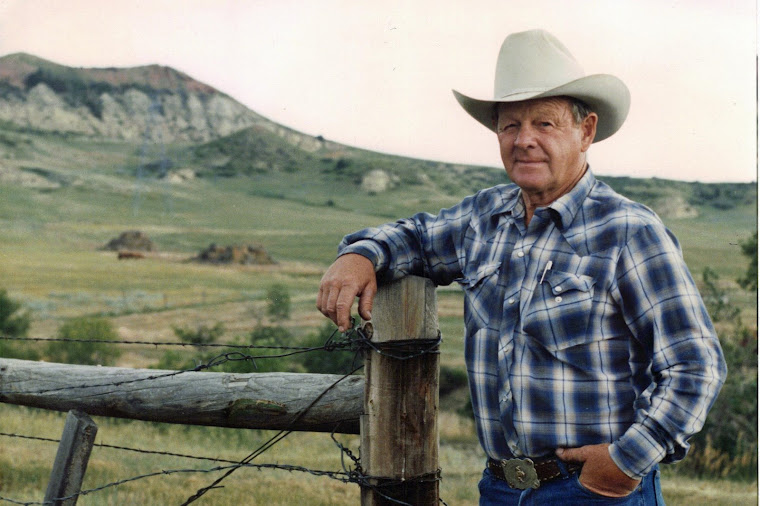
In September it will be one year since we lost our dear friend, Tom Tescher. Tom had tracked the horses for 50 years but was gracious enough to invite us greenhorns into his vehicle, with Lorraine and himself, to drive the loop road looking for the wild horses. It was an honor to spend time with the two of them looking for horses or sitting around their kitchen table talking about their family, his days as a champion rodeo cowboy, and, of coarse, all the wild horses he had known. When Tom passed away, I asked his daughter, Carol, to write about her Dad for this blog. The following is his story in her words.
On the day my Dad died, my oldest brother, Bill, looked into the cloudless North Dakota sky and saw a white horse. Then, Bill heard Dad whistle.
When Bill told that story to me, it took my breath away. I knew Dad was in Heaven, because Heaven to Dad was being with the wild horses and to get the attention of those beautiful bands of wild horse flesh.......... Dad would whistle!
Dad loved the wild horses; they were his passion. From the early 40's until his death, he kept meticulous records on the wild ones in Theodore Roosevelt National Park. When Dad was in the nursing home, he still wanted to go see the wild horses. Up until two weeks before he left us, I would take him on a drive every chance I got to look at the feral horses.
To get the thousands of pictures I took for him, I walked miles, sank in the mud to my knees in Paddock Creek, side-stepped rattlesnakes, climbed buttes, went through washouts, slipped on sodden gumbo, tripped in Prairie Dog holes, and faced the big roan stud that was snorting and pawing because I was bothering his harem. But, it was worth every moment to see Dad smile at the images of the horses. When he couldn't walk any more, I took pictures and showed them to him on the digital camera. When he couldn't see well anymore, I bought a laptop to show him a bigger picture. When he couldn't write any more, he would dictate to me, and when he couldn't talk any more, I would describe to him what I saw. It tickled him to hear about High Star fighting with and running off another stud that was trying to steal his band of mares; he would "humph" and smile. One time he got so excited about seeing the "young guns" (young studs) that he opened the door of the van because he thought he could still walk and wanted to get a closer look. At the end of the day, a highlight for him was when we tallied up how many horses we had seen that day. Some days it would be two and some days it would be over 50 head.
Nothing compared to the feeling of watching Dad's eyes twinkle when the old pinto stud walked down the road right beside Dad's open van window; Dad could almost touch him. I think the old pinto knew Dad's time watching him was almost over.
In gathering the herds for culling, Dad went from setting rope traps in box canyons to riding in a helicopter. The rush he got from roping a wild horse at a roundup was beyond his description. Dad spent many hours in the Park and he knew where each band claimed their territory. He would say, "Gary and his bunch stays south of the spring, close to the interstate." or "Keep an eye out for the big roan stud and his band; they like to stay around lower Talkington Creek." and "I'll bet we see the J bunch across the wash near Setting Chicken Butte." Dad's knowledge was immense and sot after. His mind was sharp up until the end. Until he couldn't talk any more, he could tell you which horses came from which studs and mares and the years they were all born. It amazed everyone who talked to him. He had his favorites and remembered when they were sold or how they died. His horse record books could be interpreted by anyone. He identified each band with a letter, starting with the A Bunch.
Because of his knowledge, he earned a lifetime pass with the Park. He helped college students with their thesis with his insight on the wild horses. He helped authors with their research on the wild ones, for their books. The governor of North Dakota called him after the wild horses were chosen as the state horse. The governor wondered why he hadn't talked to Dad sooner, as Dad knew the horses weren't ancestors to Sitting Bull's horses, as some had claimed. Dad knew the horses were turned out by ranchers and farmers during the Depression, when they couldn't afford to feed them. He knew several were turned loose in the Park by individuals.
Dad's excitement over the horses was contagious. I learned to love them almost as much as he did, but it wasn't always a thrill for me to go see the horses. For a while, every Mother's Day, Dad would take Mom out for dinner and then take her for a ride...................to see the horses. For some reason, my husband, Val, and I always seemed to be with them. One Mother's Day, Mom and I were sitting in the back seat of the car "discussing" what we thought of what we were doing on Mother's Day. Mom thought we should be doing something mothers like to do. I told Dad what Mom said........................he didn't get it! He couldn't imagine anyone wanting to do anything else.
So, don't be surprised when you visit TRNP and see the wild horses pick up their ears listening to a spirited whistle echoing in the North Dakota Badlands. It is just my Dad, doing what he loves.
The day Tom Tescher was laid to rest, we were in the Park, assigned to help Whit try a low stress roundup of the horses. We painfully discussed what we should do. Should we go to Tom's funeral or keep our commitment to Whit and help him find horses to bring in? It was a dilemma until I thought, "what would Tom want us to do; he would tell us to go out there and bring in those horses!" I think I could hear Tom whistling to the horses that day!
WHISTLE IN THE WIND
by Carol Tescher Obrigewitch
When Bill told that story to me, it took my breath away. I knew Dad was in Heaven, because Heaven to Dad was being with the wild horses and to get the attention of those beautiful bands of wild horse flesh.......... Dad would whistle!
Dad loved the wild horses; they were his passion. From the early 40's until his death, he kept meticulous records on the wild ones in Theodore Roosevelt National Park. When Dad was in the nursing home, he still wanted to go see the wild horses. Up until two weeks before he left us, I would take him on a drive every chance I got to look at the feral horses.
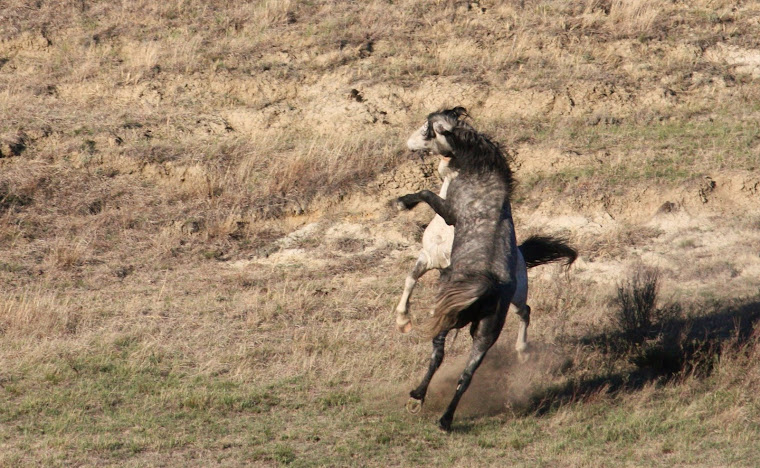
To get the thousands of pictures I took for him, I walked miles, sank in the mud to my knees in Paddock Creek, side-stepped rattlesnakes, climbed buttes, went through washouts, slipped on sodden gumbo, tripped in Prairie Dog holes, and faced the big roan stud that was snorting and pawing because I was bothering his harem. But, it was worth every moment to see Dad smile at the images of the horses. When he couldn't walk any more, I took pictures and showed them to him on the digital camera. When he couldn't see well anymore, I bought a laptop to show him a bigger picture. When he couldn't write any more, he would dictate to me, and when he couldn't talk any more, I would describe to him what I saw. It tickled him to hear about High Star fighting with and running off another stud that was trying to steal his band of mares; he would "humph" and smile. One time he got so excited about seeing the "young guns" (young studs) that he opened the door of the van because he thought he could still walk and wanted to get a closer look. At the end of the day, a highlight for him was when we tallied up how many horses we had seen that day. Some days it would be two and some days it would be over 50 head.
Nothing compared to the feeling of watching Dad's eyes twinkle when the old pinto stud walked down the road right beside Dad's open van window; Dad could almost touch him. I think the old pinto knew Dad's time watching him was almost over.
In gathering the herds for culling, Dad went from setting rope traps in box canyons to riding in a helicopter. The rush he got from roping a wild horse at a roundup was beyond his description. Dad spent many hours in the Park and he knew where each band claimed their territory. He would say, "Gary and his bunch stays south of the spring, close to the interstate." or "Keep an eye out for the big roan stud and his band; they like to stay around lower Talkington Creek." and "I'll bet we see the J bunch across the wash near Setting Chicken Butte." Dad's knowledge was immense and sot after. His mind was sharp up until the end. Until he couldn't talk any more, he could tell you which horses came from which studs and mares and the years they were all born. It amazed everyone who talked to him. He had his favorites and remembered when they were sold or how they died. His horse record books could be interpreted by anyone. He identified each band with a letter, starting with the A Bunch.
Because of his knowledge, he earned a lifetime pass with the Park. He helped college students with their thesis with his insight on the wild horses. He helped authors with their research on the wild ones, for their books. The governor of North Dakota called him after the wild horses were chosen as the state horse. The governor wondered why he hadn't talked to Dad sooner, as Dad knew the horses weren't ancestors to Sitting Bull's horses, as some had claimed. Dad knew the horses were turned out by ranchers and farmers during the Depression, when they couldn't afford to feed them. He knew several were turned loose in the Park by individuals.
Dad's excitement over the horses was contagious. I learned to love them almost as much as he did, but it wasn't always a thrill for me to go see the horses. For a while, every Mother's Day, Dad would take Mom out for dinner and then take her for a ride...................to see the horses. For some reason, my husband, Val, and I always seemed to be with them. One Mother's Day, Mom and I were sitting in the back seat of the car "discussing" what we thought of what we were doing on Mother's Day. Mom thought we should be doing something mothers like to do. I told Dad what Mom said........................he didn't get it! He couldn't imagine anyone wanting to do anything else.
So, don't be surprised when you visit TRNP and see the wild horses pick up their ears listening to a spirited whistle echoing in the North Dakota Badlands. It is just my Dad, doing what he loves.
The day Tom Tescher was laid to rest, we were in the Park, assigned to help Whit try a low stress roundup of the horses. We painfully discussed what we should do. Should we go to Tom's funeral or keep our commitment to Whit and help him find horses to bring in? It was a dilemma until I thought, "what would Tom want us to do; he would tell us to go out there and bring in those horses!" I think I could hear Tom whistling to the horses that day!
Subscribe to:
Posts (Atom)