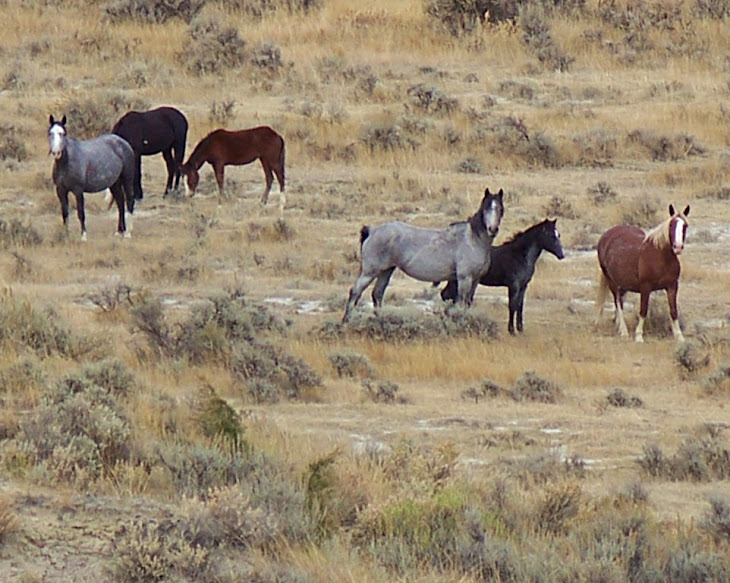
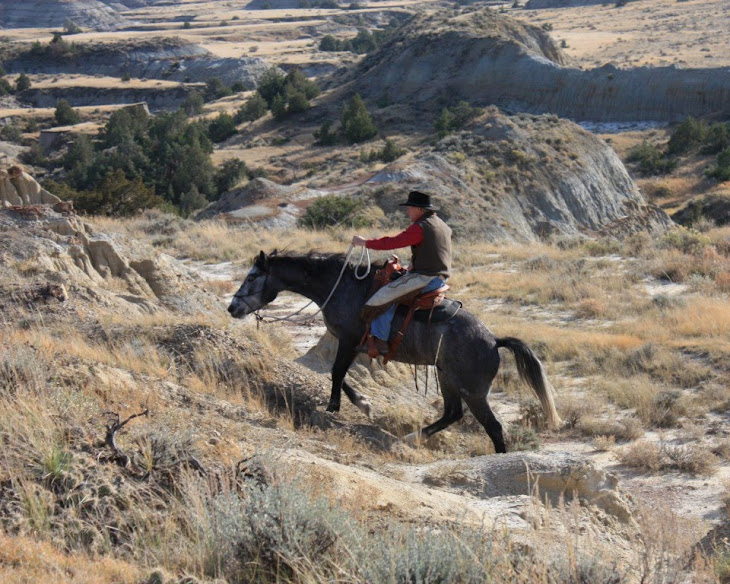
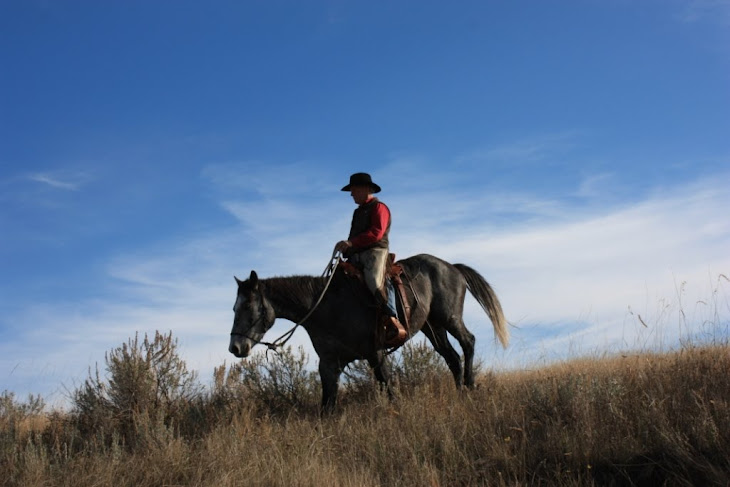
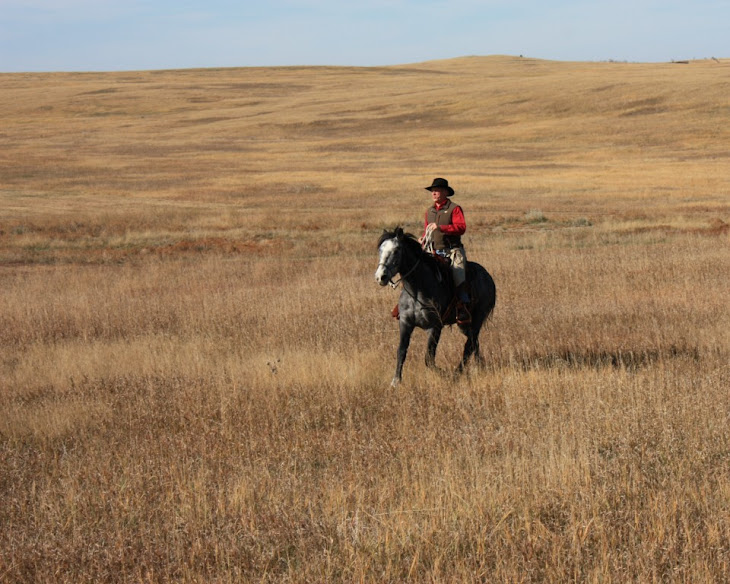
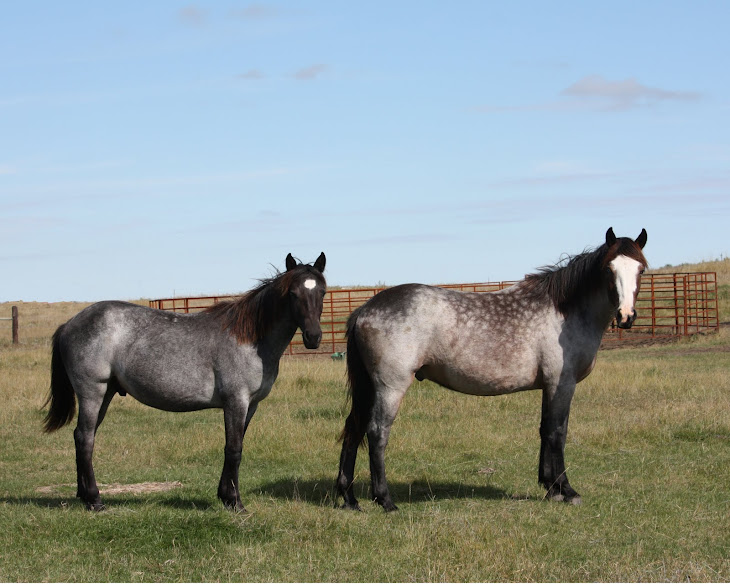
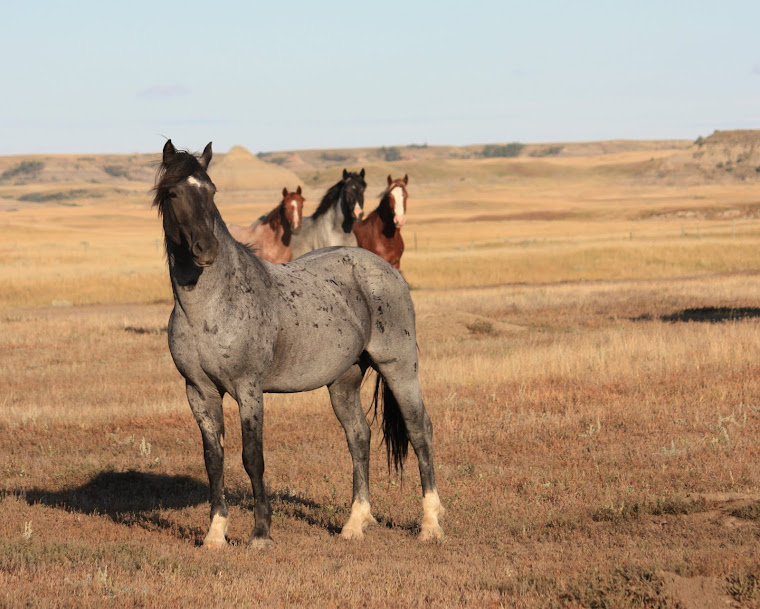
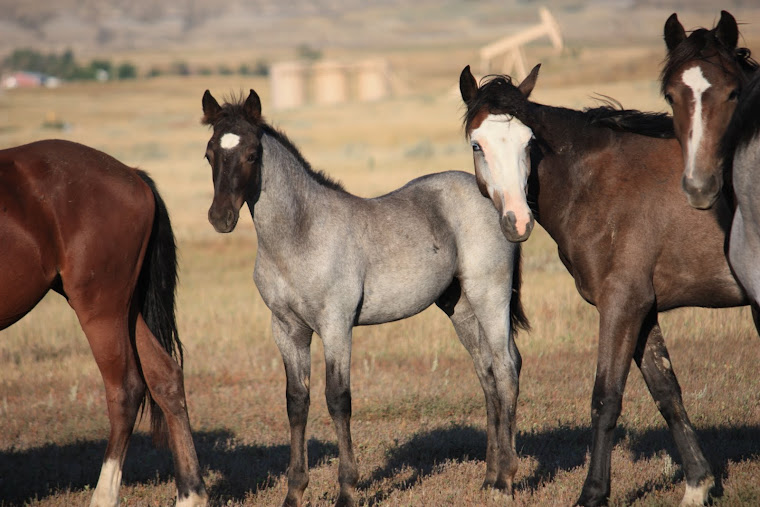
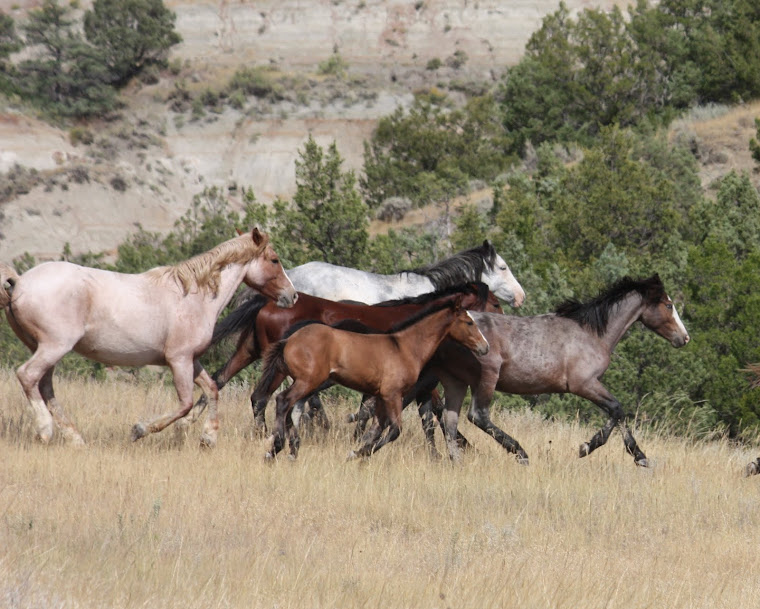
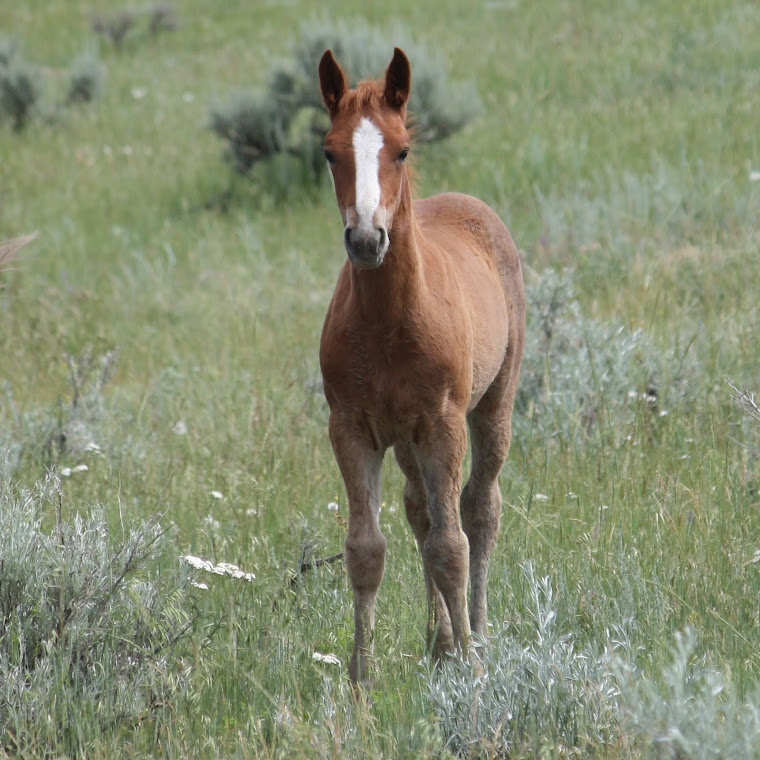
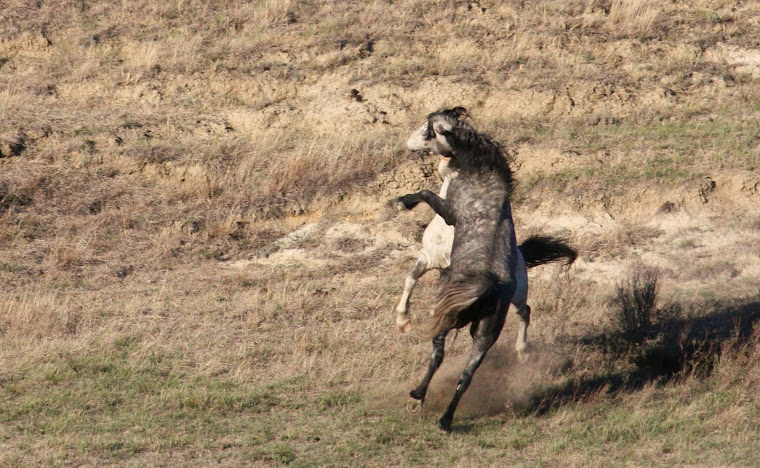
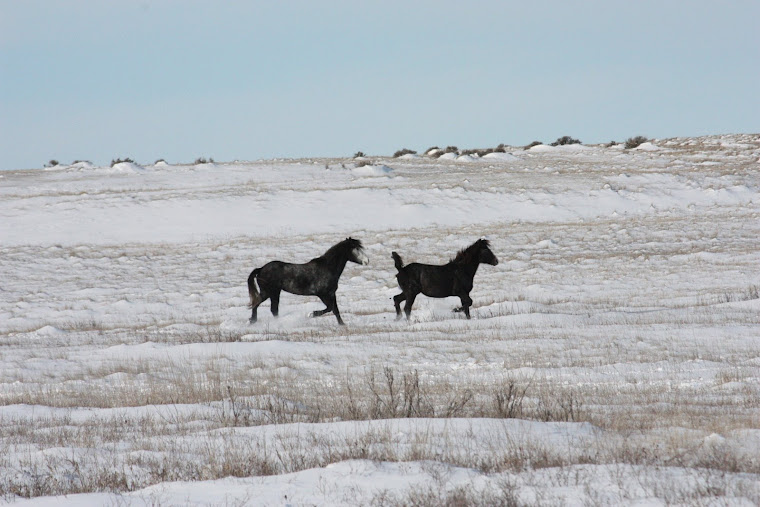
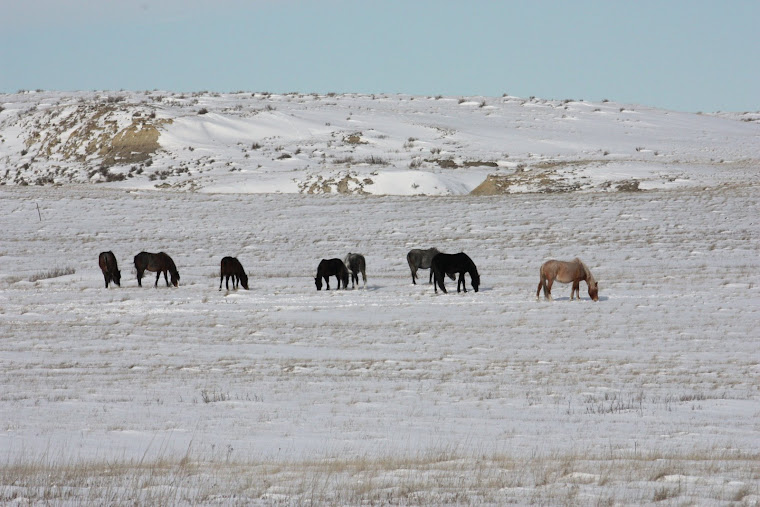
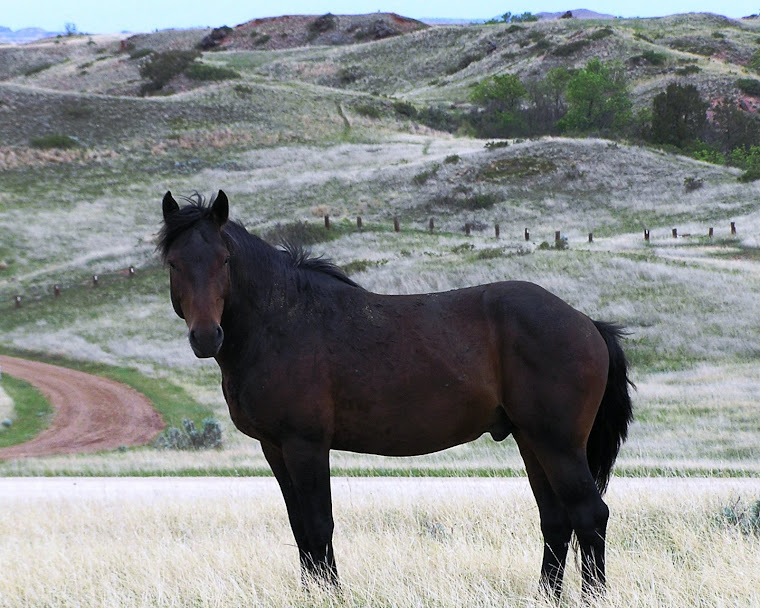
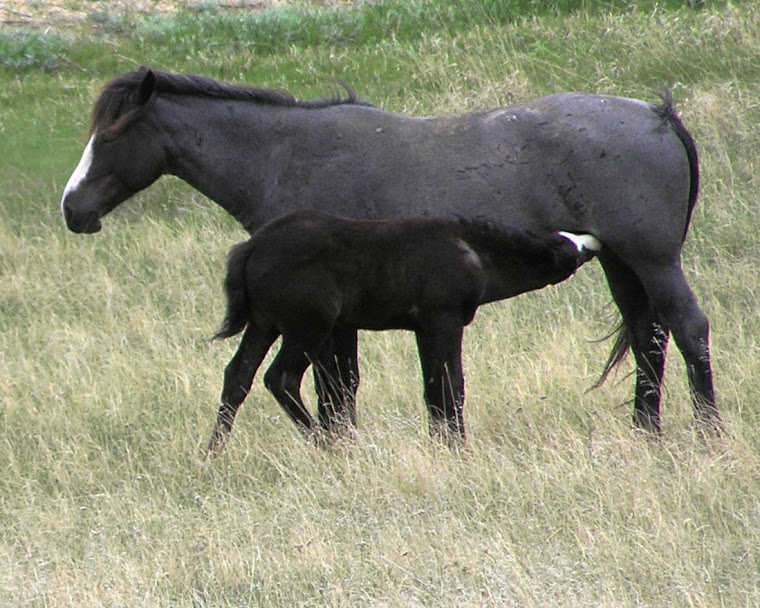
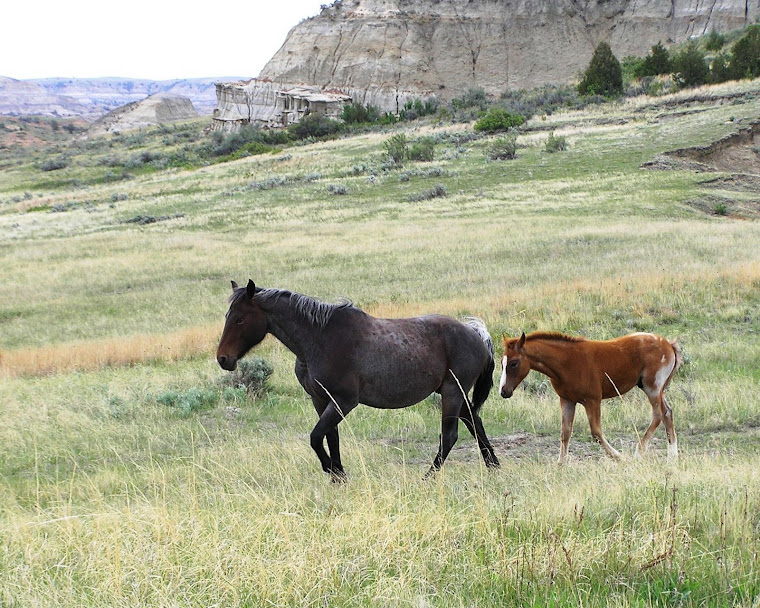
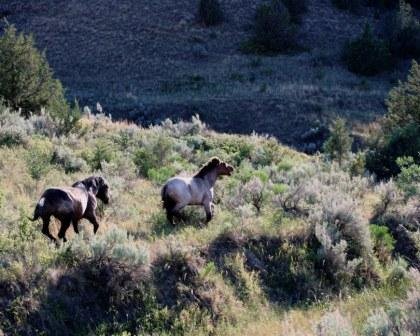
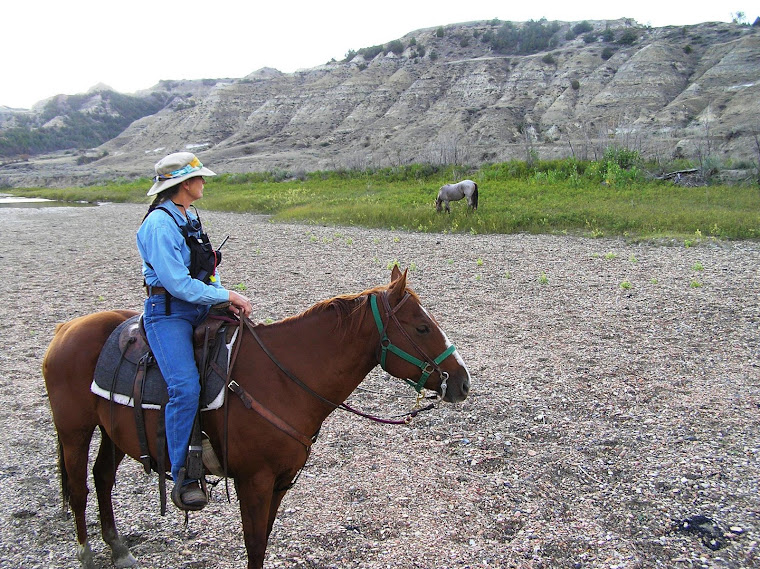
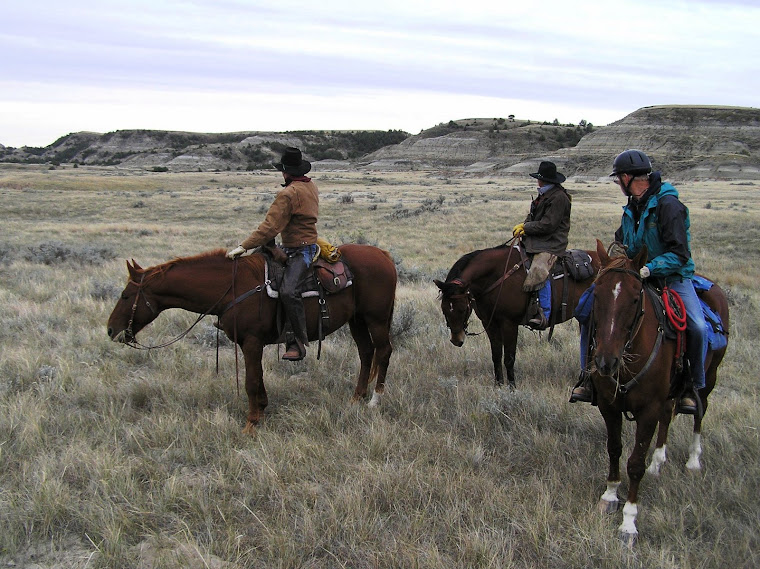
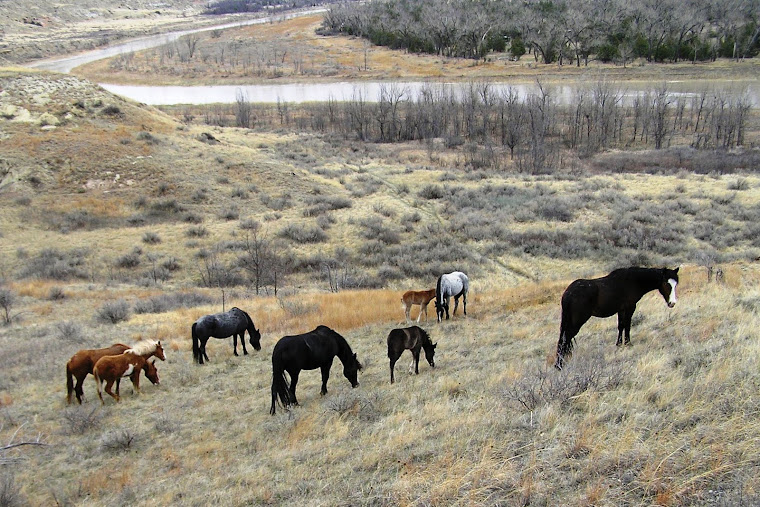
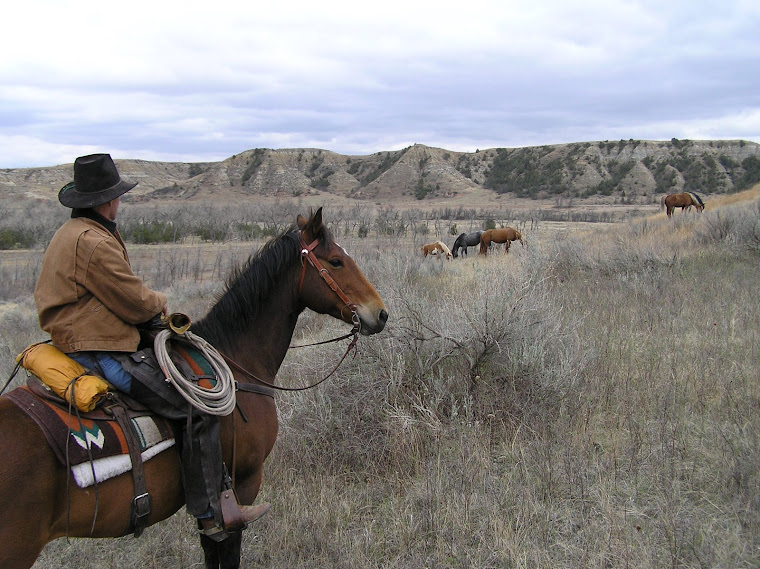
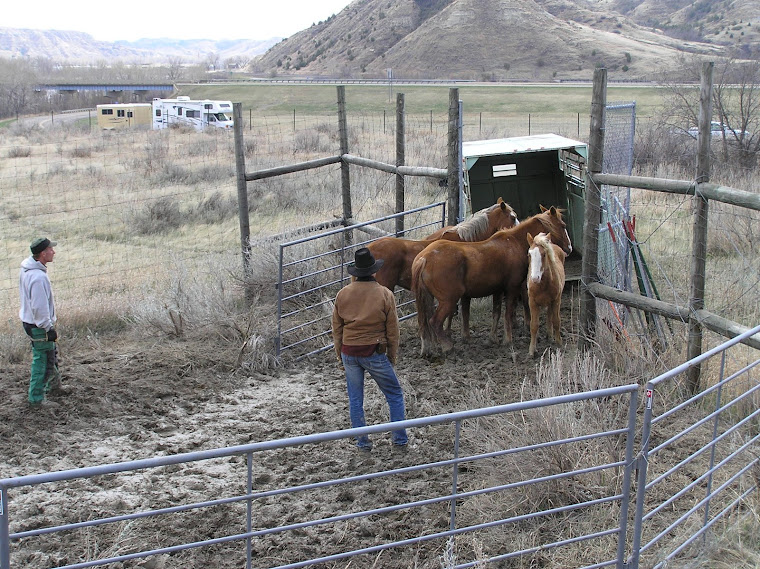
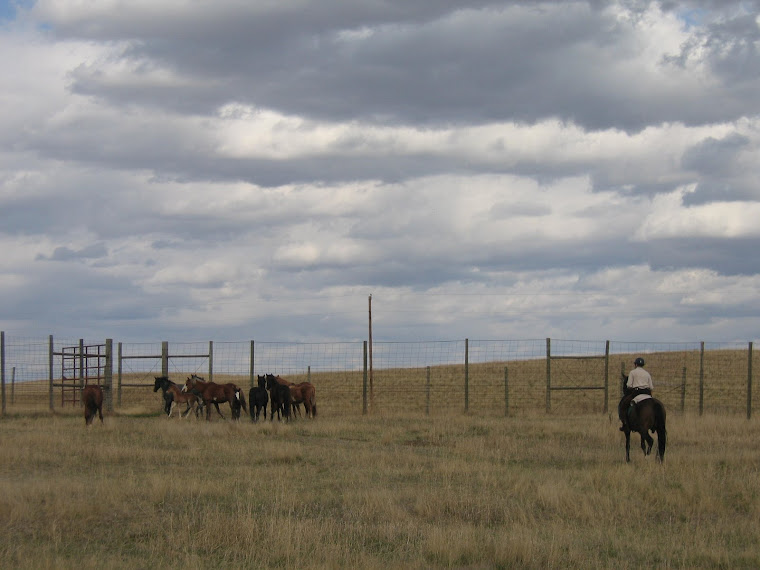
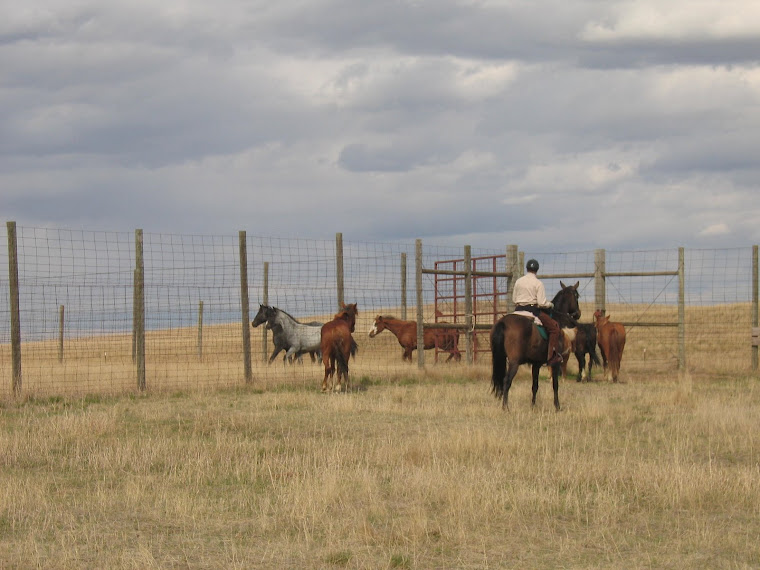
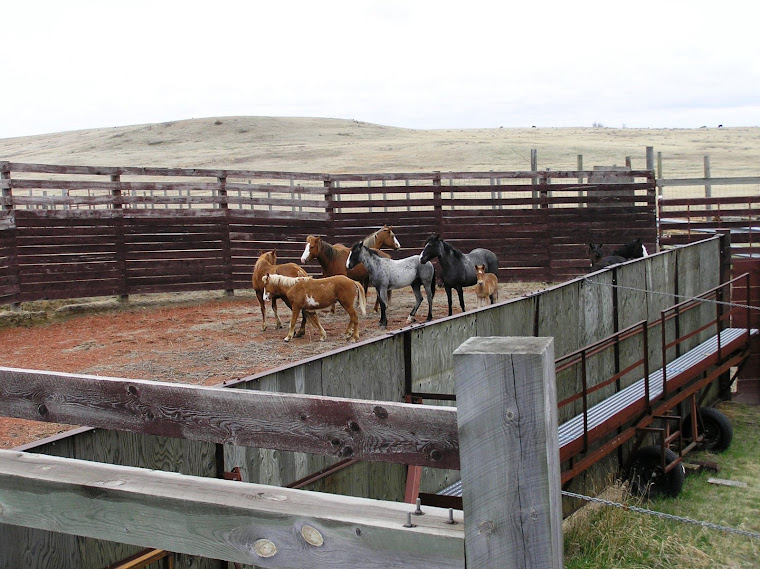
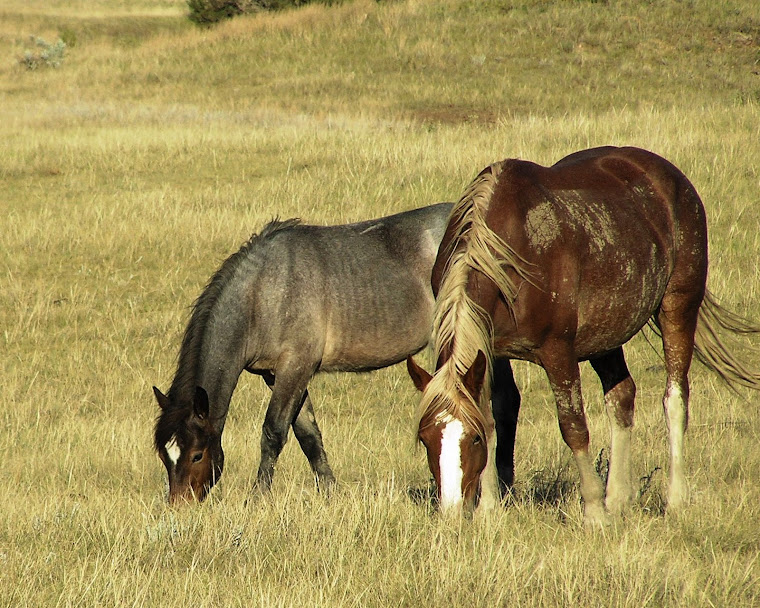
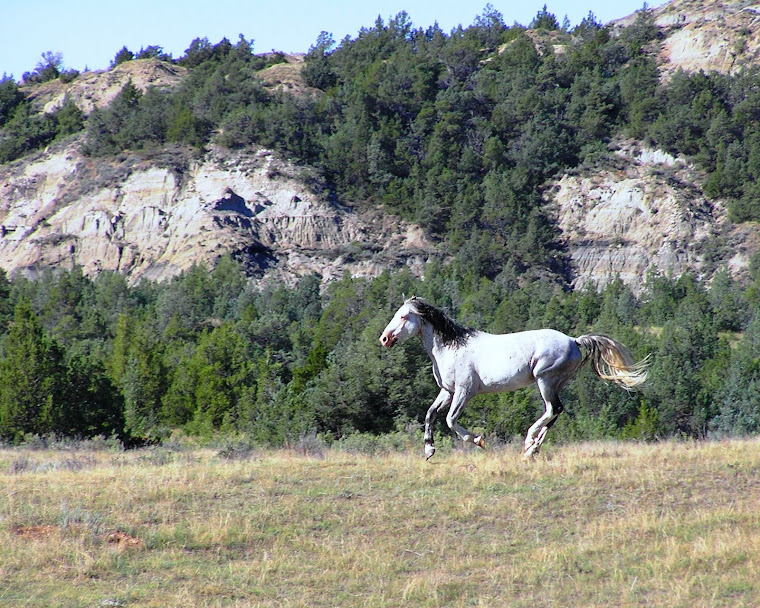
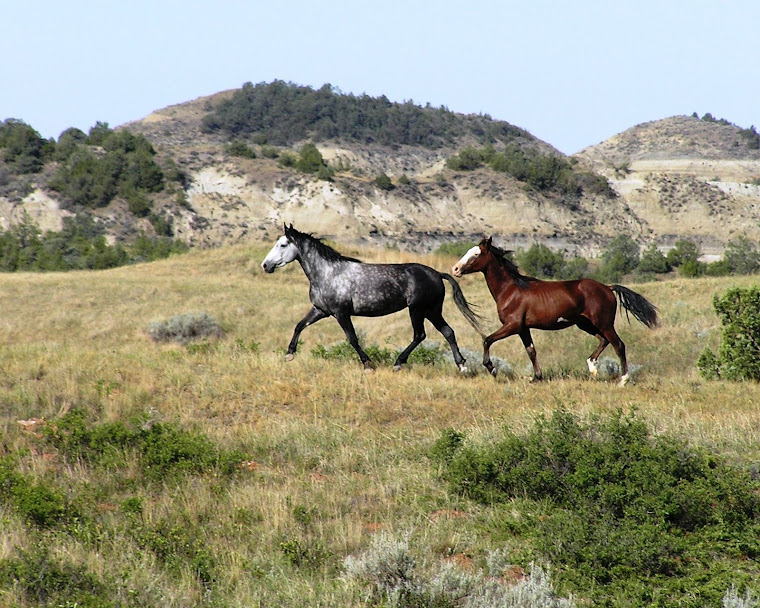
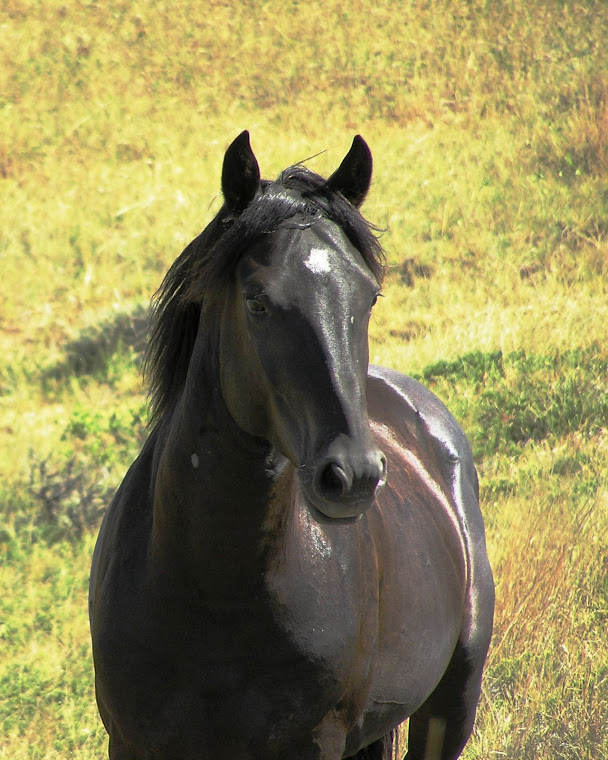
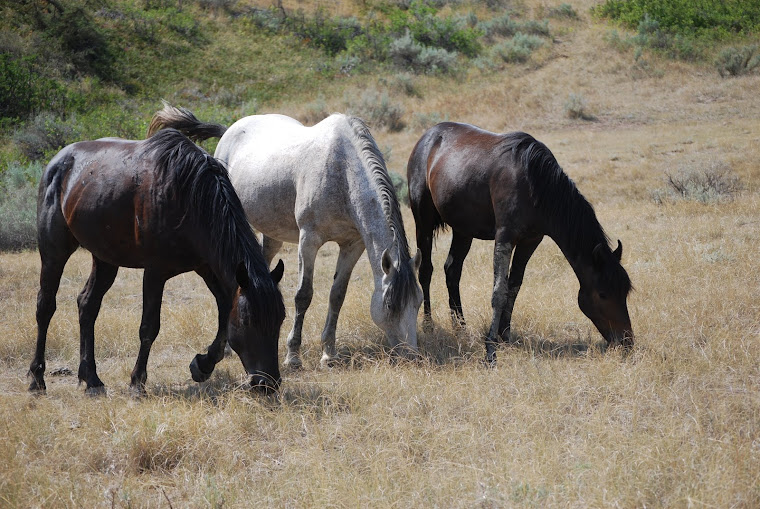
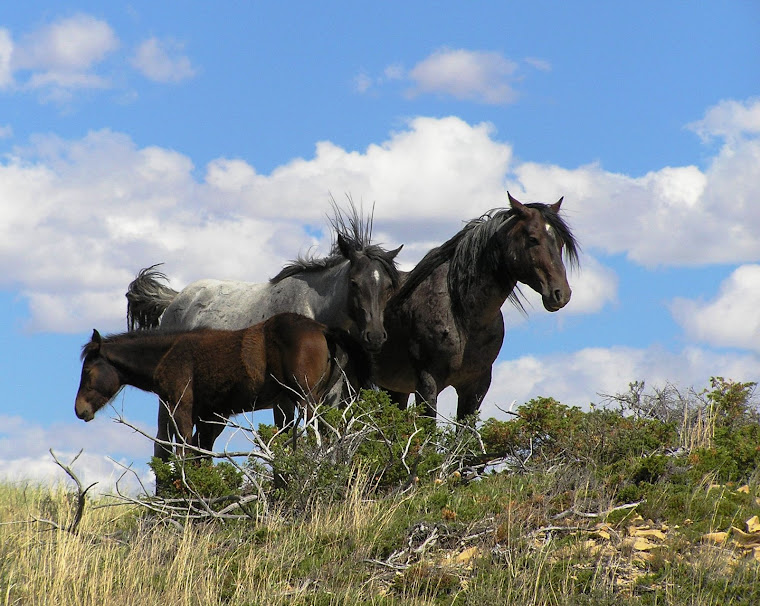
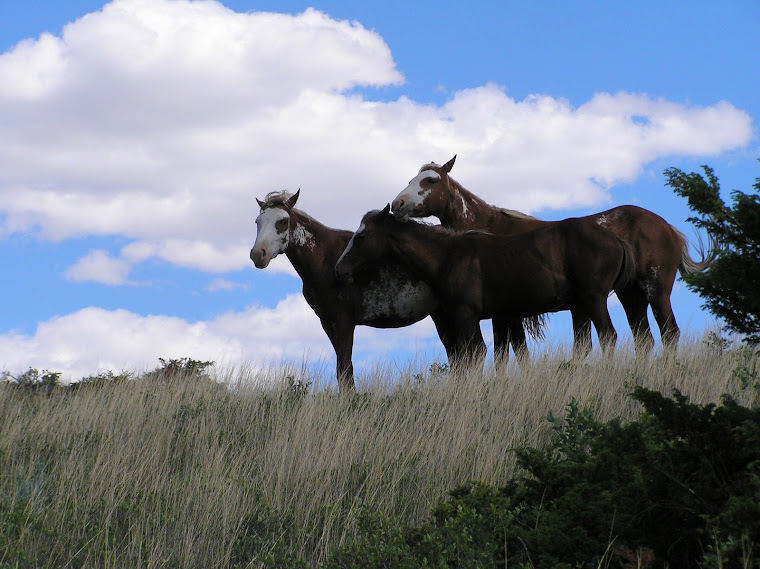
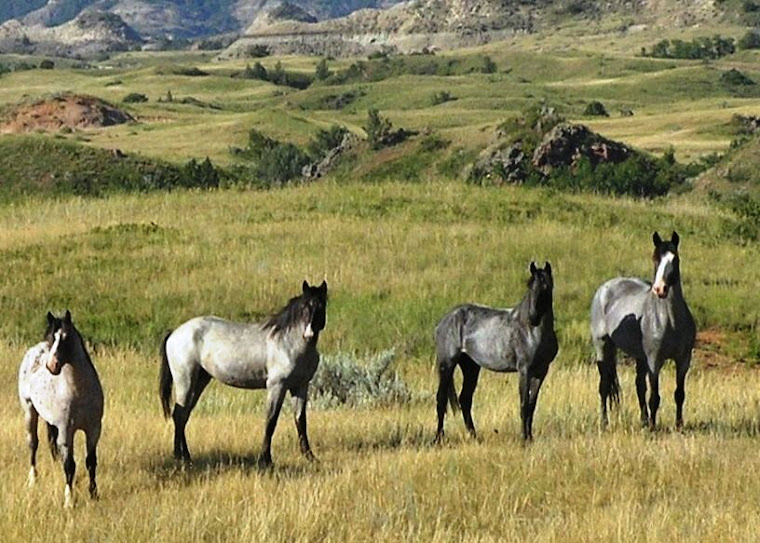
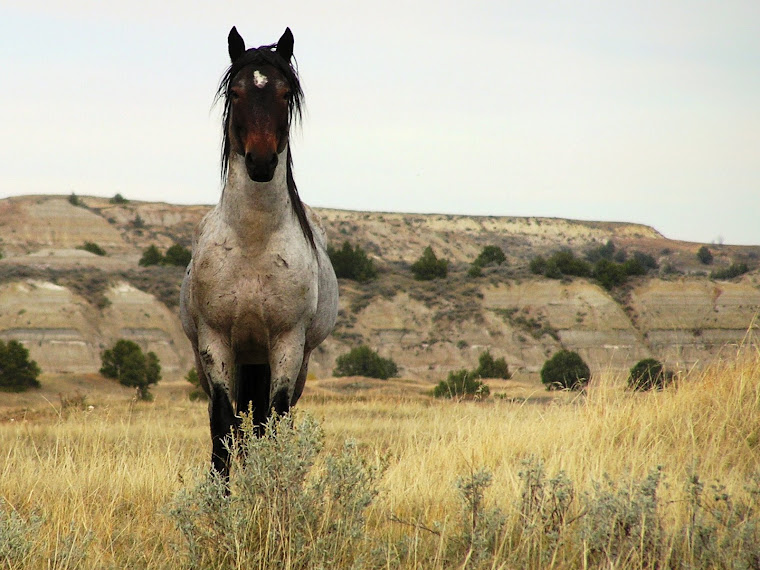
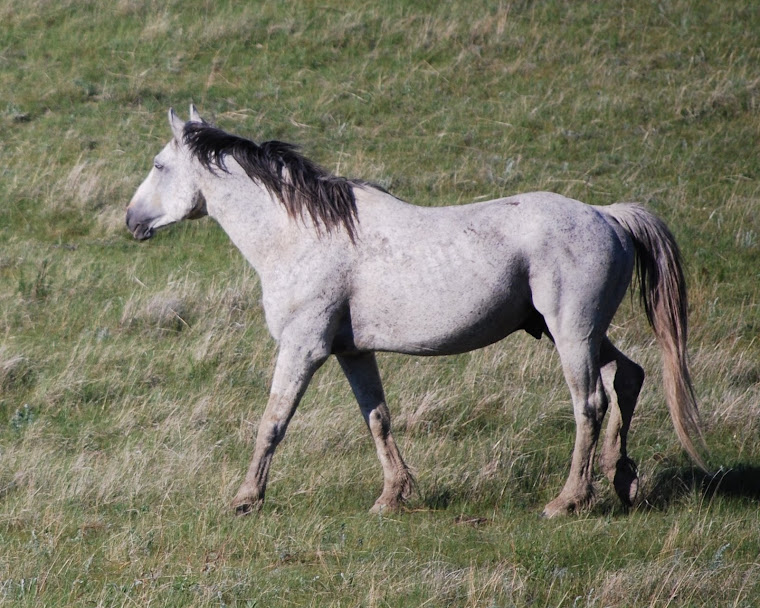
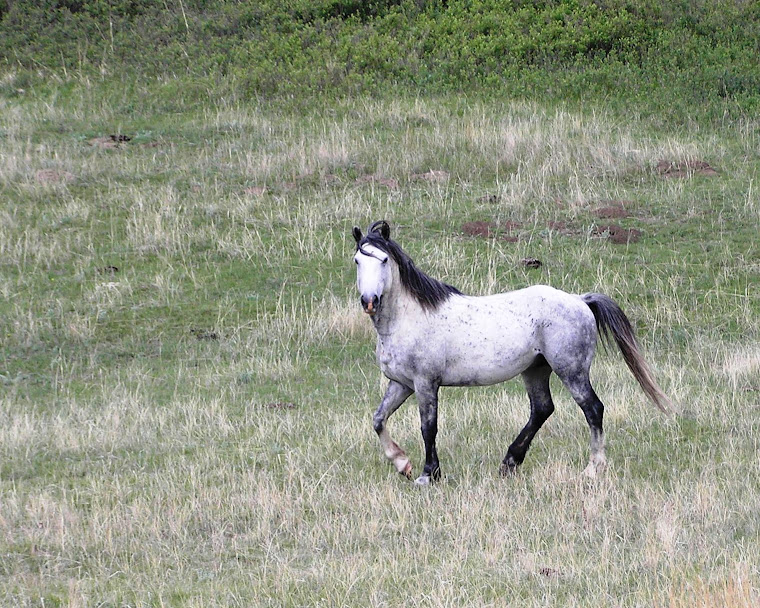
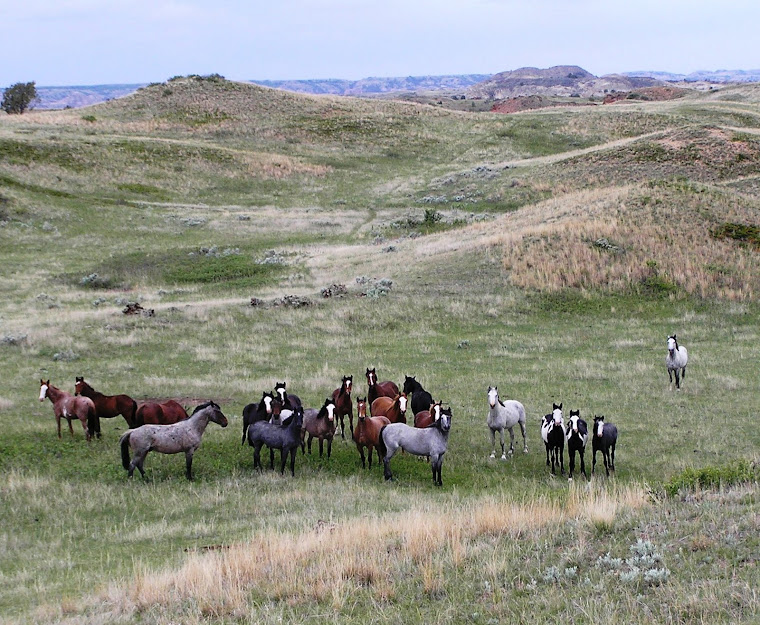
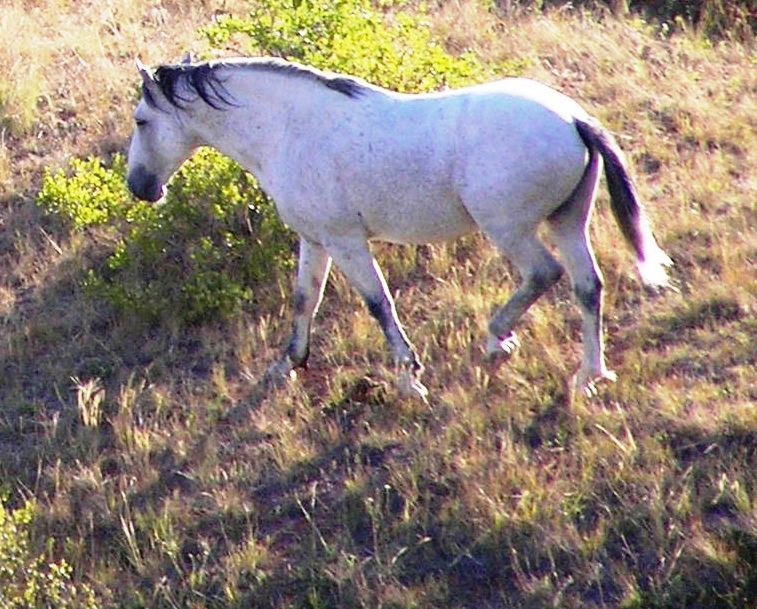
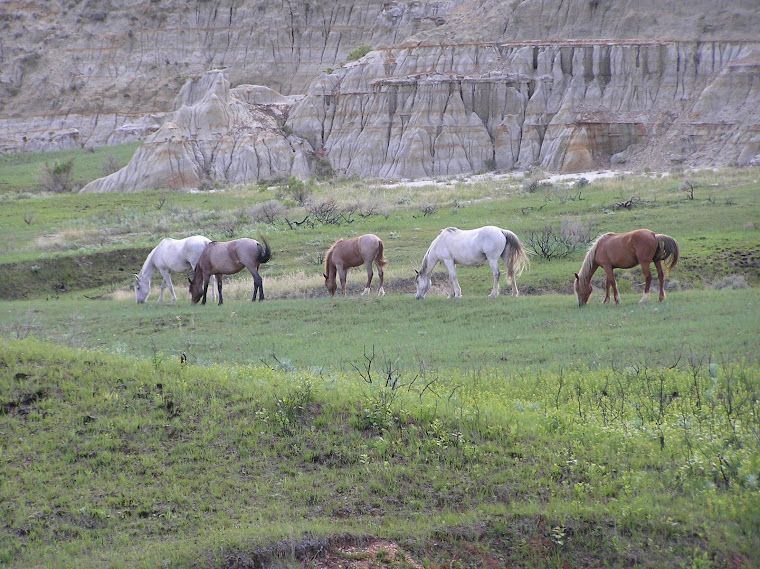
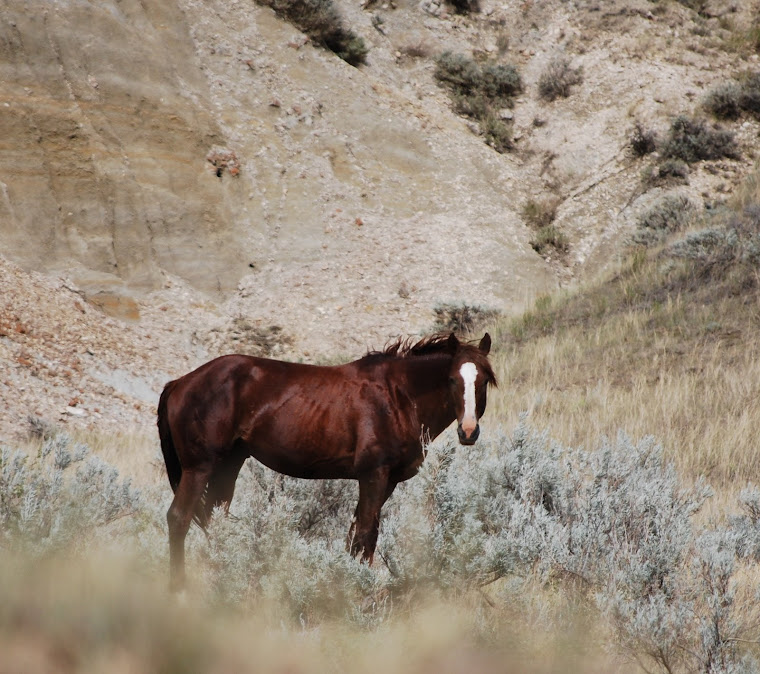
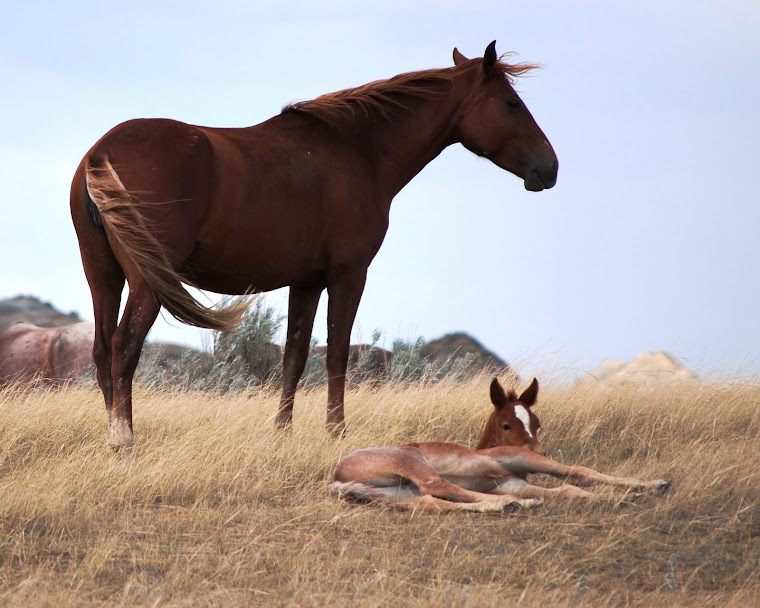
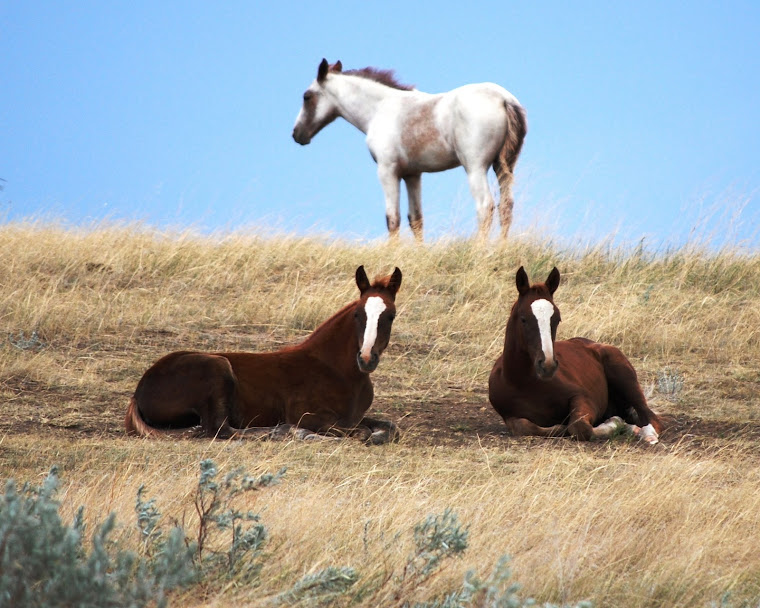
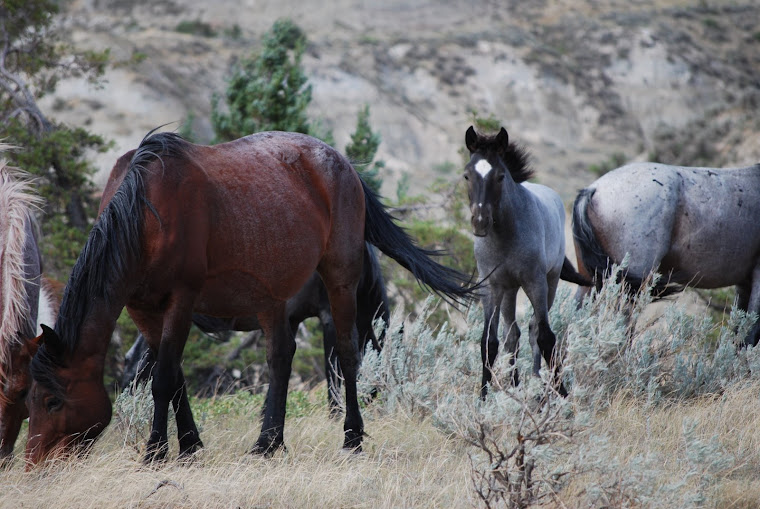
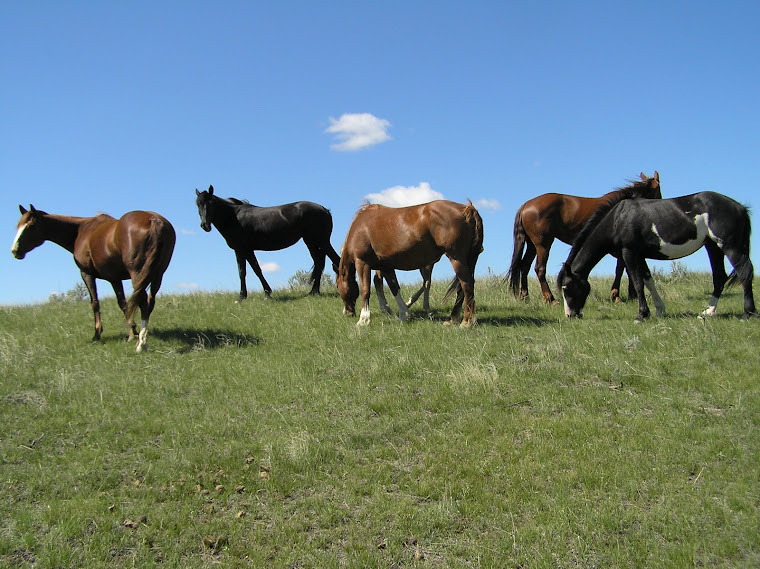
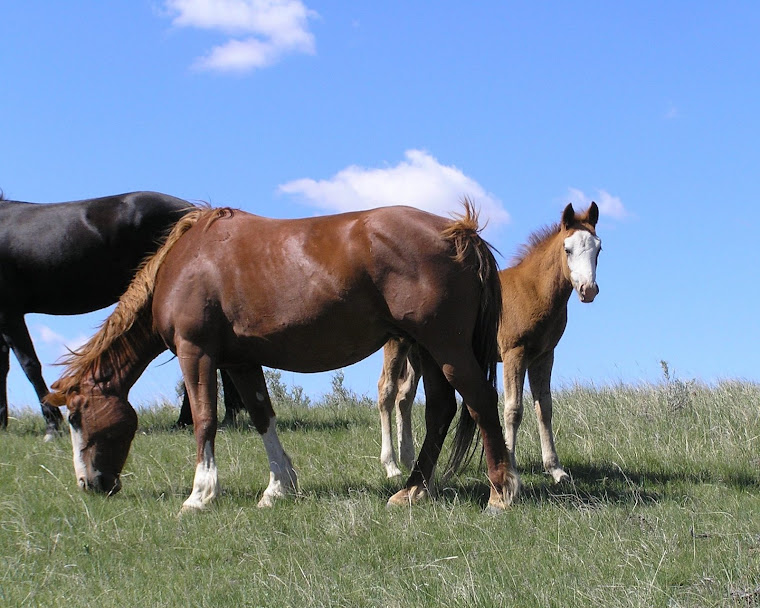
The feral horse studies of 2011 have been difficult and frustrating with the weather and ground conditions in the Park this spring. Though we were supposed to began the study in March in order to find all the foals, we were held back by storm after storm. It would be safe to say that there has been a snow storm at least once a week since our target date of March 15. With only one full time person, our new tracker and office manger, Maggie, it has been a daunting challenge to even find all the bands. If not for the help of the Biologists, Mike and Wade, we would still be looking for some of the more remote bands, since it has been so wet that even Al and his horses were prevented from getting out.
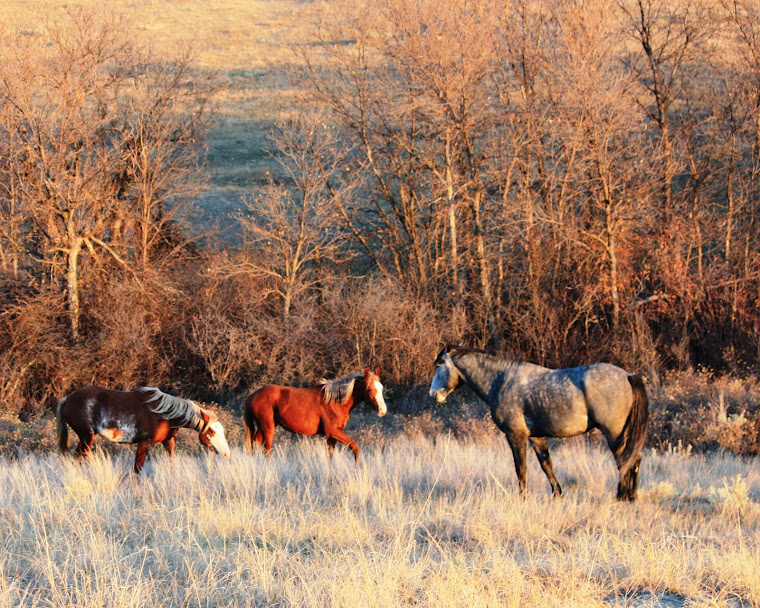
With the hard work of the biologists, Maggie, Al, Jennifer, Henry and me all the bands have been accounted for and, to date, 12 foals have been found. Most of the bands were as they had been when we finished the 2010 observations in November, but there have been some changes, as there always are. Embers, the oldest stallion in the park, has lost his two mares, Bella and Mist, to the younger stallion, Sidekick. Bella has already dropped a pretty bay filly, Larkspur, that should roan like her sire, and Mist was about to pop the last time I saw her. Sidekick's mare, Embers' Girl has a new colt named Hawthorn.
Some of the red roan mares appeared to be trying to play some tricks on our trackers early this spring. There was a red roan mare with Mystery that they assumed was Shale, who had a yearling filly with a star with her, but the red roan mare from Gray Ghost's band, Ginger, was missing her yearling filly with a star and Nordie, the red roan mare from Little Sorrel's band, was nowhere to be found. They also had seen a few horses that didn't seem to fit the description of any of the bands. Maggie had never been able to get close enough to them to identify who they were, but they had a new dark foal with them.
When I was finally able to get out, we were able to figure out the puzzle. The unknown band turned out to be Smokey and Shale from Mystery's band along with Shale's yearling filly, Teepee. Smokey had a new foal that we called Crocus. Then who were the red roan mare and yearling filly with the star now in Mystery's band? Finding them again that day, we were able to determine that they were Ginger and her filly, Whiskey, from Gray Ghost's band. There was only one more piece of the puzzle to figure out; the red roan mare with Gray Ghost had to be the missing Nordie!
With all of that mix up straightened out, we were able to determine that we had only lost one horse over the long, cold winter. The broken, Randy, who had been badly injured in stallion fights, had finally succumbed to the draining task of digging for grass through the deep snow. It was a blessing for him to finally die.
It wasn't long before the horses started playing their tricks again, but this time Maggie was on to them. Nordie somehow found her way back to Little Sorrel and was replaced in Gray Ghost's band by the dark red roan mare, Tanker. It must have been a pretty intense fight between Little Sorrel and Gray Ghost, because Tanker was Little Sorrel's darling who stuck to him like glue. One day I was watching Gray Ghost's band and thinking how boring they were making my job; the next day he had taken the two mares Mystery had lost. I had seen Mystery running from the area, but the emaciated Gray Ghost had been strong enough to win the mares. By then, Shale also had a new foal, a bay filly we called Lupine, but Smokey's foal turned out to be a colt, not a filly, so we had to change his name to Prairie Smoke.
We gave the name Crocus to a beautiful flaxen chestnut foal out of Flame until I saw the foal up close and found out that Crocus was also a colt! We named him Flax! Two other foals in the Double band are Frosty's Fool, a cute black filly born on April 1st, and Indian Paintbrush, a bay filly out of Pretty Girl.
The two latest foals hadn't been named yet but our very first foal was out of Raven, the pretty little Esprit. Another one of Mystery's mares, Cheyenne, had an extremely active little bay filly, Sumac. Copper continued passing his color on in his new filly, Buttercup, out of River.
I will soon add photos at the bottom of this blog, but 10 of the foals are up on the North Dakota Badlands Horse Registry page on Facebook.
Friday, April 22, 2011


Sunday, March 13, 2011
The NORTH DAKOTA BADLANDS HORSE

In the fall of 2009, when we knew as many as 90 horses could be destined for removal from the Park and could be sold at public auction, my husband and I started an organization for these horses. The North Dakota Badlands Horse Registry was established to recognize, appreciate, promote, and register the the horses that were sold from the Park in that 2009 sale as well as any sold at past and future TRNP sales. To explain why we would want to start a new registry, I will give some history of these horses.
The horses from TRNP have a long and colorful history; they carry the blood of hundreds and thousands of wild and domestic horses who came before them. For centuries their heritage parallelled that of other wild horses in America. After being brought to the new world by the Spaniards, many horses escaped, reproduced, and dispersed. They soon caught the attention of the indigenous peoples of Central and North America who recognized the advantage of speed, strength, and stamina that horses could give them in daily life, hunting, and battle. The horse changed the lives of native people forever. When early American explorers and settlers brought more imported horses with them, either by intent or accidental breeding, these larger European horses interbred with the sturdy Mustangs and spread throughout the continent.
Early horses running in the North Dakota badlands carried traits of the Mustangs as well as those of horses brought by ranchers and farmers when they settled the area. At the time when the US Army was involved in various skirmishes with the Mexicans and Indians, horses were also bred in the badlands as Army remounts. As horses lost their popularity and grazing lands in other parts of the country, and farmers and ranchers in western North Dakota went bankrupt with the harsh conditions, hundreds of horses were dumped in the badlands to fend for themselves. Because they used a grazing practice known as free range, with no fences, all of these light saddle horses, draft horses, and Indian ponies ran together. Many breeds made up the badlands horse, including, Thoroughbred, Morgan, Percheron, Quarterhorse, Mustangs, etc. Early records record the Griggs QH mare, the Blue Nunn QH mare, the Orphan Brown mare, considered to be Thoroughbred, the Barnhart mares called "Indian Type" as well as several of unknown origin, the Crippled White Stud, the Fat Gray mare, and Pink Nosed Stud, and the Wild Gray.
When TRNP was established in 1947 and the fence was completed in 1957, many horses were enclosed within the Park. These horses were, at first, considered trespass animals and almost all of them wore brands. They were relentlessly rounded up and sold or broken by local ranchers. Tom Tescher and his brothers had a hand in the management and roundups of the horses for decades. After almost being eradicated in the late sixties, the wild, feral horses began to gain some recognition as being a representation of what Theodore Roosevelt saw when he live in North Dakota. Since that time the horses have been managed as a demonstration herd, though they are still rounded up and sold periodically.
Because their numbers were so low in the sixties, Tom began to see the results of inbreeding in the form of swayed backs, crooked legs, over sized heads, and weak hind quarters. It was decided to take out the stallions who had maintained bands for several years and introduce some new blood. In 1981 seven outside horses were introduced, three BLM Mustang studs, a Quarterhorse stud, an Arabian stud, named Tyger II, who was turned out with a QH mare, and the Brookman Stud, which was a Shire-Paint cross. The QH stud was soon injured and removed, the BLM studs ran with other lead stallions and had limited success in reproducing, the Arabian stud did breed the QH mare, but is not known to have bred any wild mares, only the Brookman stud gained a large band of his own, successfully passing on his blood. Another QH stud was released a few years later and ran under a wild stallion, but he too was soon injured and removed. After much investigation, I am convinced that he was not very successful in breeding mares. Though The Chestnut, sold in 2000, was accidentally called half QH, by Tom's records, his sire seems to have been Painted Canyon, a wild horse. If that is true, as of the 2009 roundup, the only recently introduced blood that still existed in the park was Arabian in a small number of horses and that of the Brookman in a larger number of horses.
Over the past several decades others have taken horses from the Park and began a breeding program to preserve them. The Nokota Horse is the result of that effort. To avoid severe inbreeding because of the small gene pool, those early horses removed from the Park were also crossed with domestic horses of QH and Paint breeding. Read more about the Nokota Horse from several on-line web pages. The Nokota Horse came from the same stock as the North Dakota Badlands Horse, but have evolved into a slightly different type because that smaller gene pool.
Since the Nokota registry appeared to be closed to horses coming out of the Park in 2009, it was necessary to have some way to keep track of them. Over the past year and a half, 40 horses have been entered into the North Dakota Badlands Horse Registry. There are horses registered as far away as California and Washington state, with most of the registered horses residing in Minnesota. A data base is maintained on all the horses in the Park and sold at the auction with lineage information going back over six generations, so owners of North Dakota Badlands Horses receive a six generation pedigree with registry.
If you own a horse from TRNP or whose lineage can be traced to the park, your horse can be registered and you can become part of a small, but growing community of enthusiastic supporters of these beautiful, unique horses. People who know the horses, know that they speak for themselves in their trust, trainability, willingness to please, common sense, and heart, but we, their human friends, need to work together to help them tell their story of survival and courage to the rest of the world.
For additional information about the organization or the horses, go to the Face Book page, North Dakota Badlands Horse Registry or contact me at
trnphorsetracker@gmail.com
Wednesday, October 27, 2010
BASHFUL, THE STEPS OF HIS LIFE
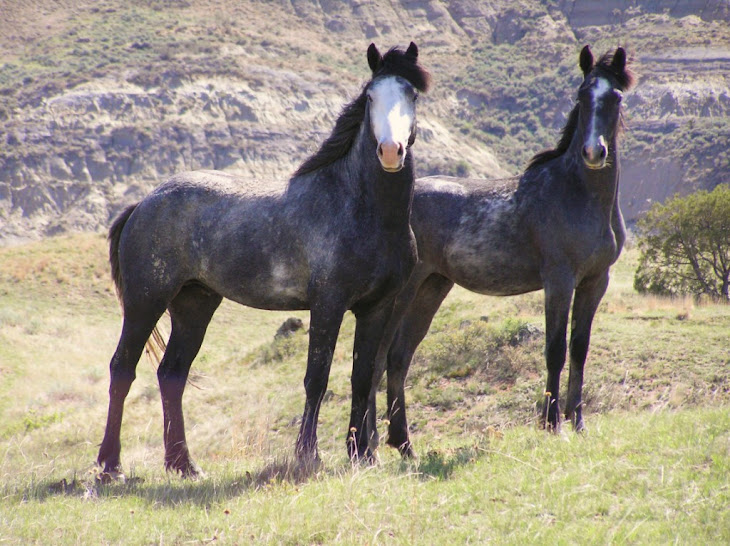
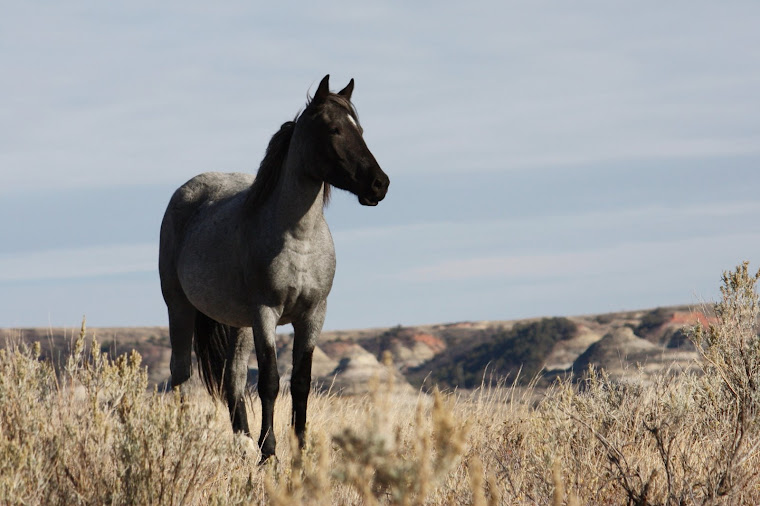
Spring of 2007, a dark colt opened his eyes for the first time, blinking at the sunshine streaming down on this land of buttes, juniper lined valleys, rock encrusted ridges, and grassy meadows. Theodore Roosevelt National Park had no meaning to him; this was just his world, his home, the place he would live out his life like all the other wild horses in his little band. Little did the blue colt know that his life would not be so simple, but for now he was intent on the only goal he must accomplish, standing up to nurse. His very first steps in life were pivotal in his survival. Stand and wobble on uncooperative legs to the sweet life-giving milk the pretty gray mare standing over him was patiently offering, or fall back to the ground, too weak to rise, succumb to the cold wind, and die. The dark colt took his first steps, reached his goal, drank in life, and grew in strength.
The first two weeks of a foal's life are tenuous with predators wanting to feed on their tender flesh and other stallions with flailing feet and biting teeth attempting to steal their dams during the foal heats. The land that provides shelter and nourishment to the band can be dangerous to foals running precariously on spindly legs through deep spring snow, hidden sink holes, and rocky gullies. Around 30% of newborn foals die in the first two weeks of life, but the blue colt was one of the lucky ones. With each day he grew stronger, soon adding bright green grass to his diet of milk.
Some time during his gestation, his dam, Winter, another cute red roan, maiden mare, Little Brother's Girl, and another gray mare, Rain, with her two fillies, were stolen from his sire, Thunder Cloud. Thunder Cloud had most likely been injured in the fight with Blaze, as he was now running with another bachelor, Copper, while he gained strength to fight again. The mares stayed several months with the feisty bay roan stud, Blaze, but by spring, his blue roan sire had gained enough strength to win them back. Unfortunately for the blue colt, at one year old, he was now also considered a threat and Thunder Cloud chased him away from the band before the blue colt could learn the ways of a wild stallion from his majestic sire.
The colt didn't have much choice but to join another young stallion who had been fiercely driven from his natal band. Though he was curious when he saw us, the two leggeds he would come upon on a regular basis, he was young and shy, and didn't want to get too close to us. He would hide behind the older, braver, bald faced colt. The bald faced black colt was a son of High Star out of the beautiful gray mare, Bella. His family had been taken by Embers, so he too needed company. We called the black, Baldy and the blue, Bashful, because of his shy behavior. It was already apparent that both would gray like their dams, though both had colored sires. They spent that summer and the next munching on the rich green grass and playing with other young stallions in the "bachelor" bands. The younger bachelors were often referred to as the "young guns" because they cruised the Park play fighting and looking for mischief. It was an idyllic life for a young horse; the valleys were filled with lush grass, water was abundant, and the young Bashful had not matured enough to worry about acquiring a band of his own. However, on a rainy day in October, life took another change for Bashful, forcing him to make another choice and another step into an unknown world
The helicopters hung low in the sky that day because of the overcast sky. As they came closer, the young stallions became frightened and started to run away from them. They could already see the forms of other horses moving away in the distance, up, out of the flats and onto Boicourt Ridge, then down again into Talkington valley. Though the helicopters were a constant reminder, looming behind with their rhythmic roaring, thumping like the heart in Bashful's chest, they didn't get too close, so the horses settled into a comfortable trot that was easy for the suckling foals who had joined them along with their dams. Most of the mares moved obediently up the trail toward the east ridge, not wanting to challenge the throbbing beasts above them. One pretty, light red roan mare, Pale Lady, was not to be intimidated; finding just the right gully to make her move, she suddenly broke from the herd and led her golden dun colt, Marquis, to safety. The pilots saw her go and one attempted to go after her, but not wanting to lose the others, they let her return to freedom. Along with several other wild horses, Bashful ran into the catch pen and into another chapter of his life.
The trip though the handling facility can be very frightening, but the Park people stayed quiet and as gentle as they could be to move the horses, one at a time, through the chutes. Bashful was so distracted by all the sights and sounds above the chute as he was weighed and measured that he barely felt the needle as Doc expertly drew blood for a Coggins test. All Bashful wanted was to get out of this tight spot; he hated being confined by the high solid walls and tried to focus on the blue sky ahead of him. It must have seemed like an eternity to him, but he was soon released to run down the ally to a large pen where his buddy, Baldy, was already munching on grass. They spent three days in the large wooden pen. The green grass soon turned to brown as their sharp hooves churned it into mud. They were given fresh hay, which was difficult to learn how to eat, but filled their nervous stomachs. Water was provided from a tank that they soon learned would not hurt them. They must have wondered what would happen next.
The horses destined for sale did not have long to wait; soon large trucks came and they were herded onto the noisy, smelly stock trailers. What was more frightening was the fact that they moved under the horses' feet. The rocking and bumping must have seemed to never end, but before long they were unloaded at the sales barn in Dickinson. Nothing could have prepared these wild horses for the noise and stress of sales day with hundreds of people flocking through the alleys to gaze at the horses and plan their purchases. Bashful was particularly nervous, as he hated confinement; his only comfort were his buddies in the pen with him. On October 23, 2009 Bashful made another step that would be pivotal to his survival.
Stepping into the sales ring itself, he moved around in a daze with all the noise and lights confusing him. He could see what seemed to be hundreds of the two legged creatures surrounding him and two in particular, flailing flags at him. He couldn't get his bearings; where were his buddies; where was the light leading him out of this chaos? Then he saw it, the light of day high above him. Bashful took a huge leap in order to reach the light, a jump like he had never attempted before, to take him away from this cacophony of sounds and pressure, away to freedom. He gathered his body, tucked his front legs under his chest, rocked back on his haunches, and pushed with all the power and adrenalin within him. Up he soared toward the light, but he didn't make it to freedom; the cruel cable fence caught his hind leg and he came crashing into the crowd of people. The people screamed with fright and Bashful screamed with pain as the cable slashed into his leg. He pawed and fought furiously to get free, but it was not to be. A man under him felt his fury; a vidiographer, Brad, put himself in jeopardy and reached in to pull the man to safety; another man, Dan, threw his jacket over Bashful's head to try to calm him, but Bashful was in too much pain and terror to be calmed. He fought the jacket and anything else in reach of his teeth until his blood left crimson stains where once enthusiastic buyers had been.
What would happen to Bashful now? How would they remove him from the cable fence? Not able to watch any more, I left my safe vantage point in the auctioneer's box. Sure that they would have to euthanize him to get him off the fence, I couldn't bear to see it. As people milled around outside the barn I wondered what Bashful's fate would be inside. As the ambulance rushed away with the injured man, I learned that Bashful was removed alive from the fence and was recovering from sedation far back in the lot, away from the crowd, away from the noise, away from the auctioneer's cry as he finished the sale in the back barn. I could hardly be happy for Bashful, since he had decided his fate when he took that leap. Injured and deemed a rogue, no one would want to take him home now.
At that instant, Michael Sparling, who I had known since he was a little kid, son of our good friends, a Parelli Professional trainer, came to me and said, "I want that horse!" I was a little taken aback and just said I didn't know if they would sell him right away but to go for it. When the decision was made to sell him, Michael stepped in and bought Bashful for $35. Michael had now made a step that would forever save Bashful from certain death. Michael had seen in him a challenge to turn a horse others had rejected into one others would one day admire. Since Michael was taking on a new job in Washington state and Bashful was too injured to travel, it was decided to leave him with Michael's dad, Dan, in Bismarck. Michael spent a little time, even one night, with Bashful before his job took him to Seattle. It must have been sad to leave the nervous, blue colt behind.
It happened that Dan was also a Parelli Natural Horsemanship trainer and, having wanted to buy one of the wild ones himself, he couldn't resist starting to see what he could do with Bashful. Since Bashful was injured and Dan had injured his foot, his first tactic was to just sit outside the pen. Little by little and with generous use of treats, Dan was able to win Bashful over. He broke goals down into simple steps Bashful could understand and rewarded him for the right reactions.
With Dan's patience he gained Bashful's trust to the point of giving every part of his body up to be petted and scratched. Like other TRNP horses removed that fall, Bashful had winter ticks and loved to be scratched where they had been feeding on him. This became a way to keep Bashful coming back for attention. The scratching led to playing confidence building games, which led to under saddle training.
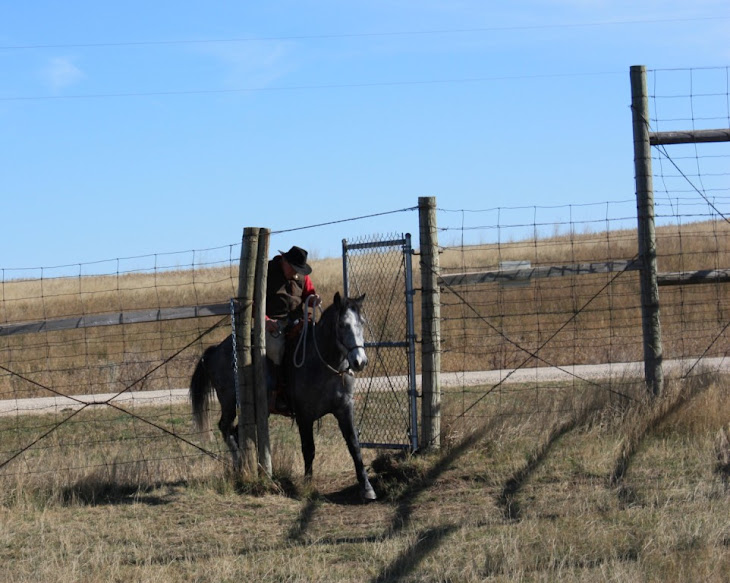
Over the summer Bashful became more and more reliable as a saddle horse. October 22, 2010 Dan rode Bashful back into the park. Bashful stepped with confidence onto the sun flooded ground where he was born, into the juniper lined valleys, across the rock strewn ridges, up the high buttes, and down the grassy meadows. He is in Dan's "herd of two" now and his future is bright.
The first two weeks of a foal's life are tenuous with predators wanting to feed on their tender flesh and other stallions with flailing feet and biting teeth attempting to steal their dams during the foal heats. The land that provides shelter and nourishment to the band can be dangerous to foals running precariously on spindly legs through deep spring snow, hidden sink holes, and rocky gullies. Around 30% of newborn foals die in the first two weeks of life, but the blue colt was one of the lucky ones. With each day he grew stronger, soon adding bright green grass to his diet of milk.
Some time during his gestation, his dam, Winter, another cute red roan, maiden mare, Little Brother's Girl, and another gray mare, Rain, with her two fillies, were stolen from his sire, Thunder Cloud. Thunder Cloud had most likely been injured in the fight with Blaze, as he was now running with another bachelor, Copper, while he gained strength to fight again. The mares stayed several months with the feisty bay roan stud, Blaze, but by spring, his blue roan sire had gained enough strength to win them back. Unfortunately for the blue colt, at one year old, he was now also considered a threat and Thunder Cloud chased him away from the band before the blue colt could learn the ways of a wild stallion from his majestic sire.
The colt didn't have much choice but to join another young stallion who had been fiercely driven from his natal band. Though he was curious when he saw us, the two leggeds he would come upon on a regular basis, he was young and shy, and didn't want to get too close to us. He would hide behind the older, braver, bald faced colt. The bald faced black colt was a son of High Star out of the beautiful gray mare, Bella. His family had been taken by Embers, so he too needed company. We called the black, Baldy and the blue, Bashful, because of his shy behavior. It was already apparent that both would gray like their dams, though both had colored sires. They spent that summer and the next munching on the rich green grass and playing with other young stallions in the "bachelor" bands. The younger bachelors were often referred to as the "young guns" because they cruised the Park play fighting and looking for mischief. It was an idyllic life for a young horse; the valleys were filled with lush grass, water was abundant, and the young Bashful had not matured enough to worry about acquiring a band of his own. However, on a rainy day in October, life took another change for Bashful, forcing him to make another choice and another step into an unknown world
The helicopters hung low in the sky that day because of the overcast sky. As they came closer, the young stallions became frightened and started to run away from them. They could already see the forms of other horses moving away in the distance, up, out of the flats and onto Boicourt Ridge, then down again into Talkington valley. Though the helicopters were a constant reminder, looming behind with their rhythmic roaring, thumping like the heart in Bashful's chest, they didn't get too close, so the horses settled into a comfortable trot that was easy for the suckling foals who had joined them along with their dams. Most of the mares moved obediently up the trail toward the east ridge, not wanting to challenge the throbbing beasts above them. One pretty, light red roan mare, Pale Lady, was not to be intimidated; finding just the right gully to make her move, she suddenly broke from the herd and led her golden dun colt, Marquis, to safety. The pilots saw her go and one attempted to go after her, but not wanting to lose the others, they let her return to freedom. Along with several other wild horses, Bashful ran into the catch pen and into another chapter of his life.
The trip though the handling facility can be very frightening, but the Park people stayed quiet and as gentle as they could be to move the horses, one at a time, through the chutes. Bashful was so distracted by all the sights and sounds above the chute as he was weighed and measured that he barely felt the needle as Doc expertly drew blood for a Coggins test. All Bashful wanted was to get out of this tight spot; he hated being confined by the high solid walls and tried to focus on the blue sky ahead of him. It must have seemed like an eternity to him, but he was soon released to run down the ally to a large pen where his buddy, Baldy, was already munching on grass. They spent three days in the large wooden pen. The green grass soon turned to brown as their sharp hooves churned it into mud. They were given fresh hay, which was difficult to learn how to eat, but filled their nervous stomachs. Water was provided from a tank that they soon learned would not hurt them. They must have wondered what would happen next.
The horses destined for sale did not have long to wait; soon large trucks came and they were herded onto the noisy, smelly stock trailers. What was more frightening was the fact that they moved under the horses' feet. The rocking and bumping must have seemed to never end, but before long they were unloaded at the sales barn in Dickinson. Nothing could have prepared these wild horses for the noise and stress of sales day with hundreds of people flocking through the alleys to gaze at the horses and plan their purchases. Bashful was particularly nervous, as he hated confinement; his only comfort were his buddies in the pen with him. On October 23, 2009 Bashful made another step that would be pivotal to his survival.
Stepping into the sales ring itself, he moved around in a daze with all the noise and lights confusing him. He could see what seemed to be hundreds of the two legged creatures surrounding him and two in particular, flailing flags at him. He couldn't get his bearings; where were his buddies; where was the light leading him out of this chaos? Then he saw it, the light of day high above him. Bashful took a huge leap in order to reach the light, a jump like he had never attempted before, to take him away from this cacophony of sounds and pressure, away to freedom. He gathered his body, tucked his front legs under his chest, rocked back on his haunches, and pushed with all the power and adrenalin within him. Up he soared toward the light, but he didn't make it to freedom; the cruel cable fence caught his hind leg and he came crashing into the crowd of people. The people screamed with fright and Bashful screamed with pain as the cable slashed into his leg. He pawed and fought furiously to get free, but it was not to be. A man under him felt his fury; a vidiographer, Brad, put himself in jeopardy and reached in to pull the man to safety; another man, Dan, threw his jacket over Bashful's head to try to calm him, but Bashful was in too much pain and terror to be calmed. He fought the jacket and anything else in reach of his teeth until his blood left crimson stains where once enthusiastic buyers had been.
What would happen to Bashful now? How would they remove him from the cable fence? Not able to watch any more, I left my safe vantage point in the auctioneer's box. Sure that they would have to euthanize him to get him off the fence, I couldn't bear to see it. As people milled around outside the barn I wondered what Bashful's fate would be inside. As the ambulance rushed away with the injured man, I learned that Bashful was removed alive from the fence and was recovering from sedation far back in the lot, away from the crowd, away from the noise, away from the auctioneer's cry as he finished the sale in the back barn. I could hardly be happy for Bashful, since he had decided his fate when he took that leap. Injured and deemed a rogue, no one would want to take him home now.
At that instant, Michael Sparling, who I had known since he was a little kid, son of our good friends, a Parelli Professional trainer, came to me and said, "I want that horse!" I was a little taken aback and just said I didn't know if they would sell him right away but to go for it. When the decision was made to sell him, Michael stepped in and bought Bashful for $35. Michael had now made a step that would forever save Bashful from certain death. Michael had seen in him a challenge to turn a horse others had rejected into one others would one day admire. Since Michael was taking on a new job in Washington state and Bashful was too injured to travel, it was decided to leave him with Michael's dad, Dan, in Bismarck. Michael spent a little time, even one night, with Bashful before his job took him to Seattle. It must have been sad to leave the nervous, blue colt behind.
It happened that Dan was also a Parelli Natural Horsemanship trainer and, having wanted to buy one of the wild ones himself, he couldn't resist starting to see what he could do with Bashful. Since Bashful was injured and Dan had injured his foot, his first tactic was to just sit outside the pen. Little by little and with generous use of treats, Dan was able to win Bashful over. He broke goals down into simple steps Bashful could understand and rewarded him for the right reactions.
With Dan's patience he gained Bashful's trust to the point of giving every part of his body up to be petted and scratched. Like other TRNP horses removed that fall, Bashful had winter ticks and loved to be scratched where they had been feeding on him. This became a way to keep Bashful coming back for attention. The scratching led to playing confidence building games, which led to under saddle training.
Over the summer Bashful became more and more reliable as a saddle horse. October 22, 2010 Dan rode Bashful back into the park. Bashful stepped with confidence onto the sun flooded ground where he was born, into the juniper lined valleys, across the rock strewn ridges, up the high buttes, and down the grassy meadows. He is in Dan's "herd of two" now and his future is bright.
Tuesday, October 26, 2010
MORE TRAINING FOR HAWK
It is now October of 2010, one year after the horses of Theodore Roosevelt National Park were rounded up, separated, and 77 sold at public auction. Unfortunately, we have lost track of some of them, but many of their owners are keeping in contact with us and telling us how well the horses are doing.
I will be telling the stories of some of these other horses in future blogs. One of special interest is Bashful, the horses who leaped out of the sales ring in Dickinson, but before I tell his story, let me continue Hawk's tale of progress.
As I related in the last post, Hawk is learning to be brave by playing with all the obstacles I have set up for him in the arena. Besides the can and bottle box, the bridge, the rubber tub, feed sack, and step stool, he has learned to jump over a rail and back through cones. Each new thing become easier as he gains confidence, though the tarp on the ground is still a little frightening to him. We are still working toward loading into the two-horse trailer too. He happily loads and backs out of the stock trailer, but the other one is much more enclosed. I have no doubt that he will be fine with the two-horse once he gets used to it, since he seems to be OK with almost anything once he has a chance to check it out.
Two big steps that he has taken recently are letting the farrier trim his feet and wearing a saddle. With gradual, patient, calm work, Hawk got to where I could handle his rear feet. It was hard for me, because I didn't want to take a chance of being kicked, but I had to stuff the fear deep inside and portray only confidence and trust as I asked for each foot. He has only had the farrier trim him twice since the time of his gelding, and both times he has stood quietly once the farrier pets him a little and shows him he's a friend.
After wearing the surcingle several times, the English saddle was easy. I was able to get him to smell of it and just placed it on him back. So far, the stirrups are tied up, but shortly he will learn to carry a western saddle with the stirrups flapping. I'm quite sure it won't be a big deal to him because he had carried the surcingle around the round pen with the saddle blanket flapping in the wind and he has not minded it. Those of us who are training these horses have found that they are very tolerant when introduced to new things patiently.
I am anxious to be able to ride Hawk next year, once he turns three. He has become such a willing partner who responds with he slightest cue. I have no doubt that his responsiveness with carry over into his under-saddle work and he will continue to be a joy to work with through the coming years.
See photos belo w post
I will be telling the stories of some of these other horses in future blogs. One of special interest is Bashful, the horses who leaped out of the sales ring in Dickinson, but before I tell his story, let me continue Hawk's tale of progress.
As I related in the last post, Hawk is learning to be brave by playing with all the obstacles I have set up for him in the arena. Besides the can and bottle box, the bridge, the rubber tub, feed sack, and step stool, he has learned to jump over a rail and back through cones. Each new thing become easier as he gains confidence, though the tarp on the ground is still a little frightening to him. We are still working toward loading into the two-horse trailer too. He happily loads and backs out of the stock trailer, but the other one is much more enclosed. I have no doubt that he will be fine with the two-horse once he gets used to it, since he seems to be OK with almost anything once he has a chance to check it out.
Two big steps that he has taken recently are letting the farrier trim his feet and wearing a saddle. With gradual, patient, calm work, Hawk got to where I could handle his rear feet. It was hard for me, because I didn't want to take a chance of being kicked, but I had to stuff the fear deep inside and portray only confidence and trust as I asked for each foot. He has only had the farrier trim him twice since the time of his gelding, and both times he has stood quietly once the farrier pets him a little and shows him he's a friend.
After wearing the surcingle several times, the English saddle was easy. I was able to get him to smell of it and just placed it on him back. So far, the stirrups are tied up, but shortly he will learn to carry a western saddle with the stirrups flapping. I'm quite sure it won't be a big deal to him because he had carried the surcingle around the round pen with the saddle blanket flapping in the wind and he has not minded it. Those of us who are training these horses have found that they are very tolerant when introduced to new things patiently.
I am anxious to be able to ride Hawk next year, once he turns three. He has become such a willing partner who responds with he slightest cue. I have no doubt that his responsiveness with carry over into his under-saddle work and he will continue to be a joy to work with through the coming years.
See photos belo w post
Friday, July 23, 2010
THE SIGNIFICANCE OF A NAME by Bonnie Overby

"Why can't you be like other women and prefer diamonds over horses?" This was Soldier Man's response from half way around the globe in Afghanistan when he learned that I had, indeed, purchased a wild horse.
Earlier, our grown daughter had accurately remarked, "Dad won't be happy, but he won't be surprised either."
"Well, I guess this will have to be both your birthday and Christmas present, " he said, knowing that my birthday had been the day before and that no gift was in the mail. My husband has always had trouble buying me gifts, probably because I don't feel the need for traditional stuff women like to receive.
Enthusiastically I replied, "This is a wonderful gift; thank you so much!"
I could hear the softening in his voice when he said, "Well, it's going to have to be your birthday present, anyway."
"Just be thankful it's a wild horse I'm chasing and not wild men!" I grinned over the phone.
When Soldier Man left for his one year tour of duty in Afghanistan, my friend, Mya, took it upon herself to make sure I would not sit home and sulk. Weather permitting, the two of us were off riding our horses whenever schedules and family allowed us to get away. During the summer, I noticed in an equine paper that there was going to be a wild horse auction in the fall some time. I called up Mya, "Mya, please convince me that I should not go to this auction."
"I think it's a great idea! That will be my birthday present to you."
Okay, it didn't take much to convince me, but we were going to leave the trailers at home. We eagerly waited for it to be announced when the auction would be. October 23rd, the day before my birthday, I arranged for a replacement at work for that weekend. " Remember, we're not taking a trailer with us, Mya, this is just a fun get-away weekend, we'll think of it as entertainment. Together, we could not think of a better way to spend a weekend.
"Bonnie, I'm hauling my trailer down. I know you, you'll buy a horse and I'll have to come all the way home and back again to get it. Besides, even if you don't buy one, maybe I can help someone else out by hauling for them."
We got to the auction ring several hours before the start of the sale. We carefully looked over each pen, made notes of horses we would like to own, visited with other enthusiastic and curious onlookers, and marveled at the unique colors represented by the herd. Could we manage one of these beautiful bachelor stallions and did we have the appropriate area for them? It was a no-brainer that we would be taking a least one apiece home, if not more, but decided we probably should stick with one of the younger horses.
We sat in the crowded arena nervous and excited for the bidding of the wild horses to start; we had an opportunity to take home a registered Quarter Horse weanling for next to nothing, but we wanted one of the mysterious, often forbidden animals that we had viewed from a distance in the Park. The bidding was competitive, and we realized , if we were serious, we would need to spend more than we initially planned, if the dreams we had formed were to come true. In the end, Mya purchased Cinnamon, a one year old pretty little sorrel as well as a weanling filly, Lindbo, a five month old gray overo filly with one blue eye, neither of which had been on our list to buy. I purchased number 364, Sugar, a red roan yearling that reminded me of a filly I had owned and lost to colic.
These horses were raw beauties that we felt honored and a little scared, for more than one reason, to be taking home. Nightfall had come but in our excitement we had no problem staying awake on the long drive home. We strategically planned how we would house these horses and honor our commitment to care for them, these powerful creatures that had neither known barriers nor the gentle touch of human hands. We wondered and laughed over what we had gotten ourselves into this time.
"Do you realize, Mya, that we purchased Cinnamon and Sugar?" We hadn't until this moment in our drive home. We both knew coincidences didn't happen without reason. "It was meant to be!"
When the North Dakota Badlands Horse Registry was up and running, I wanted to choose a name that reflected my horse and the significance of the event. I wanted to keep her Park name and chose "Autumn" to reflect one of the best birthday events ever, and "Diamond" in remembering the conversation with my husband. Thus "Autumn's Sugar Diamond was formed.

Afterward: My husband recently returned from Afghanistan. He was pleasantly surprised that my wild horse didn't seem wild at all. One of his concerns for me was that I would get hurt working with her. I found this very sweet since this was the first time in 27 years that he had voiced worry about me getting hurt around horses.
Monday, June 7, 2010
THE FERAL HORSE STUDY AT TRNP - YEAR 2
Wow, where do I start to report on the study? We have been so busy working there and working with our youngsters here at home that I have not had time to write about it. We are now over half done with the study this season and have had many interesting experiences with the wild ones. Mike started doing observations of the bands in early April. By the second week, Henry and I and our new Horse Project Technicians, Heidi, from Chicago, and Al, a local retired rancher, had joined him and were covering the park on foot and on horseback. Two more, Veterinary students from Colorado State, joined us in mid May. Alanna and Lindsey will work full time with Heidi, while Al, Henry, and I will work part time.
This year, besides the location, weather conditions, names and number in the band, 20 minute activity log, spatial chart, and all occurrence activity log, each mare will be evaluated once per week for body condition, injection site reactions, and expected date of foaling. New foals are reported as soon as they are found so that foal heats and next year's foaling dates can be calculated. Fortunately, we have not seen anything to indicate that foals of the treated mares are any less viable. The harsh winter and normal breeding activities of the horses have contributed to some foal mortality in the first 2 weeks of life, but is to be expected in a wild herd of this size. As of June 4 we had 27 live foals and had lost 6. We fully expect to lose a few more, as in that first 2 weeks, many perils face the delicate young foals; once the foal is stronger and has weathered it's dam's foal heat, it usually does well.
I do not have good photos of all the foals yet, because new moms are not very willing to share their new babies with anyone, but I will list the mares and their foals here and add as many photos as I can at the bottom of the blog.
In Little Sorrel's band we have three new fillies: Trouble's Girl's filly, Feather, Freckles' filly, Shawl, and Little Gray's filly, Dream.
Red Face has Molly with a filly, Dove, Flame with a filly, Bandanna, and Pretty Girl with a filly, Papoose. Singlefoot has Frosty with a colt, Wrangler, Lightning with a filly, Latigo, and Crow with a filly, Eagle. Eagle had not been seen the day after we found her.
Wind Canyon has a filly, Chaps, out of Betty Blue.
Embers has a colt, Arrowhead, out of Bella.
Blaze has a filly, Sky, out of Little Brother's Girl and a colt out of Domino. We fear the colt is a lethal white so may not live long.
Cocoa has a filly, Maiden, out of Busy Blue and a colt, Brave, out of Autumn. Stormy lost a filly that looked just like Cocoa Puff from last year.
Sidekick has a colt, Peace Pipe, out of Snip's Gray, a colt, Guitar, out of Embers' Girl and another colt, Stetson, out of Orphan Blue.
Mystery has a colt, Half Moon, out of Lacey and a filly, Tepee, out of Shale.
Copper has a colt, Wing, out of Angel, and a filly, Cowgirl, out of Bentonite. Both foals should be by the black stallion who died last summer, High Star.
Gary has a cute filly out of Twister, named Dancer.
Brutus has Tomahawk, a colt out of Maddie by Silver.
Thunder Cloud has a filly out of his mare, Winter, named Boots and and colt (we think) out of Pale Lady and High Star, named Reata.
We have seen some interesting and even surprising behavior out of the horses, but the most surprising happened June 2. Henry and I walked out to Sheep Butte because it had rained that morning and spoiled our plans to ride. We came upon Cocoa, Blaze, Red Face, Singlefoot and his "body guard" Satellite, Brutus, and Copper all on the flats below us. As we did our observations on Cocoa and his band, they climbed the steep side of Sheep Butte. We worked the double band of Red Face and Singlefoot next, keeping a close eye on Crow, who had just foaled and was being guarded by Satellite. He was trying to herd her closer to the double band while protecting her from Blaze. She would have none of it and just wanted to be left alone. Satellite's attempts to herd her met with kicks and constant circling of the new foal. As the double band moved farther to the north, he finally got her to move closer to them, but then she was too close and he prevented her from joining them.
While this was going on, Blaze also moved farther north, so we walked out along the top of the butte, around Cocoa's band now standing on top, and settled in on a ledge overlooking the whole of Lindbo Flats. While working Blaze, Brutus, and Copper's bands, Satellite continued to try to get Crow to follow the double band. Twice Blaze went out to challenge him, both stallions sniffing, posturing, squealing, stomping and spinning away with a kick. Crow was at last left at peace along the fence with Satellite, a little frustrated, still standing guard. Then, with Blaze and Brutus with easy access to Crow, Satellite took off the follow the double band, his need for his familiar place in their band overcoming his desire to keep a mare. Surprisingly, both Brutus and Blaze moved off and left poor, tired, Crow alone.
As we were busily working all the bands before us and starting the last band, Copper, I picked up the phone to call Al and let him know what bands we had finished. Having a hard time getting good signal on my cell phone, I turned my head to the right and caught a glimpse of a horse close behind me-very close. I dropped the phone as I turned to see Cocoa and all his band standing in a semi-circle about 20 feet from us. We had been so busy we didn't see or hear them coming, but now it seemed that had those pesky humans where they wanted them. It almost seemed that they wanted to push us off the ledge, but of coarse they didn't. They were just curious as to what we were doing. While we finished our observation of Copper they settled in to rest, the babies stretching out to soak up the warm sun.
I suggested we do another observation on them since Stormy should have been on the first day of her foal heat. Henry didn't even get his cover sheet completed before Cocoa started to show interest in Stormy. We watched in amazement as Cocoa courted Stormy with soft nickers and touches. While standing 12 feet from us he completed the breeding. We were a little concerned that they would run right into us, but they politely finished and went on to feeding. We had been wondering whether we should slide off the ledge, but we didn't want to miss any of the action, so I continued to snap pictures through the whole event. The only problem was that they were so close that I couldn't get much in my lens, but I have the photos to prove another amazing tale of the wild horse of TRNP.
This year, besides the location, weather conditions, names and number in the band, 20 minute activity log, spatial chart, and all occurrence activity log, each mare will be evaluated once per week for body condition, injection site reactions, and expected date of foaling. New foals are reported as soon as they are found so that foal heats and next year's foaling dates can be calculated. Fortunately, we have not seen anything to indicate that foals of the treated mares are any less viable. The harsh winter and normal breeding activities of the horses have contributed to some foal mortality in the first 2 weeks of life, but is to be expected in a wild herd of this size. As of June 4 we had 27 live foals and had lost 6. We fully expect to lose a few more, as in that first 2 weeks, many perils face the delicate young foals; once the foal is stronger and has weathered it's dam's foal heat, it usually does well.
I do not have good photos of all the foals yet, because new moms are not very willing to share their new babies with anyone, but I will list the mares and their foals here and add as many photos as I can at the bottom of the blog.
In Little Sorrel's band we have three new fillies: Trouble's Girl's filly, Feather, Freckles' filly, Shawl, and Little Gray's filly, Dream.
Red Face has Molly with a filly, Dove, Flame with a filly, Bandanna, and Pretty Girl with a filly, Papoose. Singlefoot has Frosty with a colt, Wrangler, Lightning with a filly, Latigo, and Crow with a filly, Eagle. Eagle had not been seen the day after we found her.
Wind Canyon has a filly, Chaps, out of Betty Blue.
Embers has a colt, Arrowhead, out of Bella.
Blaze has a filly, Sky, out of Little Brother's Girl and a colt out of Domino. We fear the colt is a lethal white so may not live long.
Cocoa has a filly, Maiden, out of Busy Blue and a colt, Brave, out of Autumn. Stormy lost a filly that looked just like Cocoa Puff from last year.
Sidekick has a colt, Peace Pipe, out of Snip's Gray, a colt, Guitar, out of Embers' Girl and another colt, Stetson, out of Orphan Blue.
Mystery has a colt, Half Moon, out of Lacey and a filly, Tepee, out of Shale.
Copper has a colt, Wing, out of Angel, and a filly, Cowgirl, out of Bentonite. Both foals should be by the black stallion who died last summer, High Star.
Gary has a cute filly out of Twister, named Dancer.
Brutus has Tomahawk, a colt out of Maddie by Silver.
Thunder Cloud has a filly out of his mare, Winter, named Boots and and colt (we think) out of Pale Lady and High Star, named Reata.
We have seen some interesting and even surprising behavior out of the horses, but the most surprising happened June 2. Henry and I walked out to Sheep Butte because it had rained that morning and spoiled our plans to ride. We came upon Cocoa, Blaze, Red Face, Singlefoot and his "body guard" Satellite, Brutus, and Copper all on the flats below us. As we did our observations on Cocoa and his band, they climbed the steep side of Sheep Butte. We worked the double band of Red Face and Singlefoot next, keeping a close eye on Crow, who had just foaled and was being guarded by Satellite. He was trying to herd her closer to the double band while protecting her from Blaze. She would have none of it and just wanted to be left alone. Satellite's attempts to herd her met with kicks and constant circling of the new foal. As the double band moved farther to the north, he finally got her to move closer to them, but then she was too close and he prevented her from joining them.
While this was going on, Blaze also moved farther north, so we walked out along the top of the butte, around Cocoa's band now standing on top, and settled in on a ledge overlooking the whole of Lindbo Flats. While working Blaze, Brutus, and Copper's bands, Satellite continued to try to get Crow to follow the double band. Twice Blaze went out to challenge him, both stallions sniffing, posturing, squealing, stomping and spinning away with a kick. Crow was at last left at peace along the fence with Satellite, a little frustrated, still standing guard. Then, with Blaze and Brutus with easy access to Crow, Satellite took off the follow the double band, his need for his familiar place in their band overcoming his desire to keep a mare. Surprisingly, both Brutus and Blaze moved off and left poor, tired, Crow alone.
As we were busily working all the bands before us and starting the last band, Copper, I picked up the phone to call Al and let him know what bands we had finished. Having a hard time getting good signal on my cell phone, I turned my head to the right and caught a glimpse of a horse close behind me-very close. I dropped the phone as I turned to see Cocoa and all his band standing in a semi-circle about 20 feet from us. We had been so busy we didn't see or hear them coming, but now it seemed that had those pesky humans where they wanted them. It almost seemed that they wanted to push us off the ledge, but of coarse they didn't. They were just curious as to what we were doing. While we finished our observation of Copper they settled in to rest, the babies stretching out to soak up the warm sun.
I suggested we do another observation on them since Stormy should have been on the first day of her foal heat. Henry didn't even get his cover sheet completed before Cocoa started to show interest in Stormy. We watched in amazement as Cocoa courted Stormy with soft nickers and touches. While standing 12 feet from us he completed the breeding. We were a little concerned that they would run right into us, but they politely finished and went on to feeding. We had been wondering whether we should slide off the ledge, but we didn't want to miss any of the action, so I continued to snap pictures through the whole event. The only problem was that they were so close that I couldn't get much in my lens, but I have the photos to prove another amazing tale of the wild horse of TRNP.
Sunday, April 4, 2010
MORE DANCING WITH HAWK
Hawk is a master at the dance, an attentive, respectful gentleman, graceful yet powerful, wary yet trusting.
It's hard to explain just how much Hawk has worked his way into my heart. Seeing him slowly learning that he can look to me for security and leadership even though his instincts tell him to run from me, builds my respect and appreciation of him more and more every day. He will always have a special place in my heart and I look forward to the day that I can ride him back in the park where he once ran free. What a wonderful privilege that will be for all of us who have taken home one of these very special horses.
The weather and melting snow made it impossible to keep Hawk and Hail outside, so Henry built me a small round pen inside the barn that is accessible from the stalls. Since both horses had been loading in and out of the trailer for several weeks, it was no problem to get them loaded for the short trip to the barn. Now they have an outside pen, nice dry stalls in the barn, and the little round pen to play in. I was afraid Hawk would be more skittish inside the barn because of all the stuff, the sound of the tin roof, and the cats running everywhere, but he has actually been more relaxed. He will flinch if a cat jumps onto the plastic bedding bags we have strewn around outside the round pen, but he stands his ground.
In the five months I have been working with Hawk, I have been so amazed with his intelligence and his willingness to do whatever it is I ask of him, even though it is against his instincts. We are perfecting our games every day. He now lets me touch him with ropes, towels, blankets, plastic, nylon, etc. He is so attentive and sensitive that the slightest cue of touching just the hair of his side sends him away from the pressure in a pivot on the forehand. I only have to point in the direction I want him to go to get him to circle the pen or reverse directions and a wagging finger backs him up. He's not brave enough to step on the blanket on the floor yet, but he will approach, sniff, and chew it.
After all these months of working on trust, he will finally let me rub inside and out on all four legs. Though he immediately puts it down again, I can get him to lift any foot just by touching it and telling him, "Up." Earlier in his training, he was so extremely afraid of the thicker ropes. I think he really thought they were snakes, because he would let me touch him all over with the lariat or the lash of the training stick, but he would cringe when I touched him with the lead rope. Now he lets me touch him all over with it and a long soft cotton rope that I use to work with his feet. Once I was able to touch him with the cotton rope, I could reach around a leg to make a loop around it. By twisting the long ends together, I could keep the loop around the pastern and ask him to lift the leg. That way he learned to lift the foot without my having to get too close to it. I also use this method to get him used to having a leg restrained. I wrap the rope around a pastern and then ask him to move around the pen. When I say, "Whoa," I put pressure on the rope and I don't release him until he stops dead still. I thought that would really panic him, but he didn't panic and learned quickly to stop and stand.
He has learned to give to the pressure of the halter when I wrap the rope around his hind quarters and ask with the rope for him to make a complete 360. In preparation for vaccinations, he is learning to relax his neck when I pinch on his neck and poke him with a blunt substitute needle. I hope it works! We are about 10 days from "G day" so we are having friends come and pretend to be the vet. We have decided to have the vet come here so that we don't have to put Hawk though the trauma of the vet clinic until he has had more experience outside his little world of our barnyard.
Hawk has a long way to go to be trusting of all his two-legged friends, but he now comes to me and drops his head letting me know he wants to be near me and get the scratches he's learned to love. I couldn't ask for a more engaging dance partner. Who needs Dancing with the Stars when I can dance with a Hawk!
It's hard to explain just how much Hawk has worked his way into my heart. Seeing him slowly learning that he can look to me for security and leadership even though his instincts tell him to run from me, builds my respect and appreciation of him more and more every day. He will always have a special place in my heart and I look forward to the day that I can ride him back in the park where he once ran free. What a wonderful privilege that will be for all of us who have taken home one of these very special horses.
The weather and melting snow made it impossible to keep Hawk and Hail outside, so Henry built me a small round pen inside the barn that is accessible from the stalls. Since both horses had been loading in and out of the trailer for several weeks, it was no problem to get them loaded for the short trip to the barn. Now they have an outside pen, nice dry stalls in the barn, and the little round pen to play in. I was afraid Hawk would be more skittish inside the barn because of all the stuff, the sound of the tin roof, and the cats running everywhere, but he has actually been more relaxed. He will flinch if a cat jumps onto the plastic bedding bags we have strewn around outside the round pen, but he stands his ground.
In the five months I have been working with Hawk, I have been so amazed with his intelligence and his willingness to do whatever it is I ask of him, even though it is against his instincts. We are perfecting our games every day. He now lets me touch him with ropes, towels, blankets, plastic, nylon, etc. He is so attentive and sensitive that the slightest cue of touching just the hair of his side sends him away from the pressure in a pivot on the forehand. I only have to point in the direction I want him to go to get him to circle the pen or reverse directions and a wagging finger backs him up. He's not brave enough to step on the blanket on the floor yet, but he will approach, sniff, and chew it.
After all these months of working on trust, he will finally let me rub inside and out on all four legs. Though he immediately puts it down again, I can get him to lift any foot just by touching it and telling him, "Up." Earlier in his training, he was so extremely afraid of the thicker ropes. I think he really thought they were snakes, because he would let me touch him all over with the lariat or the lash of the training stick, but he would cringe when I touched him with the lead rope. Now he lets me touch him all over with it and a long soft cotton rope that I use to work with his feet. Once I was able to touch him with the cotton rope, I could reach around a leg to make a loop around it. By twisting the long ends together, I could keep the loop around the pastern and ask him to lift the leg. That way he learned to lift the foot without my having to get too close to it. I also use this method to get him used to having a leg restrained. I wrap the rope around a pastern and then ask him to move around the pen. When I say, "Whoa," I put pressure on the rope and I don't release him until he stops dead still. I thought that would really panic him, but he didn't panic and learned quickly to stop and stand.
He has learned to give to the pressure of the halter when I wrap the rope around his hind quarters and ask with the rope for him to make a complete 360. In preparation for vaccinations, he is learning to relax his neck when I pinch on his neck and poke him with a blunt substitute needle. I hope it works! We are about 10 days from "G day" so we are having friends come and pretend to be the vet. We have decided to have the vet come here so that we don't have to put Hawk though the trauma of the vet clinic until he has had more experience outside his little world of our barnyard.
Hawk has a long way to go to be trusting of all his two-legged friends, but he now comes to me and drops his head letting me know he wants to be near me and get the scratches he's learned to love. I couldn't ask for a more engaging dance partner. Who needs Dancing with the Stars when I can dance with a Hawk!
Subscribe to:
Posts (Atom)