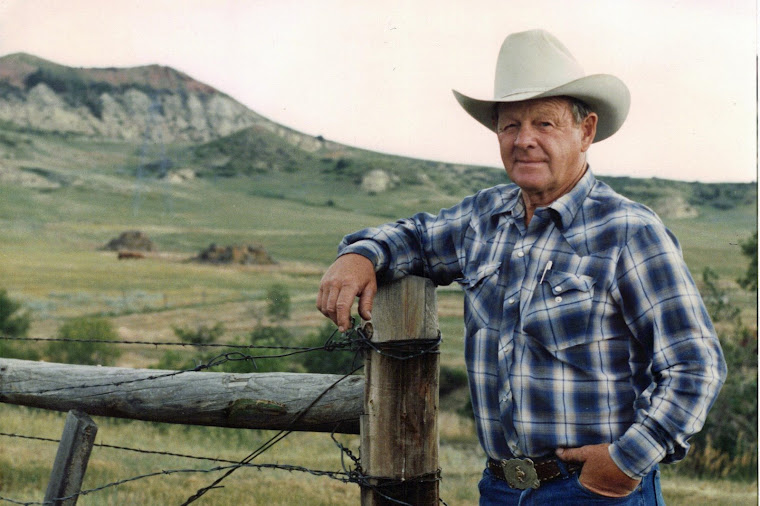
Welcome to the blog by Marylu Weber

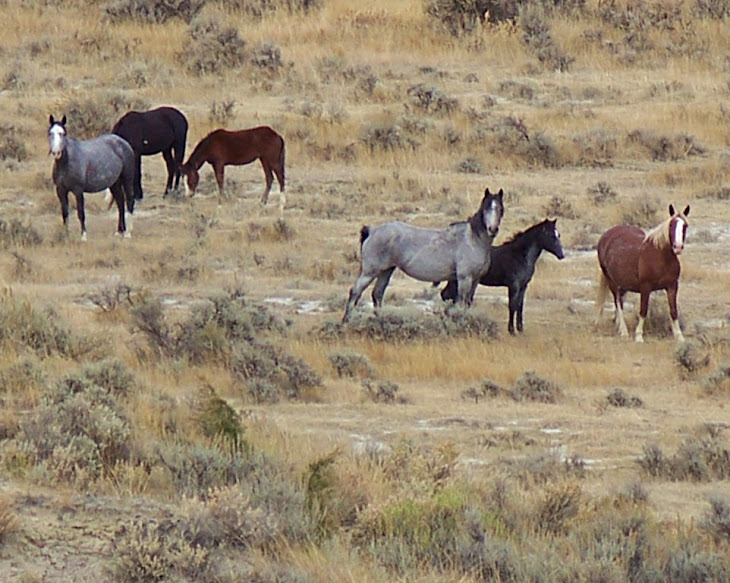
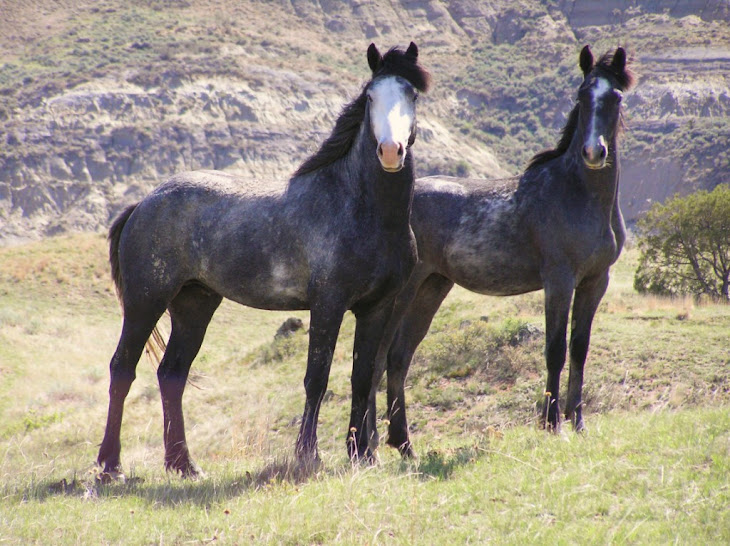
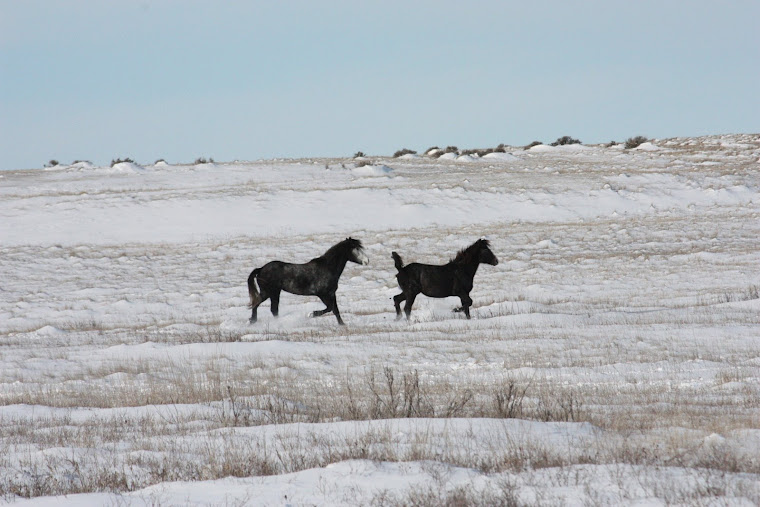
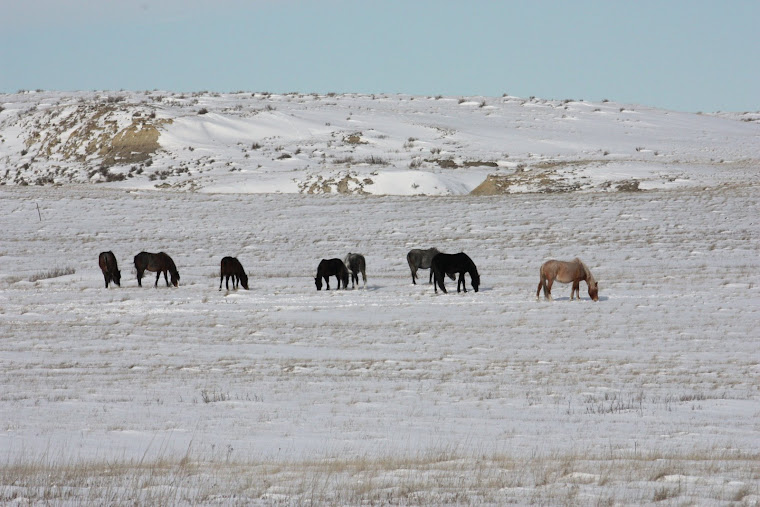
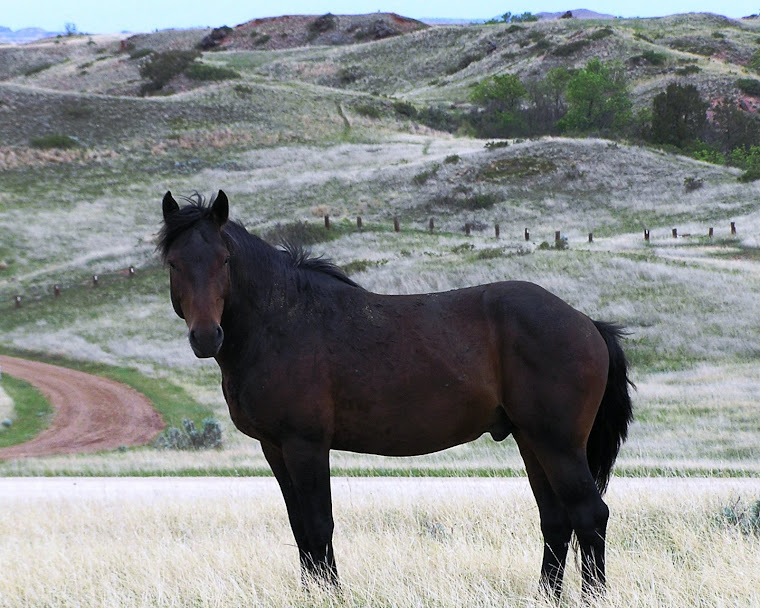
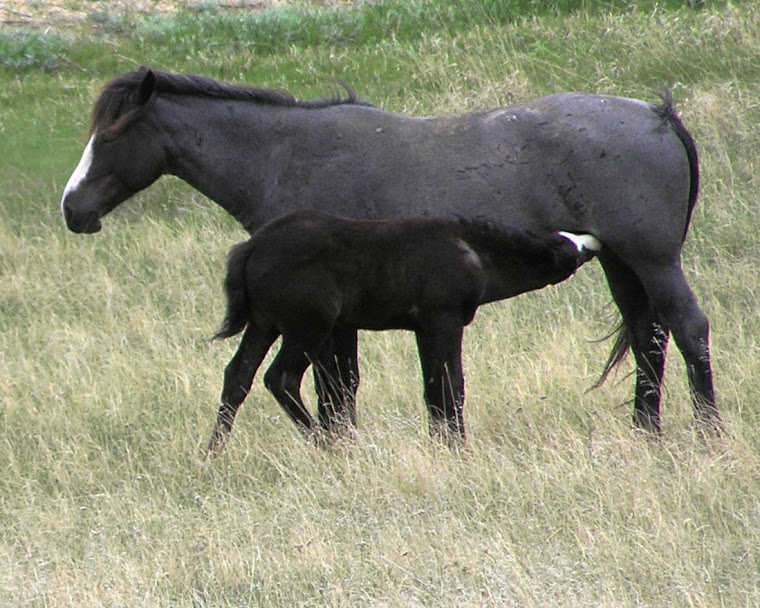
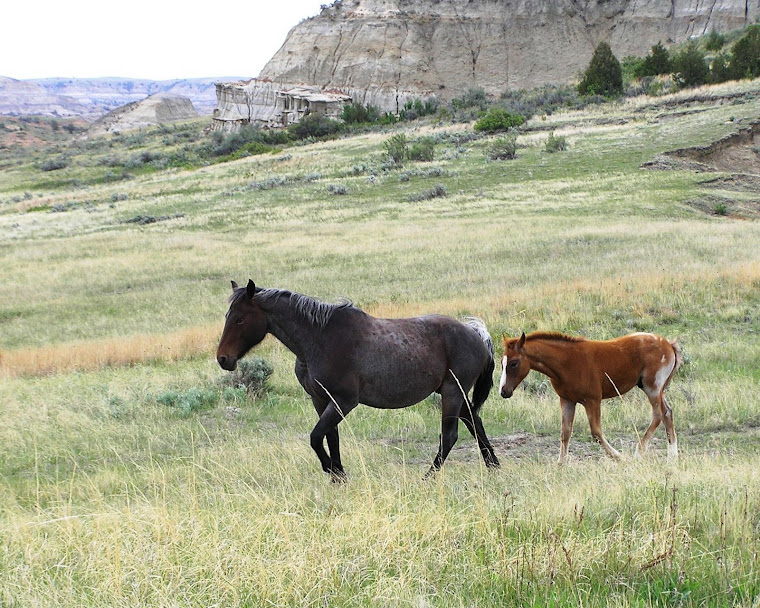
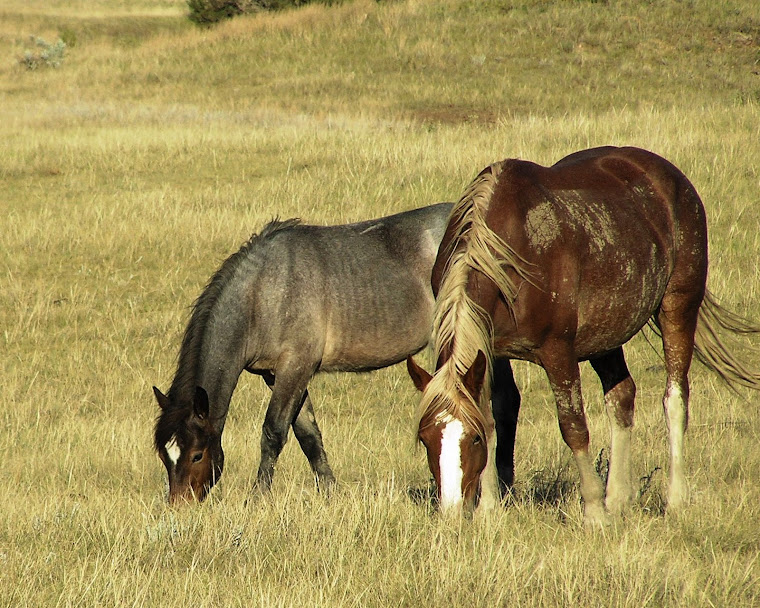
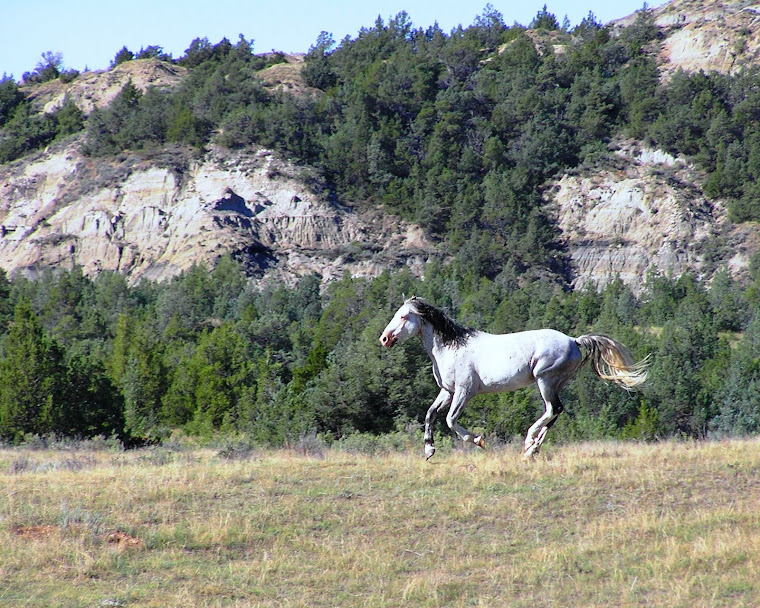
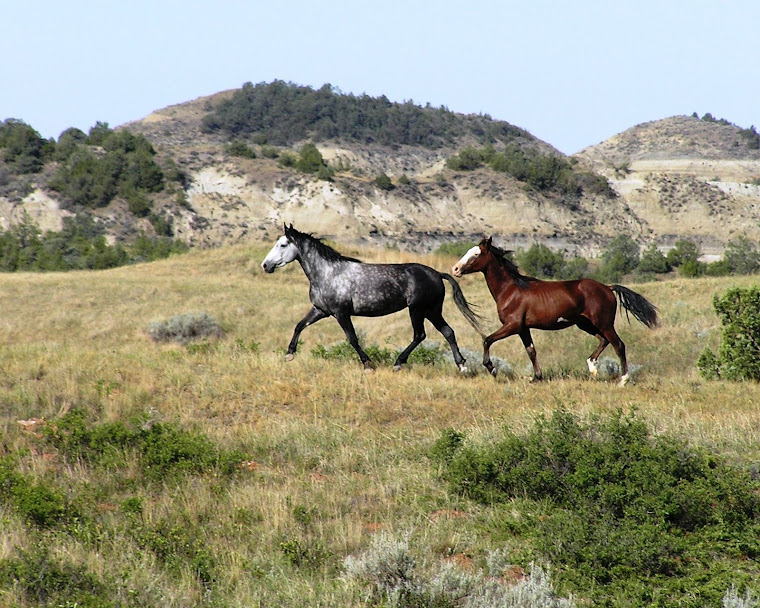
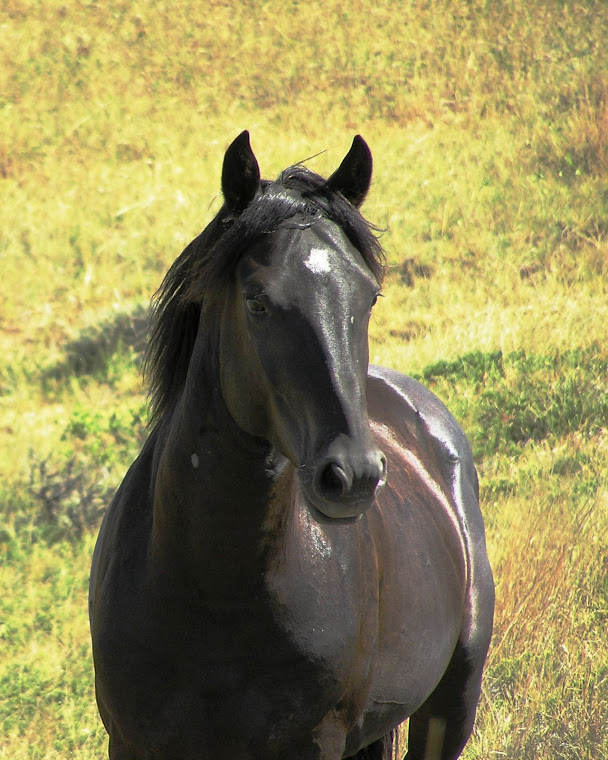
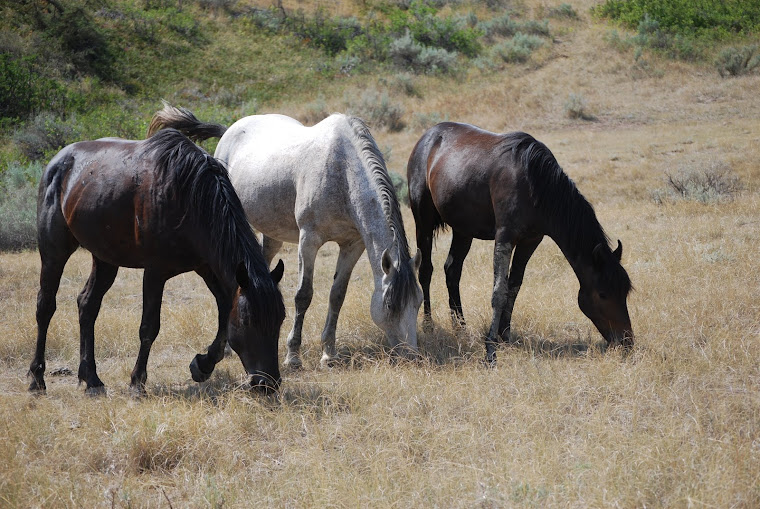
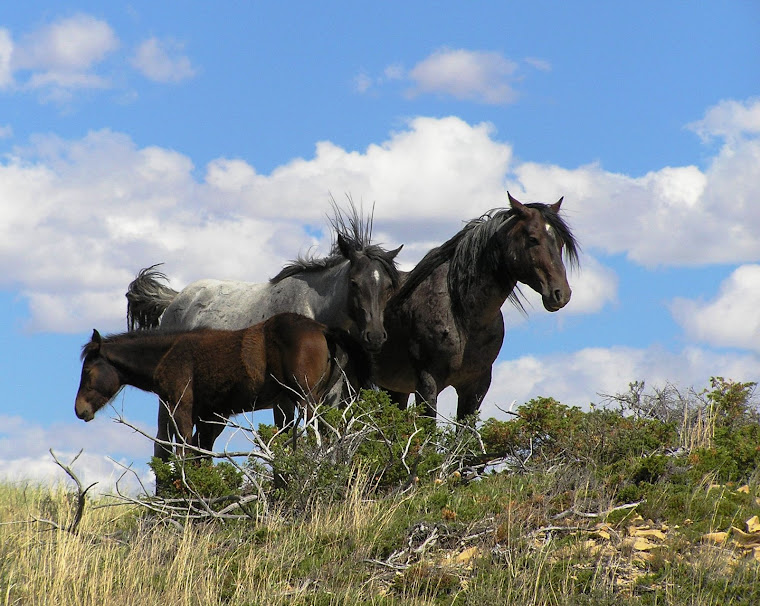
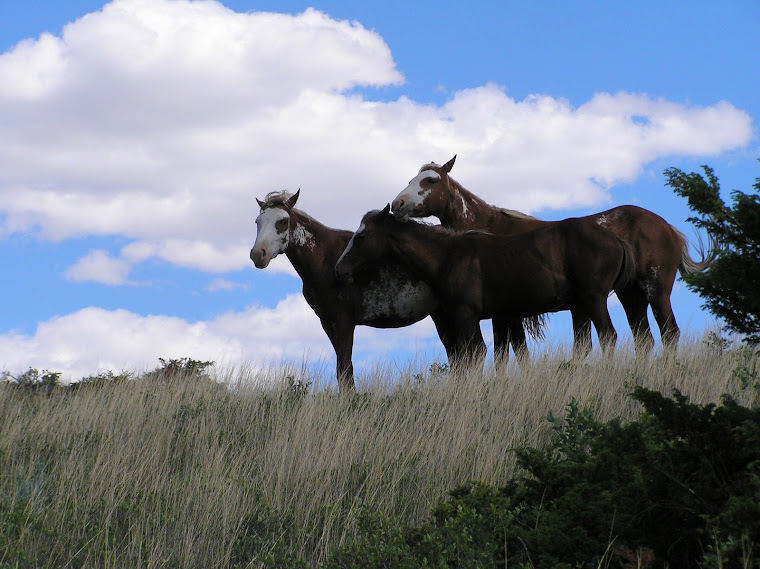
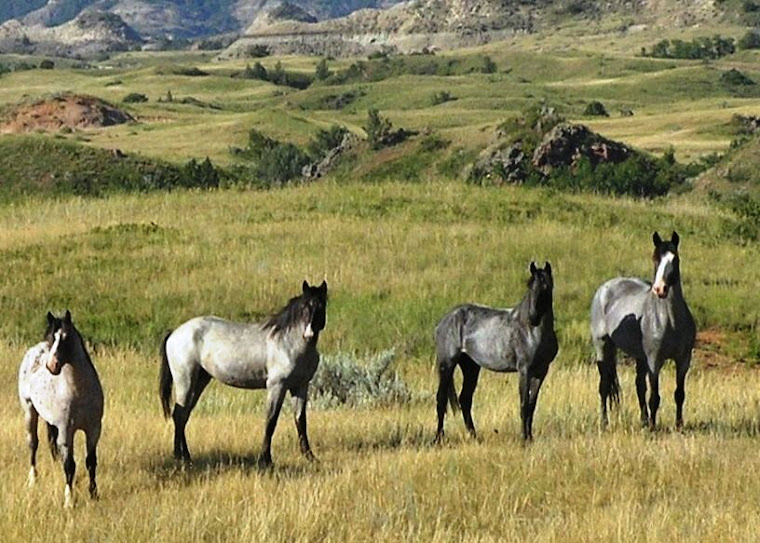
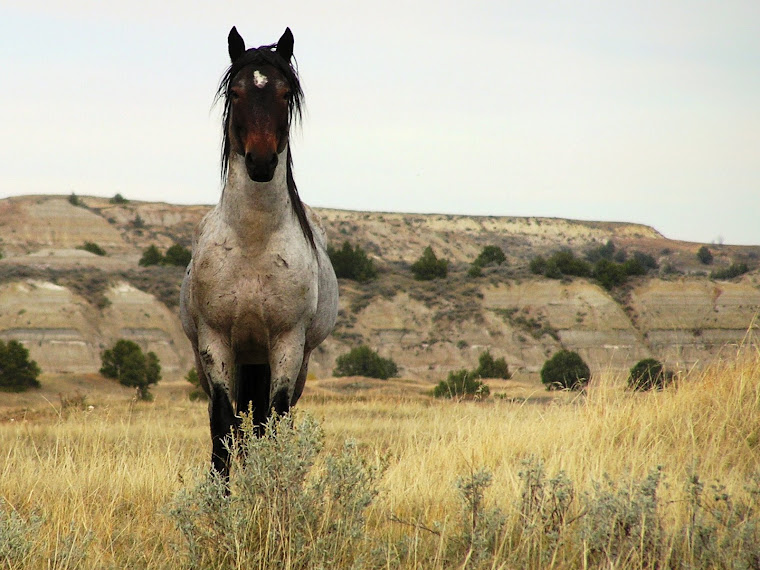
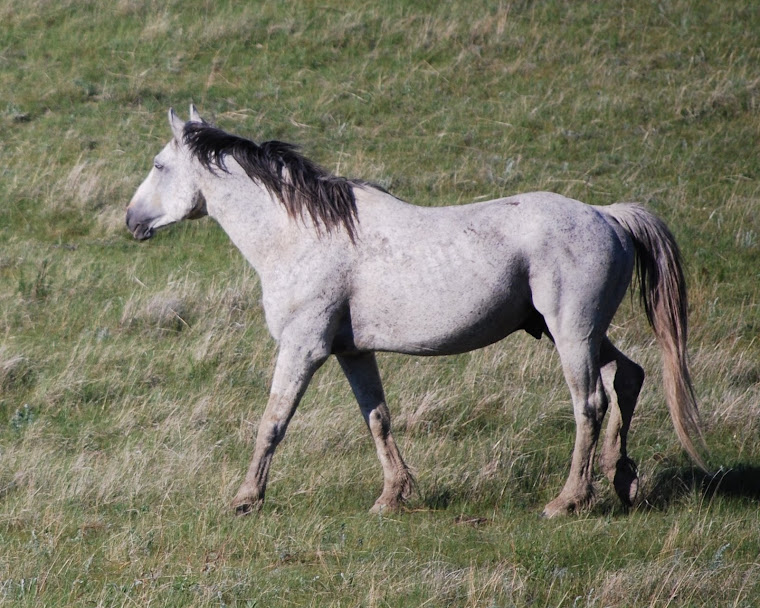
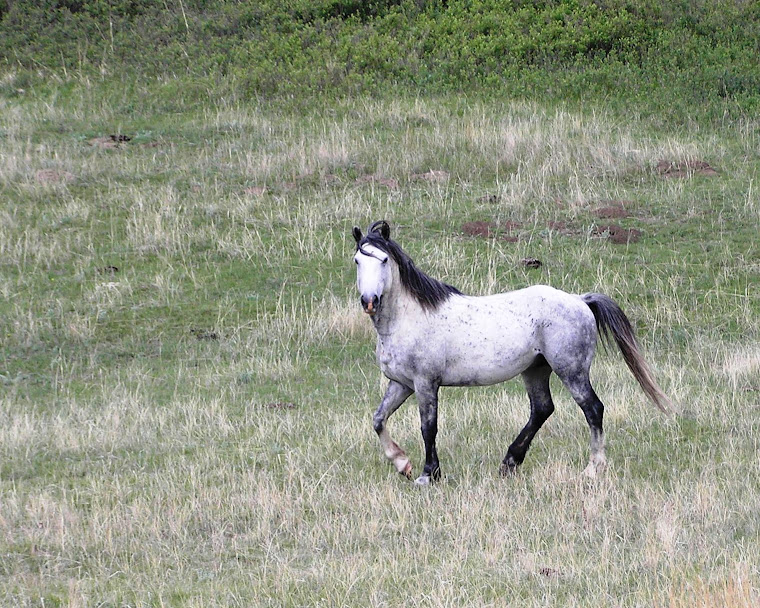
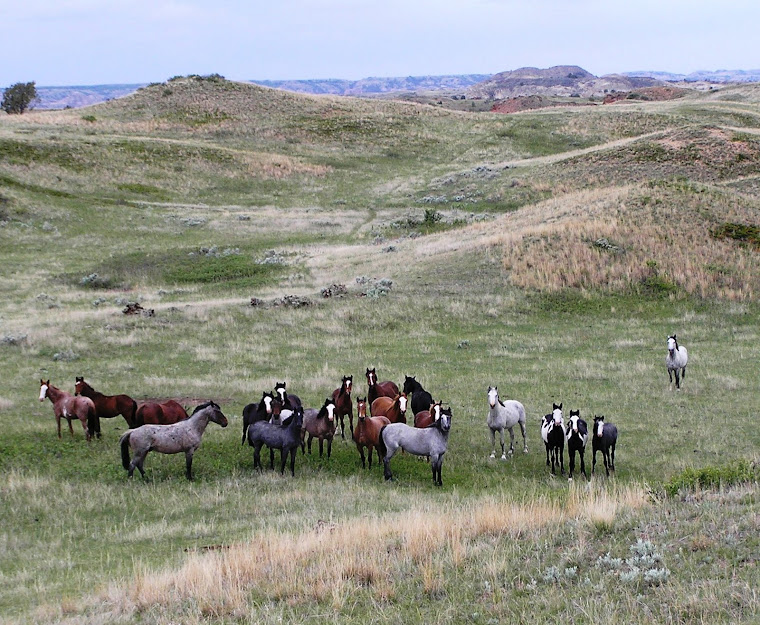
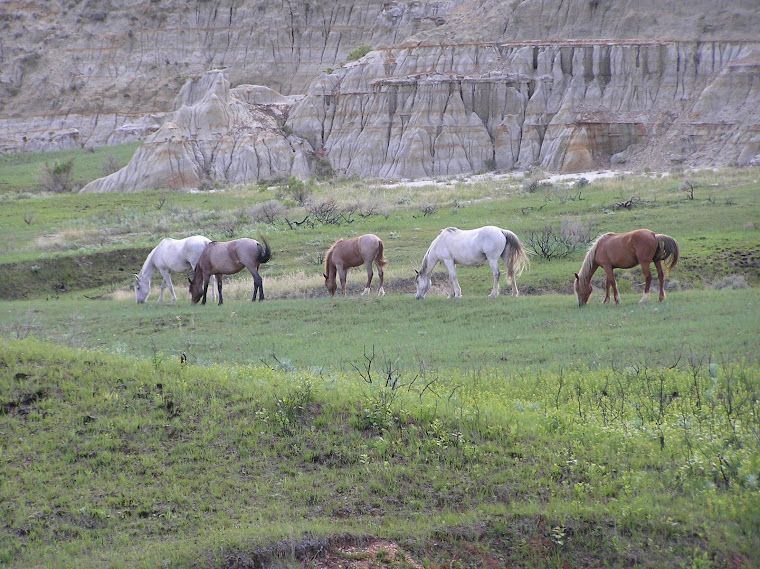
This blog contains dozens of posts and photos of the wild, feral horses from the park and some of the people involved with them. These horses are owned by the park and not managed by the BLM. To see most of the photos, scroll to the bottom of this page. To find earlier posts of interest go to Blog Archive on the right and follow this guide:

For some of the history of the horses and people involved:

2008
Wild Horses of Theodore Roosevelt National Park
2009
Tom Tescher's Story
The Boicourts
The Roundup

The Sale

For some of the special horses' stories:
2008
Fire's Story
Whisper's Story
2009
Our Boys Come Home
Dancing with a Wild Horse
Whit's Story
2010

The Dance Continues
Training Update

More Dancing with Hawk
More Training for Hawk
Bashful, the Steps of His Life

Post of Interest:
2009
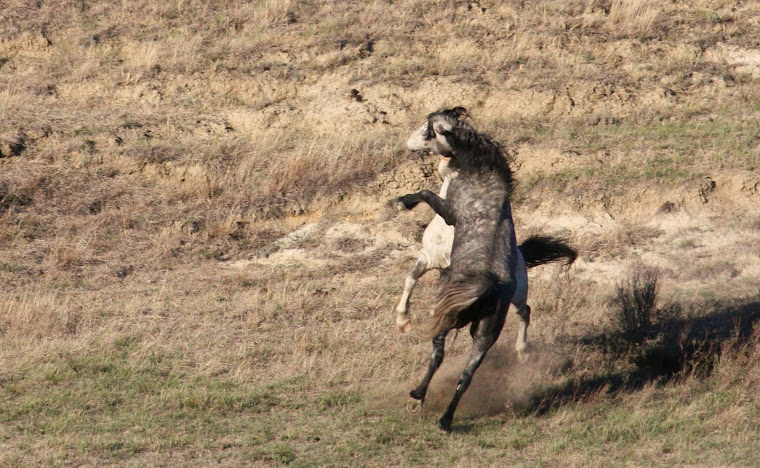
Four Stallion Fight
Hazards, Did I Mention Hazards?

Thursday, July 31, 2014

    From L to R are Bonnie and Sugar, Dan and Bashful, Whit and Teddy, Kristin and Baldy, Henry and Fire, Marylu and Hawk, Mya and Hail, and Bob and Crow.  These horses were all born in the park.


The 2nd Annual Reunion Ride will be based out of Sully Creek State Park just south of Medora, ND, September 5-7.   Come join us for trail rides in the park and other activities.  You don't need to be riding a North Dakota Badlands Horse, you don't even need a horse.  Just come and meet others who love the horses from Theodore Roosevelt National Park.  Go to the Facebook page: North Dakota Badlands Horse for more information.  Be sure to sign up for the event on that page.

Sunday, July 27, 2014

THE GREAT ESCAPE

Tracking in the snow
The Sieben Four Adventure

By Marylu Weber

At one mile above sea-level, winter comes early to the Sieben Live Stock Company ranch nestled in the foothills of the Big Belt Mountains of Montana.  The four wild young stallions that had been purchased from Theodore Roosevelt National Park had been gelded and kept together in a large corral separated from the ranch headquarters so they could adjust to ranch life gradually.  They had plenty to eat and drink, but something in their hearts must have been drawing them back to the wild.  One day in early winter while having lunch at Cooper Hibbard’s house, Iain Davis saw that Sage, Hawthorne, and Peace Pipe were on the wrong side of the fence around their corral.  Tomahawk was still inside but running back and forth trying to figure out how the others had gained freedom.  Iain watched as Tomahawk too jumped the narrow space between the wooden gate and the gatepost and all four galloped up the hill behind the corrals.  When a couple of them dropped their heads to graze Iain hoped they would stay on the sunny slope about ¾ of a mile from the corral complex. With any luck he could somehow lure them back into the corrals, but the young horses had other ideas and within the hour disappeared over a high ridge into what was wild, rugged breaks filled with all sorts of wildlife, including bears and mountain lions.

Iain took two bales of good hay up the mountain to entice the horses back or maybe even catch them there.  Hawthorne, always the tamer of the four, came with the others behind him.  Iain was able to get within 100 yards of them, but it was too much pressure for the wilder horses and they all ran farther into the rough country.  As more snow came Iain was able to track the horses but never get close to them.  Several times he saw the tracks of mountain lions following the horses.  Fascinated with the mountain lion tracks and how the dust from the barren areas the cat had walked on would drop off onto the snow tracks, Iain took his phone out and took a few pictures of the large tracks.  As he crouched there in the snow, intrigued with the size of the tracks and the dust encircling each indentation from the cat’s pads, he noticed that the wind was quickly blowing the dust away.  The cat must have been in that very spot only minutes earlier.  Maybe it wasn't such a good idea to be crouching in the snow so soon after the cat had passed that way; maybe he was being watched at that very moment.  After all a pocket knife wasn't much of a weapon against a mountain lion.  With the hair standing up on the back of his neck and being much more aware of possible hiding spots for the big cats, Iain hiked back out to the safety of the ranch, deciding the wild horses would have to fend for themselves or come back to the safety of the corrals on their own.


It was almost three months since the horses had run away to freedom.  Efforts to bring them back were scrapped because of the weather and the difficulty in traversing the back country in winter.  Would the ranchers ever see those four ungrateful equines again?  They could travel for 100s of miles if they wanted to.  Would they starve or become dinner for the mountain lions?  It was anyone’s guess, but toward spring some hunters reported seeing horses not too far from the corral complex so this time Iain baited his corral with hay, a mare in heat, and later another gelding.  The adventurous boys seemed to long for the company of the mare and her companion and gradually came back to the corral.  Seeing that they were hanging around by the corrals Iain was able to sneak in, open the corral gate, run down the fence line, and hide so that he could close the gate again if he was lucky enough to have them go in.  One by one the wary young horses entered the corral and went to eating the delicious hay.  The adventure was over and, though a little thin, they had all survived winter blizzards, pawing through drifts for forage, eating snow for water, and the teeth of the big cats.  It was no different than life in the Badlands of North Dakota to the four wild horses, but the cowboys on the ranch were not going to take any more chances, the four were separated and put with four groups of domestic saddle horses so that they were not drawn to the wild country any more. 
 That was the end of their adventure, but not the end of their story.
showing the size of this track

showing the dust in the track

The horses disappeared over the hills to the right.

Wednesday, July 23, 2014

THE SIEBEN FOUR
By Marylu Weber
This story started in 2008 when Whit Hibbard, a fourth generation rancher and Low-Stress Livestock Handling Instructor, came to Theodore Roosevelt National Park to share his livestock handling knowledge with the staff of the park.  I had been invited to that workshop and had the privilege of riding with Whit when he gathered and penned 10 of the wild TRNP horses.  At that time, a young blue colt came up to him and sniffed his hand.  I told him he had to buy that colt and Whit took the bait.  (Read “Whit’s Story” on this blog)  Whit has never regretted that decision and calls Teddy one of the best ranch horses he has ever ridden.  Teddy is admired and coveted by all the horsemen of the ranch.  Whit’s nephew, Cooper Hibbard, says of Teddy, “He’s like riding a dream!” 

After the suggestion by Whit, it was Cooper’s decision whether or not to add four more North Dakota Badlands Horses to Sieben Live Stock Company’s cavey of ranch horses.  Whit told me Cooper would be calling me, but as busy as a “CEO in training” of a large ranch can be, he didn't call me until the night before the sale.   Based solely on Teddy and what his Uncle Whit had said about the TRNP horses, Cooper was willing to take a chance and buy four wild 2 or 3 year old stallions, sight unseen.  Though I knew the horses well, I wasn’t feeling entirely comfortable picking prospective ranch horses from the 103 being sold.  When I asked Cooper how he would get them home, he mentioned a hauler named Steve.  Surprising Cooper that I knew of Steve, I told him I had talked to Steve on the phone earlier that summer and liked him immediately.  Knowing he was a experienced horseman and a good judge of horses I enlisted his help in picking horses for Cooper.  While looking at the horses in the pens, Steve asked me if I knew Billie Rase;  Billie was a lifelong friend of mine and someone I had always loved and admired.  It turned out that Steve was married to Billie’s niece.  Any friend of Billie’s was a friend of mine, so now I trusted him implicitly with helping me pick horses!  Steve graciously gave me his list of 5 stallions he thought would make good ranch horses based on conformation and attitude in the pens. 

Without knowing it, Steve picked four sons of Sidekick: Sage, a two year old gray overo, and Peace Pipe, a three year old gray out of Snip’s Gray, Hawthorne, a two year old, and Guitar, a three year old, both roans out of Embers’ Girl.  His fifth pick was a sharp minimal sorrel overo, Bandit, out of Dolly by Cocoa.  These were favorites of mine too, so I would bid to try to purchase four of the five.  I was able to win the bid on both Sage and Peace Pipe with Sage going a little high and Peace Pipe a little low.   I was at even money when Hawthorne came in.  The bids quickly rose over my allotted budget, but I really liked the 2 year old colt’s docile disposition, so kept bidding and won him at $200 over budget.  I was not to be so lucky with Bandit; his coat still glistened and he was already showing a lot of muscular development.   Soon, at $1400, the winning bid was far beyond my budget.  The young lady sitting beside us at the sale had set her heart on buying Guitar and I was not about to deprive her of that handsome young roan, so I quickly went to Steve to see what he thought of 3 year old Tomahawk who was just about to come into the ring.  Steve gave his approval and I was able to fill out the order of four horses with Tomahawk.  Steve was going to haul the four to Billings, MT yet that night, rest them overnight, and meet Cooper in the morning.  I was a little nervous that I had gone $250 over budget, and that Cooper had never seen the horses; I wondered what he would think of them.  The next day, when we were almost back home to Rapid City, I received a call from Cooper.  He said he was “blown away” at the quality of the horses and thanked me for buying them for the ranch.  The four young stallions were moving on to another stage of their lives.

Cooper drove back to Cascade, MT with the four young horses that would one day be part of the cavey of saddle horses serving the large cattle and sheep ranch his great, great grandfather, Henry Sieben, had established in 1909.  He was excited to show the horses to the other three horsemen who would each work with one of the young stallions, gentling it and training it under saddle.  Upon seeing the four stallions, the other men were also impressed with the four and marveled at how well built they were for horses bred and raised without human intervention.   Whit Hibbard’s wife, Felice, a horse enthusiast and rider since an early age, loved Whit’s Teddy.  She said, if the new colts were a fraction as good as Teddy they would be great ranch horses.  She had been studying the Phanfare.com photo files of sale horses and was excited to see that some of her favorites were among the ranch’s new horses; she admired the sturdy build, good bone, and large healthy feet of the wild ones. 

The first order of business was to get the four young stallions gentle enough to be gelded.  Each man was to pick one stallion to work with.  Iain chose the young gray overo, Sage.  Brice liked the way Tomahawk was built; he would one day look like his sire, Silver.  Cooper had his choice of Peace Pipe, Hawthorne.  He liked them both, but Hawthorne walked right up to him so he figured Hawthorne picked him.  Brent was to train Peace Pipe.   The three other colts were pretty easy to get the first halter on, but Tomahawk was not very trusting.  He was finally caught, sedated, and all were gelded, then all four were turned out in a large paddock to heal and get accustomed to life on the Montana ranch.


Bryce and Tomahawk
Cooper and Hawthorne
Iain and Sage

Brent and Peace Pipe

Tuesday, July 22, 2014

NDBH Achieves Tax-exempt Status


As one of the members of the Board of Directors, I am pleased to announce that North Dakota Badlands Horse Registry has achieved federal tax-exempt status.  With that status, we will be able to be more active in the goals of educating the public about Theodore Roosevelt National Park and it's horses, promoting, and protecting, and finding homes for the wild horses.  We have a lot of exciting plans, so watch here and on our Facebook page: North Dakota Badlands Horse, for updates and announcements.

One of our projects is to make a Guide to all the horses of TRNP that people can buy and use to identify the horses when they visit the park.  We will let you all know when that is available.

Happy Trails to you, and go visit the Park.  You will not be disappointed!

Saturday, June 7, 2014

Behavior report from the 2009-2013 research done on the TRNP wild horses

  If you copy and paste this address you should be able to get the article published by the research team.


http://www.appliedanimalbehaviour.com/article/S0168-1591(14)00135-X/abstract

THE NORTH DAKOTA BADLANDS HORSE, WILD HORSE OF THEODORE ROOSEVELT NATIONAL PARK


(an overview by Marylu Weber)

             Horses have run wild and free in the upper plains of North America for centuries, having migrated north from South America and south from Canada.  Native Americans oral history differs on when they acquired the horse, but when the plains tribes began using horses in their daily living, it changed their lifestyle forever.  They changed from primarily farmers, living along rivers and streams, growing the majority of their food and hunting small game, to a nomadic people who could follow the bison herds.  They became experts at gentling and training horses which they called Sunka Wakan, “sacred dogs,” a gift from the Creator.  Horses were used as valuable currency when trading with one another.

When Europeans came exploring the region, they reported seeing great herds of wild horses.  They also brought with them, horses from the east that had been imported to the new world.  Europeans gradually spread across the plains, bringing not only imported saddle horses, but draft horses to work the farms that sprung up on the rich land and along rivers and railroads.   The US Cavalry built forts to protect new settlers and their claims.  Since horses were still the main means of transportation, thousands of horses flooded the northern plains.  Wars brought the need for even more horses, so remount operations were scattered throughout the region and horses were raised or captured to send back east as mounts for soldiers, many of them finding their way to Europe for “The Great War.”

During that time of pioneering and settlement of the plains, it was discovered that the Badlands of Dakota Territory may be treacherous to cross, but were abundant with rich native grasses that nourished wildlife and wild horses.  Those same native grasses could support great herds of domestic cattle and the horses the ranchers needed to handle them.  Two of the most famous of those ranchers were the Marquis De Mores, a rich young Frenchman, and the young Theodore Roosevelt. 

The Marquis settled in what is now SW North Dakota where the Little Missouri River and the railroad intersected.  He named the town of Medora after his wife; their summer house still stands on a hill overlooking the river.  Importing vast numbers of cattle, he built a packing plant with visions of making millions raising, slaughtering, packing in ice, and shipping beef back east, thus leaving out the middlemen.  To handle the cattle and the daily chores of his ranch, he imported Thoroughbred and Percheron horses which he bred to the tough little local ponies.  At one point he bought 250 ponies that had been confiscated from the Lakota Chief, Sitting Bull.   Using his swift horses, he even started a stage coach service from Medora to Deadwood.  There was no doubt the Marquis was a visionary whose dreams were clever and daring. 

The young Theodore Roosevelt came to the Badlands to hunt, but wound up turning to ranching also.  He loved the vastness of the prairie and credited the years he spent there with building his strength and making him the man he later became.   In his writings he told about seeing wild horses running free in the Badlands.  He built two ranches in the Badlands, the Elk Horn Ranch and the Maltese Cross Ranch.

Though these men and hundreds of others thought Dakota Territory was the perfect place to raise cattle and horses, with its miles of tall grass reaching from horizon to horizon, they could not imagine the devastation and toll on livestock that could be caused by drought, and a series of mighty winter storms.  After one particularly brutal winter, one cowboy reported riding for miles that spring and not seeing a living animal.  The Marquis moved back to France, later to be killed in Africa and Theodore Roosevelt went on to become the 26th President of the United States.

That year drove hundreds out of the Badlands, but other immigrants, eager to build a life for their families in the new world, came to replace them.  At one time, every quarter of land in the Badlands was homesteaded.   These homesteaders brought their saddle and work horses with them as well as cattle and sheep, but Mother Nature would also drive many of them out of the Badlands with the droughts of the 1930s.   Livestock by the thousands were lost or abandoned by farmers and ranchers retreating to more fertile lands back east. 
As trains, automobiles, and tractors became more numerous, there was no more need for horses.  By then the Badlands of North Dakota were only sparsely inhabited, so thousands of horses, either migrated or were driven there from other parts of the country.  The bison were long gone, so the horses settled into the rough breaks of the Little Missouri River from Canada to South Dakota, mingling and breeding with the herds of wild horses that still remained.  The weak died off and the hardy, that could survive the harsh conditions of drought and blizzards flourished.  However their reprieve was not long lived.  Ranchers did not appreciate horses, which required more forage than a cow, eating up the grass on the open range.  Horses were indiscriminately hunted down with saddle horses, pickups, or airplanes.  Many were killed outright and thousands were loaded onto railcars to be made into fertilizer in the east.  The lucky ones were bought off the trains by individuals who appreciated the strong, hardy “Northern Horses.”

By the mid-1950s there were very few horses running wild in the Badlands.  Theodore Roosevelt National Park had been established in 1947 and a boundary fence was being constructed to keep wildlife in and domestic stock out.  As that fence went up, a few small bands of horses were inadvertently being trapped inside the park.  These bands were made up of wild horses and domestic horses from area ranches.  Since the National Park Service looked on horses as trespass animals, the horses were again hunted and many of them removed.   There was a large roundup conducted by area ranchers in 1954 in which almost all the horses were removed from the park.  Most of them were domestic horses that had escaped from ranches or were part of domestic strings that had run in the park for decades.

Tom Tescher, a local rancher and well known rodeo cowboy and his brothers had watched and wrangled the wild horses for years.  Along with more positive public sentiment toward wild horses, Tom was instrumental in the park’s decision to keep a few horses in the park.  The decision was made to keep a small “demonstration herd” to represent the wild horses that Theodore Roosevelt had observed when he lived in the area.  Tom began to document the horses, keeping detailed records of births and deaths and which stallions held which mares.  Tom and his brothers helped the park round up the horses periodically so that numbers could be kept to around 50-100.  Culled animals were sometimes sold to individuals and rodeo contractors, but most of them went to slaughter.

My husband and I started riding in the park in the early 80s and fell in love with the wild horses we saw.  I started to document them and look for familiar ones each time we returned.  In the 90s we met then Resource Manager, Russ Runge, who introduced us to Tom Tescher who graciously invited us into his home and his pickup for horse tracking adventures and shared all his records with us.   I started making spreadsheets with information about each horse and in 1999 we began volunteering for the park in helping Tom with the identification and documentation of the wild herd.  Since then we have worked at every roundup.  I have been the principle identifier of all the horses at each of the 5 roundups since then. 

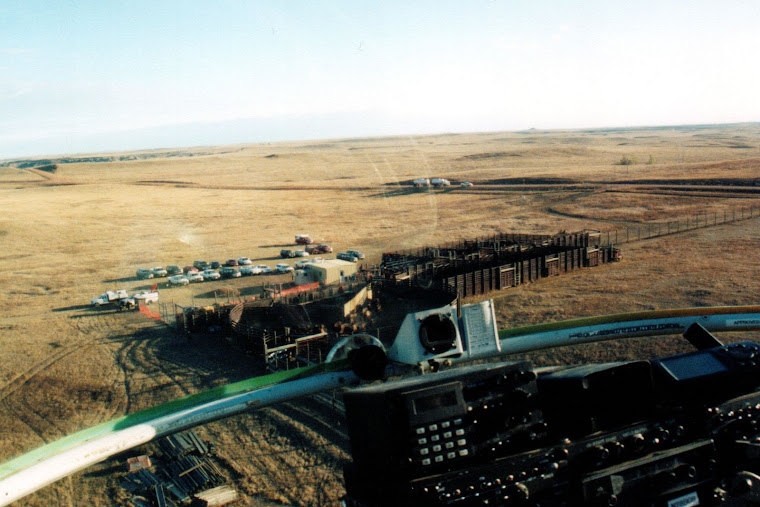
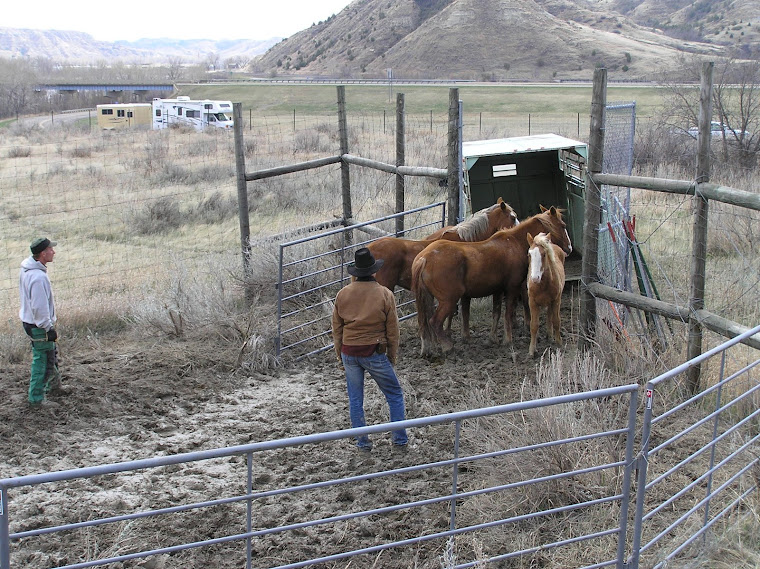
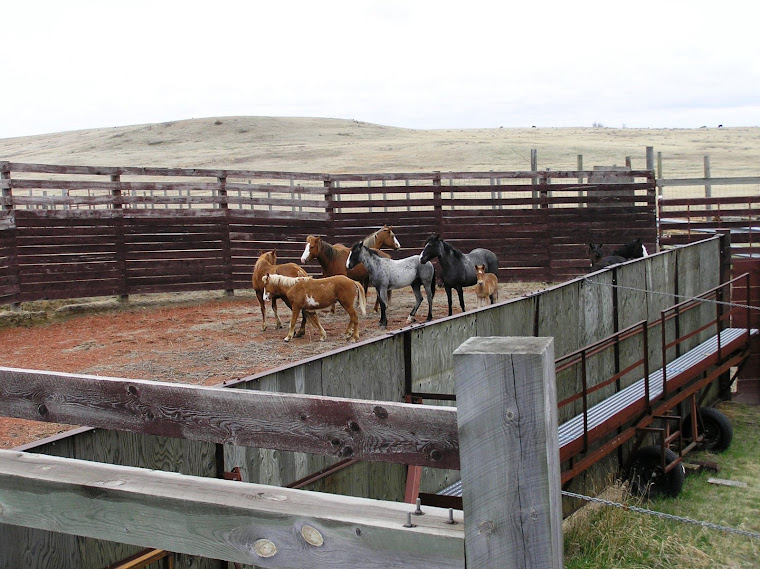
The horses are rounded up by helicopter because the terrain is so rough that it cannot be done safely on horseback.  Until the last three roundups, riders were used the last mile in order to lure the horses into the trap, but that was deemed too dangerous and discontinued in 2003.  The park has a permanent trap and handling facility that is used for elk and bison as well as horses.  Pens are high and solid wood so animals are not temped to try to get out.  Each year the roundups have gotten more humane.  The 2007 roundup ended early with the crash of the helicopter because it was too low and caught a skid on the fence, but neither horses nor people were injured.  There were no injuries to either horses or people in any of the last 3 roundups. 

In 2009 a research project was initiated to find a reliable contraceptive to prevent pregnancy on a temporary basis and avoid side effects that would cause harm or behavior changes with the horses.  During the breeding season of each year since 2009, technicians have observed behavior, pregnancy status, condition, and any possible side effects of the contraceptive.  These data have been compiled and processed by researchers in order to determine the effectiveness of the drug and any changes that should be made.  In the fall of 2009, 58 mares were injected with either the contraceptive or a placebo and data was collected at least once a week from March until July each of the following years.  In 2013 treated mares were re-vaccinated to test the efficacy of the contraceptive when boosted.

After the roundup in 2009, 77 horses were sold to the public.  Because of the efforts of a few passionate people, all but 8 of those horses were bought by individuals who gave them a home. 

That winter North Dakota Badlands Horse Registry was established to provide a registry and a network of communication and support for the buyers of those horses.  Our goal is that no more horses will be lost to slaughter, but all will find good homes where they will be appreciated and gentled.  We registered about 30 horses and created a Facebook page to share stories and photos of the horses.  As photos and stories are shared more and more people are beginning to appreciate the wild horses of TRNP.

Over the past 5 years we have attracted a large group of enthusiastic people who love the horses.  In September of 2013 we had our first Reunion Ride of horses that were once running wild in the park.  Ten once wild horses were ridden back in their homeland.  Other activities were held for owners and enthusiasts.  This will be an annual event in Medora and the park.  The 2014 Reunion Ride is scheduled for the weekend of September 5-7.  In the months leading up to another roundup in September of 2013, NDBH stepped up our Facebook campaign to reach as many people as possible with the plight of the horses being removed from the park.  We were able to bring in The Cloud Foundation and Legacy Mustang Preservation to help us tell the story of the wild horses of Theodore Roosevelt National Park.  Both organizations raised money to buy unwanted horses and Legacy was prepared to take those horses to their facility in Louisa, VA to gentle them, train them, and eventually offer them to forever adoptive homes.  Ginger Kathrens of the Cloud Foundation wrote press releases and made videos about the plight of the TRNP horses.  We are humbled and grateful to both organizations and the people involved in them for caring so much about the TRNP horses that they would work so hard, shoulder to shoulder with us to see that the horses were not lost.  Our relationship with The Cloud Foundation and Legacy Mustang Preservation grows as we support one another in the effort to help the wild horses of America.

The public auction was in a small town in ND, but Wishek rolled out the red carpet for us and the potential buyers of the wild horses.  The horse sale manager of Wishek Livestock Auction did everything he could to make the horses safe and comfortable, even having his talented cowboys practice gently moving the horses from pen to pen and through the auction ring.  Wanting to welcome all the visitors from far away, the town of Wishek had a celebratory approach to the sale with activities in which all could participate.  NDBH had depended upon and become friends with so many people during this campaign that we called ourselves TEAM NDBH, knowing that the job of saving these beautiful wild horses had to be a joint effort by many, many individuals.  TEAM NDBH succeeded in seeing that none of the wild horses went to slaughter.  Horses were sold at a minimum of untainted slaughter price ($.42/ lb.), so that the meat buyers would not be interested.  Horses went to homes all over the country and Canada, including 35 to Legacy Mustang Preservation in VA.  About 15 of those were bought by a private buyer but the other 20 might have gone to slaughter if not purchased with donated funds.  About 20 horses will be available for adoption from Legacy as they get them gentled and halter trained.   Five of the mares bought by Legacy have since had healthy foals.

During the festivities before the horse sale, NDBH had a silent and live auction of donated artwork to help pay for DNA testing on the wild horses.  Hair was pulled on all 197 horses that came through the handling facility.  (Only 16 did not get captured.)  We are confident that the results will be consistent with that found by several individuals who have had ancestral DNA reports done on their privately owned NDBH horses, and those results have been very interesting.  There is a surprising amount of Spanish influence still evident in the wild horses from the park.  There is also strong Oriental, Scandinavian, and other eastern and western European influence along with some North and South American breed connections.  They are definitely showing themselves to be mustangs with the typical mix of blood from many diverse sources.   One hundred eleven horses remained in the park in about 20 different bands.  They will again be documented and evaluated by researchers in the coming years.  The foal count as of early June is 31 live foals.

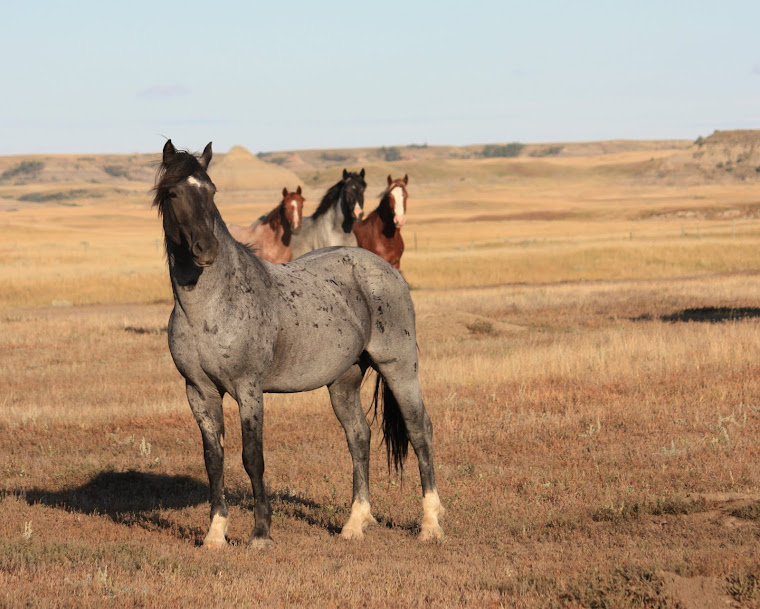
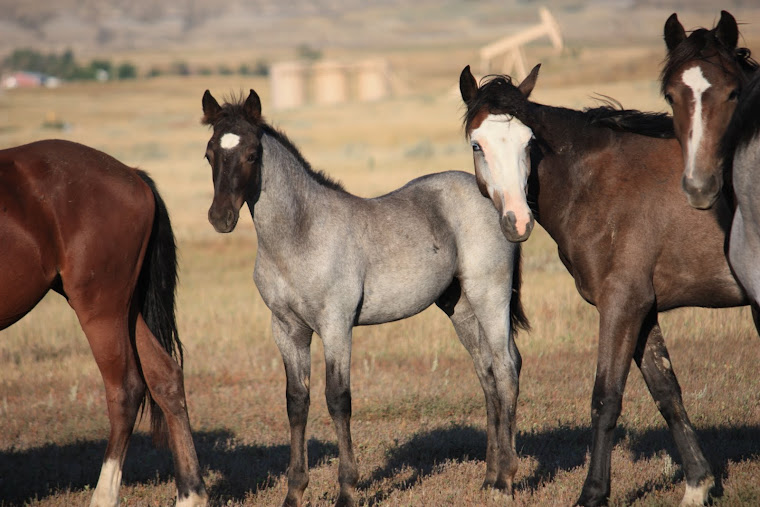
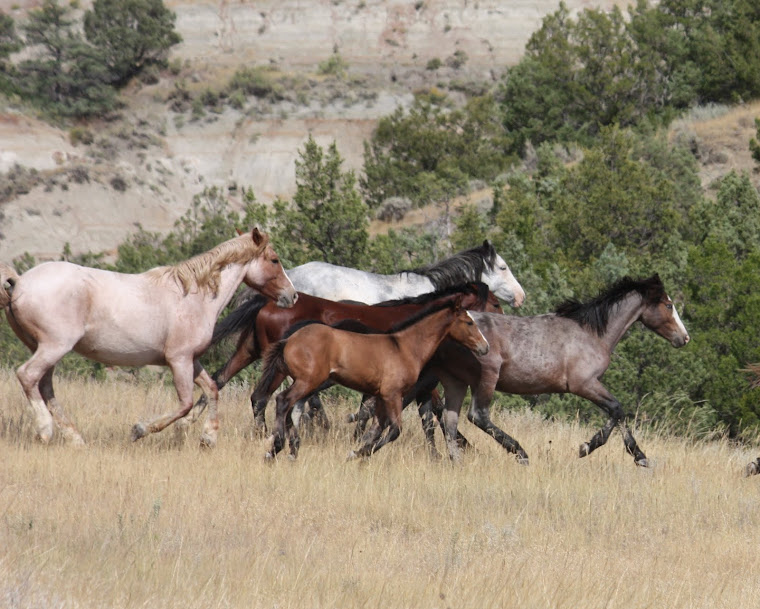
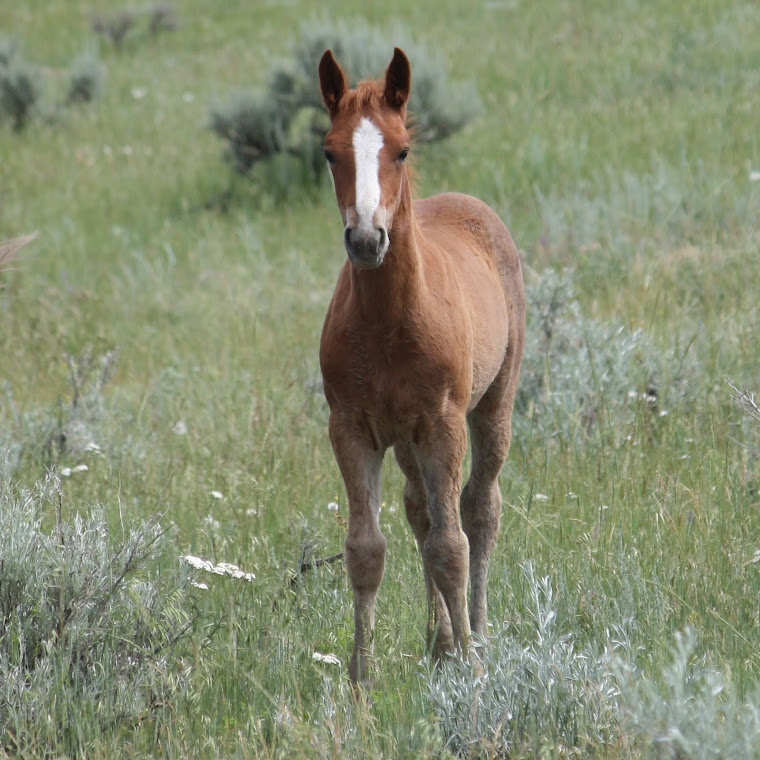
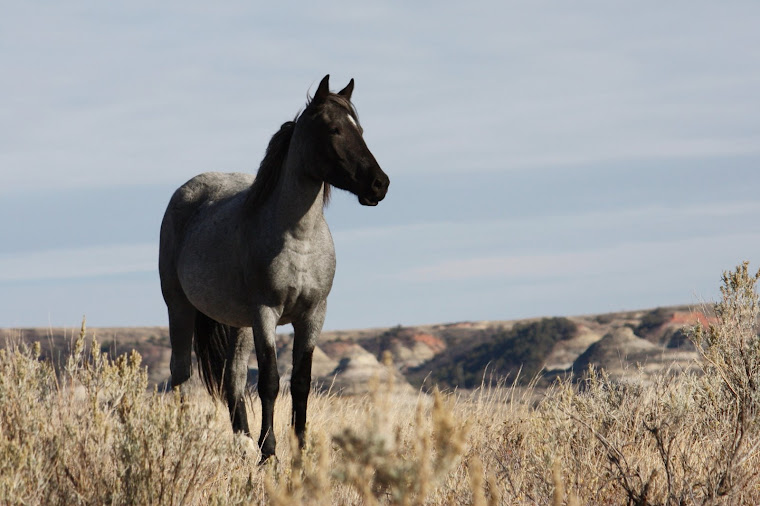
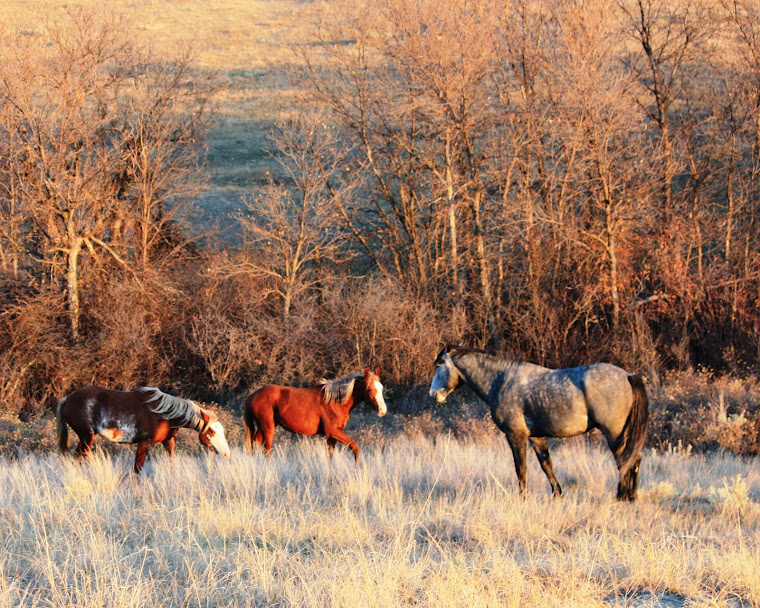
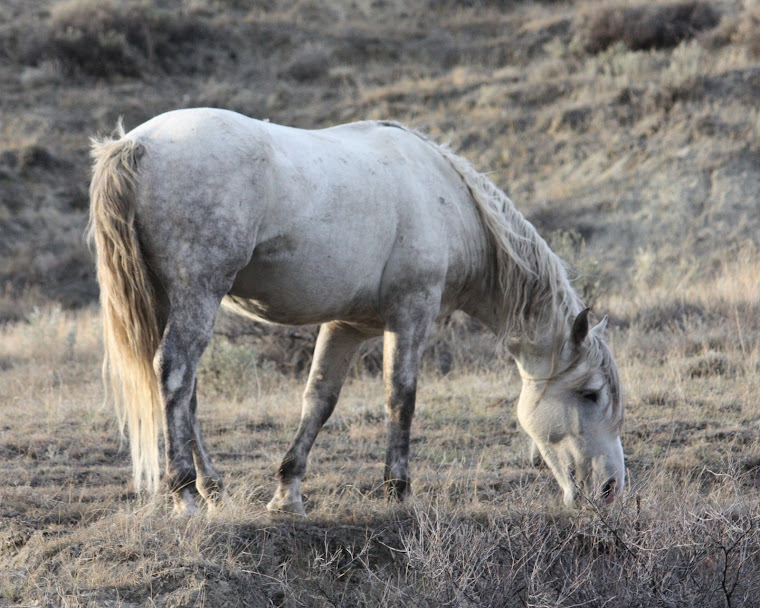
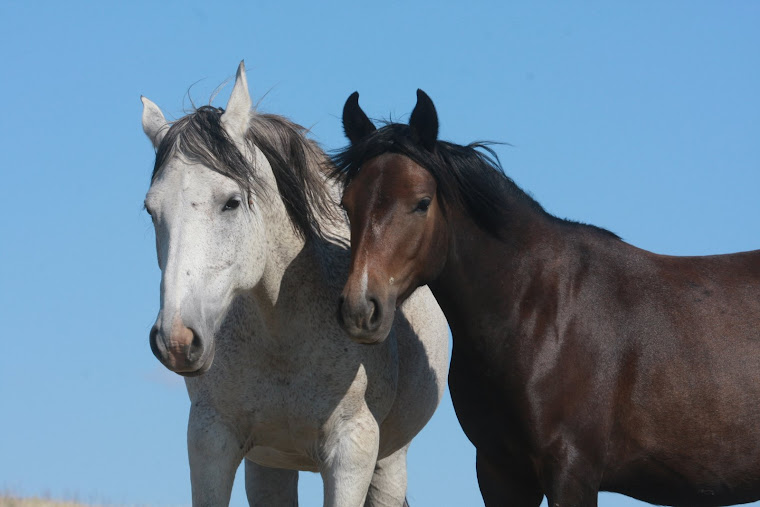
Ranging in size from 13 –16 hands, the horses come in most colors, with grays and red, bay, and blue roans the most prevalent.   Many carry the overo traits of patches of white on dark coats, bald faces, and blue eyes.   There are no tobiano pintos and no palominos in this wild herd.  Most are of sturdy build, with good bone and large, healthy feet.  They tend to be healthy in other respects, as the sickly horses do not survive in the wild.  When gentled, the horses from TRNP have proven themselves to be mellow, sensible, highly trainable, loyal partners to those lucky enough to know them.   The consistent feeling among owners is that they love these horses.   
Please visit the Facebook page, North Dakota Badlands Horse for regular updates on the horses remaining in the park and many of those being successfully gentled and trained by happy owners who are so thrilled to be a part of the history of these beautiful horses.


Thursday, April 17, 2014

A WEEK IN THE LIFE OF A FIELD TECHNICIAN FOR THE WILD HORSE RESEARCH PROJECT
By Marylu Weber
Winter had been typical in western North Dakota, with below zero temperatures and strong NW winds sculpting the snow into mammoth drifts, but spring was coming, though residents often wonder if warm weather is just a fond memory or something their “snowbird” friends brag about. 
Out in Theodore Roosevelt National Park, there had already been one foal born.  Mist had again been the first to foal, but little Autry didn't survive that pelting snow and cold.  Every year our boss with the research project wants to get technicians in the field in March to document those early foals, evaluate mares, and watch for any behaviors that could be affected by the contraceptive vaccine.  This year was no exception, but fate determined that April would again be the start of the 2014 research season. 
Our former Lead Coordination, Maggie, our new Lead Coordinator, Tiana, another field technician, and I were scheduled to all get to Medora April 1, so that Maggie and I could train the new people.  Watching the weather forecast, I talked to our boss and decided to go early, before a blizzard hit the Black Hills.  The Medora area was predicted to get rain changing to snow, but no large accumulations.  I left at 6:30 and was in the park by 11:00 am where I met up with Amber and Elizabeth, some FB friends and enthusiasts of the horses, to find horses and see if there were any new foals.   Before the rain started, we were able to find Granite’s small band and the Double band of Red Face and Singlefoot.   Amber and Elizabeth had seen a new foal with them the night before so we wanted to check it out.  There was Pretty Girl with a cute light sorrel filly; we named her Cash, because the theme for 2014 is country music artists.  Just as it started to rain, we met up with Lyle and showed him the shortest way to get to the band so he could get some shots of the new filly.
Overnight and into the next day the rain and light snow flurries became 8 inches of crystalline beauty.  By the next morning the sun came out bright and warm, but the temperatures were still just above zero.  Since the snow was soft and had not blown around much, with a “be careful” from a couple of the guys from the park, I set out around the 36 mile “loop” through the park in search of horses.  What a magical experience it is to see the Badlands covered in a pristine blanket of white!  That day I found the bands of Clinker, Gray Ghost, Silver, Satellite and the Double band.  When Amber, Elizabeth, and I had seen Firefly in Silver’s band, we had thought she looked close to foaling so it was no surprise to see a brand new baby with Firefly.  It was a cute dark filly; her name is Dixie.  It was a fabulous day to be born and to just enjoy life.
The next day Tiana and I worked in the office while we waited for Maggie because another prediction of light flurries brought about 5 more inches of snow.  Once Maggie arrived we drove just to the north side of the park and prayed that we would be able to traverse the loop the next day.   Morning again brought bright sunshine but a biting NW wind.  Going around the outside of the park we found Thunder’s band on the east side and Blaze in the bottoms to the NE.  The snow was up to our knees in places, making hiking possible but very tiring.  Neither of those two bands had new foals nor did Gary’s band on the south, but we started with the behavior study, documenting what each horse was doing every minute, on the minute for 20 minutes, and also making note of any aggressive or reproductive behaviors.  Mares were evaluated for condition, pregnancy status, and any possible reactions at the site of injection of the vaccine. 
Days six and seven brought warmer temperatures, melting snow, running water, and lots of mud.  We had taken the large scope in order to identify horses at a long distance and I had finally braved bulldozing through the drifts to get to the top of Buck Hill.  From there we could see Cocoa, Thunder, and Sidekick.  There didn't appear to be any new foals with Cocoa or Thunder, but there was a little black foal with Sidekick that could be the one born in February or a new baby.  They were so far away that we decided against going out to find them; a friend had offered to help out on his day off so he could go the next day.  I dropped Maggie and Tiana off on Talkington so they could go after Cocoa.  What would normally be a 3 hour hike, including the study, would become a 5 hour excursion through mud and running water.   I had decided to keep glassing from Buck Hill and no sooner got back to the top when I spied the Double band on lower Talkington behind a small herd of bison.  What intrigued me was the sight of another new foal, this one out of Flame.  I knew the others would be gone for some time so I texted them that I was going after the Double band again for the new foal.
It took only about 15 minutes to skirt the bison and get to the Double band, grazing and resting just across Talkington Creek.  It was an uneventful 20 minute study except for a couple threats from Red Face to Singlefoot.  Having completed the behavior study, I needed to get closer to do mare evaluations and get a sex on the foal.  The problem was that the creek had now risen to be about 4-6 feet wide and an unknown depth.  Searching up and down the creek looking for a narrower place, I considered what the best plan of action was- jump for the other side, find a tree overhanging the creek, or maybe finding an area with rocks to step on?  None of these options looked good.  Out of frustration, I finally found a wide spot that didn’t seem to have any disturbances on the bottom.  Reaching out with my walking stick, I tested the depth and found the bottom to be about a foot down.  Tying my waterproof pants over the tops of my water-resistant boots, I figured I couldn’t get too wet if I sprinted across to the other side.  After all, there was an animal trail there and I HAD to get a closer look at that foal.   I made sure my backpack with my camera, paperwork, timer, glasses, etc. was secure on my back and my phone was zipped into a deep pocket in my jacket, took a deep breath, and made a run for it.  Two steps in, I dropped into the gully running in the bottom of the streambed and stumbled to my knees.  Muddy snow runoff was now covering all but my shoulders and head.  Gasping from the cold, I scrambled across the rest of the way and stood up.  Backpack-dry!  Paperwork-dry!  Phone-just a tiny bit wet on one end!  Field Technician-soaked to the skin from shoulders to waist with water running down inside my waterproof pants and boots.   I started to laugh hysterically.  Well, I had saved the important things and now I was on the right side of the creek to get closer to baby and continue my study. 
Baby was another filly who looked just like her sister Cash; since “E” was the next letter, I called her Emmylou.  After I got some shots of the foals, the horses paraded themselves past me so that I could get good photos of their right hips in order to record any injection site reactions.  I bid them adieu and headed off the try to find a way back across the creek.  Hiking both directions found me nothing to make my crossing any easier until I came to a dead tree bent over to create a perfect arch about 4 feet high and 6 feet wide.  It was located in the center of the streaming water but I could get to it from my side without getting too wet and hoped I could jump to the other side.  Crawling onto the arch and to the other end I again reached into the water with my stick to test the depth.  It was DEEP.  My stick went down to about 3-3.5 feet.  This was not going to be a good option.  Back across the arch bridge, back through the ankle deep water and what could I do, but start hiking up Talkington Trail to where in intersects the loop road.  There was gully after slimy gully where I had to slide down one side and clamor up the other through trees and brush in order to have any traction, but finally, after more than an hour, I made it to the road and back to the truck where I stripped off everything I could and sat alone, laughing with the heater running and the windows open, until Maggie and Tiana were ready to be picked up.  Though I was by then soaking wet from my shoulders to the souls of my feet, I was never cold.  It had been another ”Excellent Adventure!”
Maggie had to go home the next day.  I stayed to help Tiana one more day before we set her off to face the challenge alone.  We knew she would do well because she is dedicated, smart, and strong.  Lyle would try to feed her as much information as he could about the location of bands and arrival of new foals.  There will be a new technician starting in May, so Tiana will have full time help and I will go back to help once a month.  As soon as I was on the road, heading back home, I was anxious to see my husband, horses, dogs and cats and the glorious Hills of home, but I was torn because I wanted to go back to the Badlands.  They and the wild ones who live there will always have a special place in my heart.