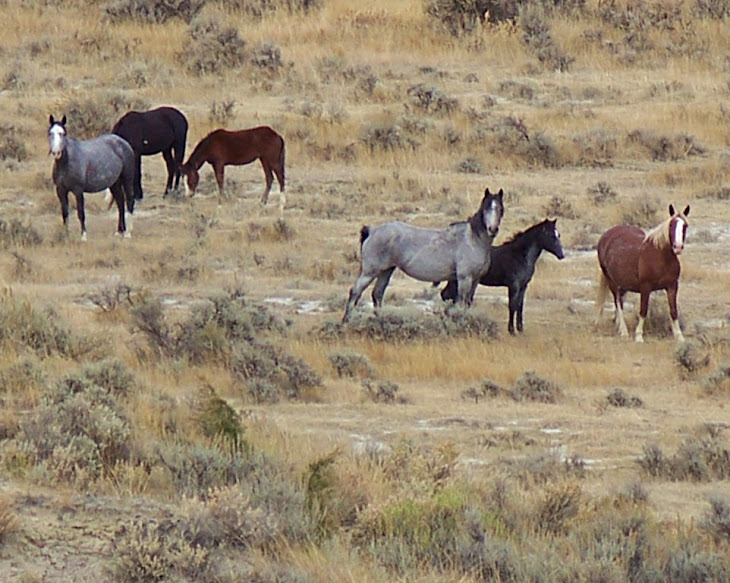
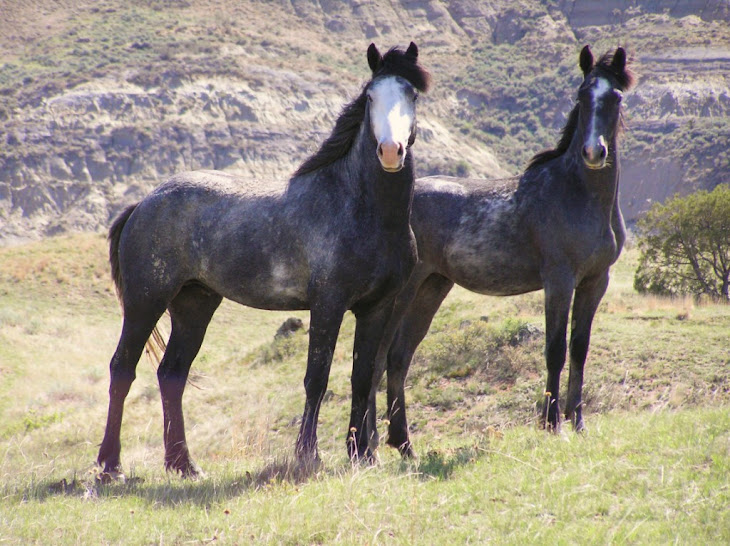
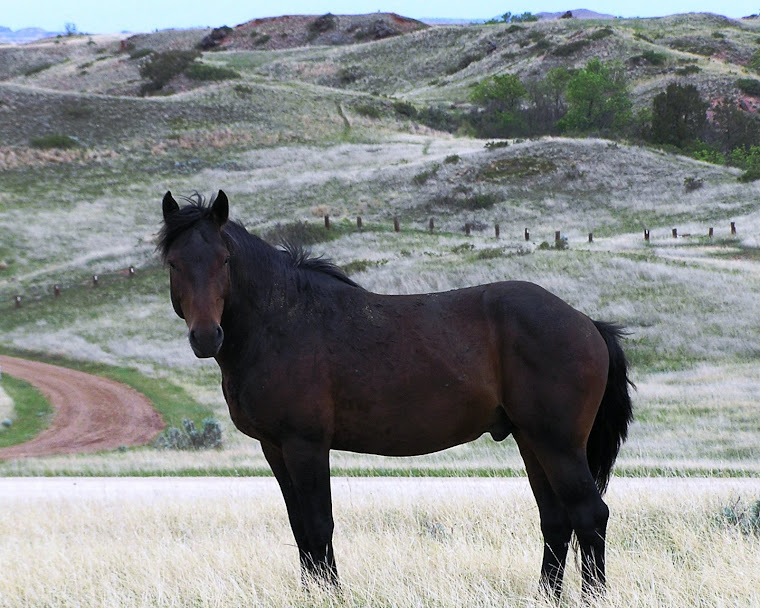
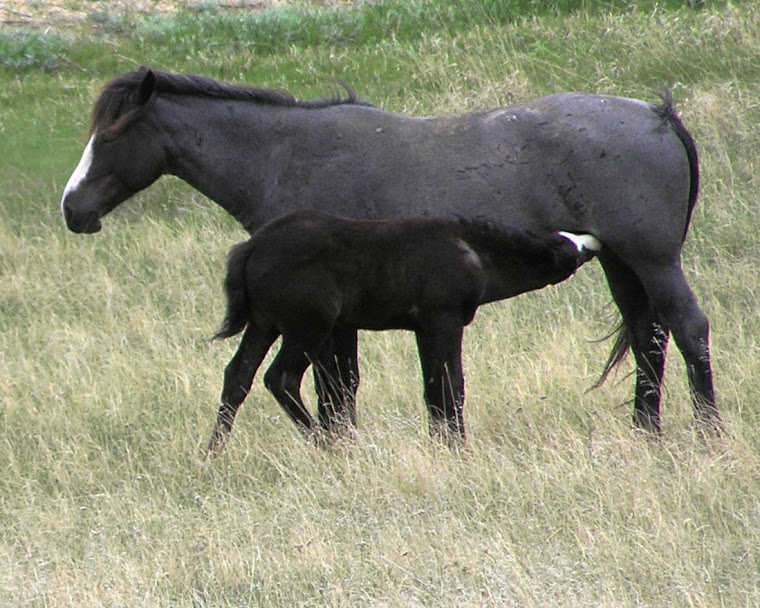
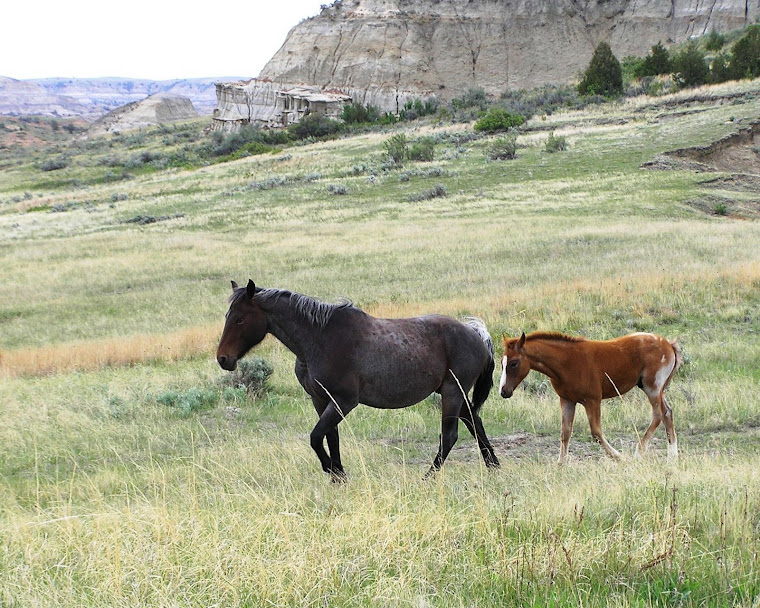
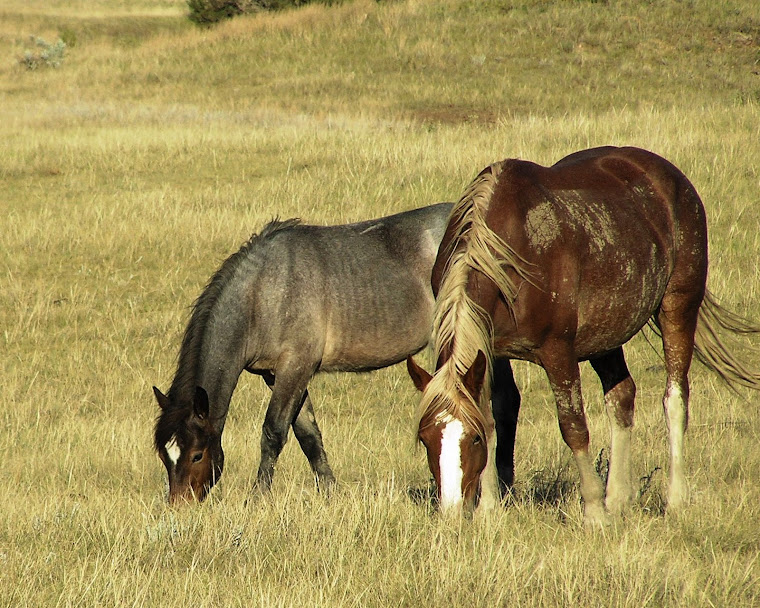
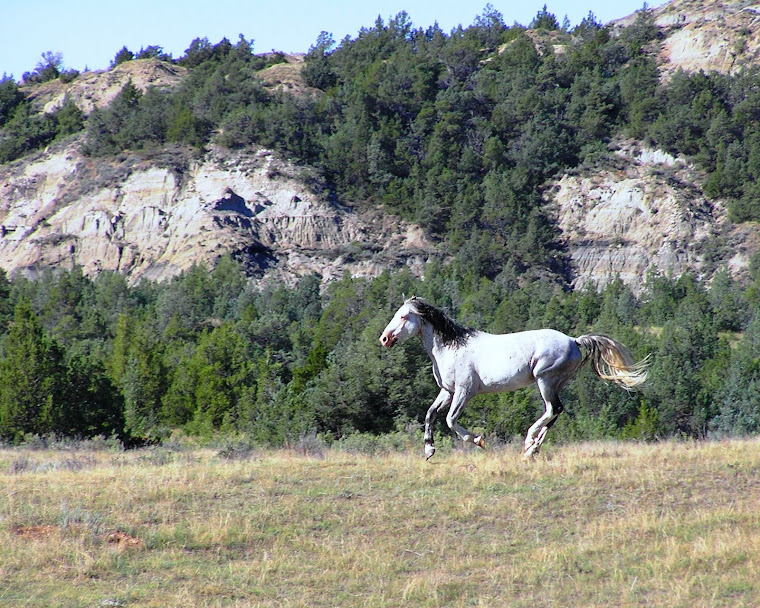
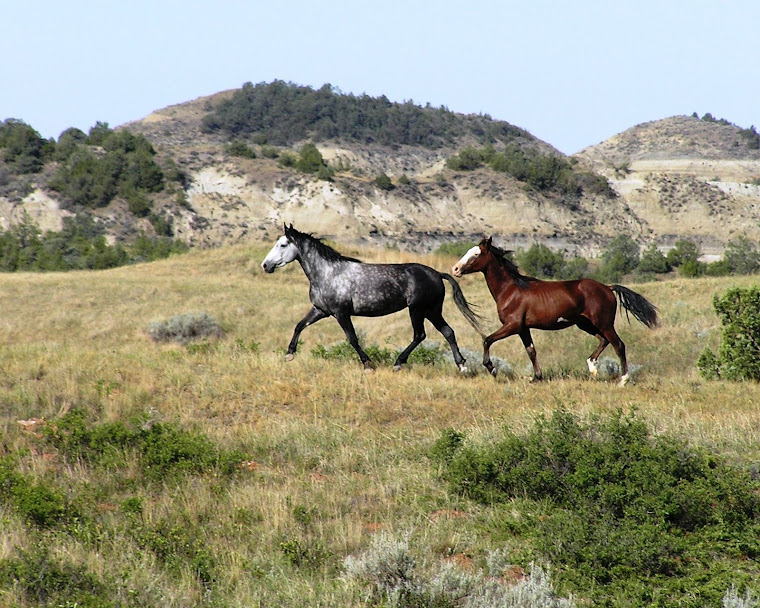
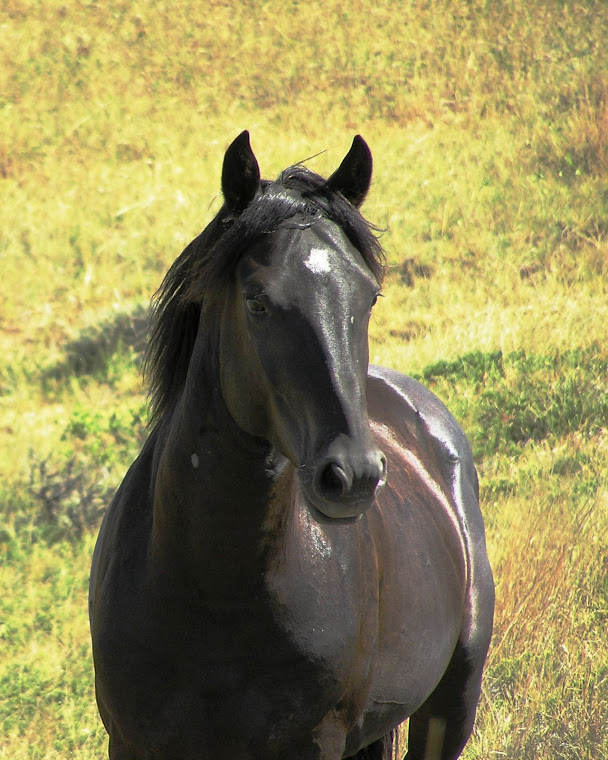
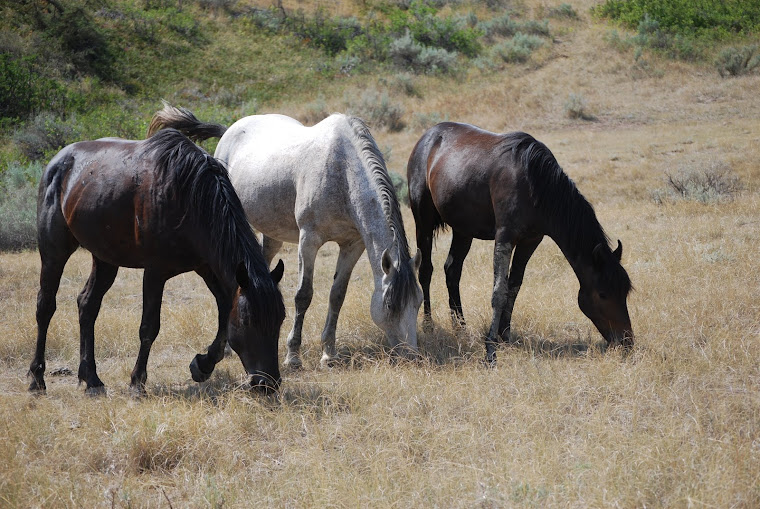
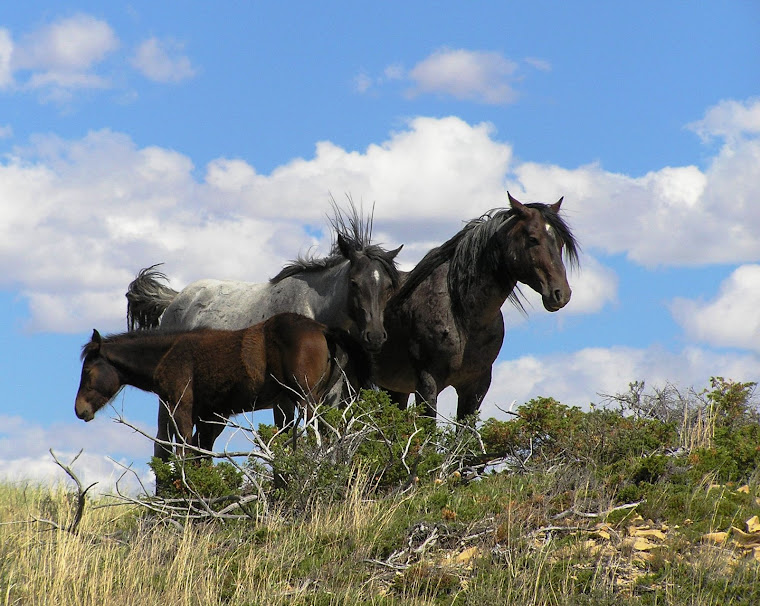
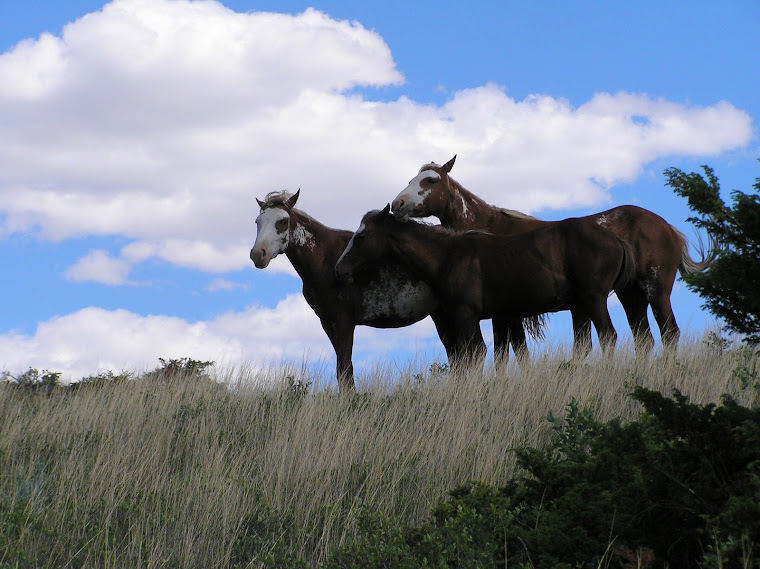
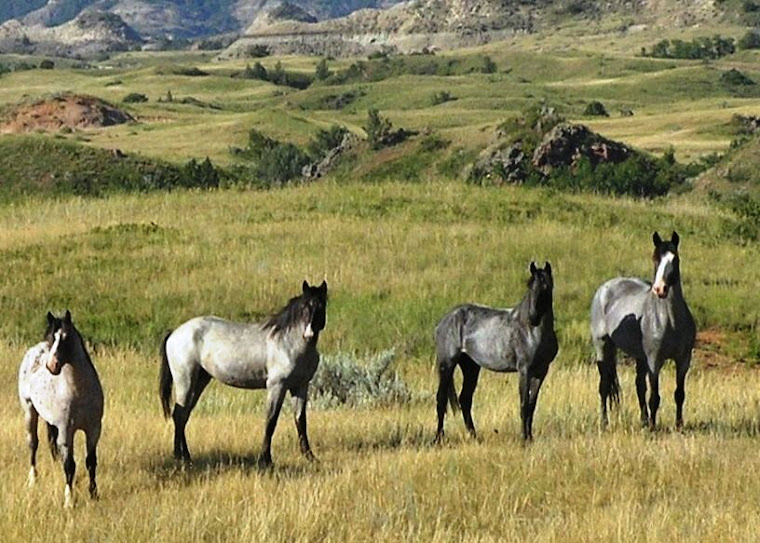
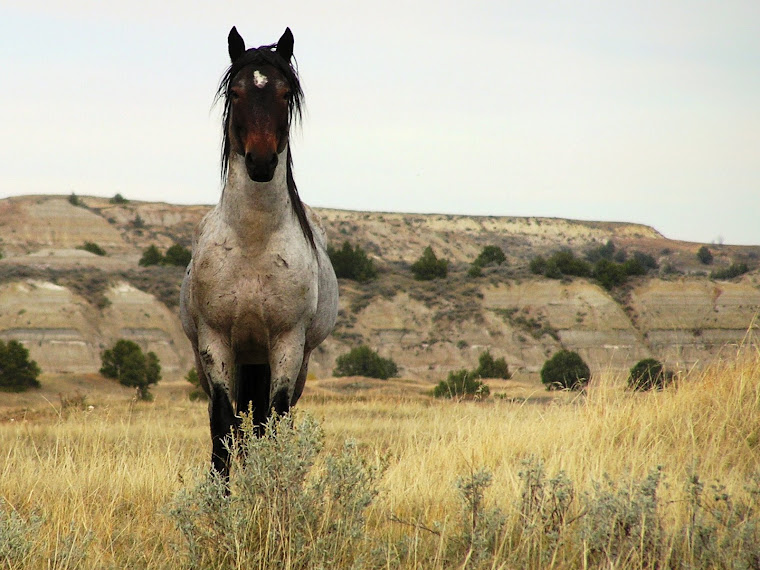
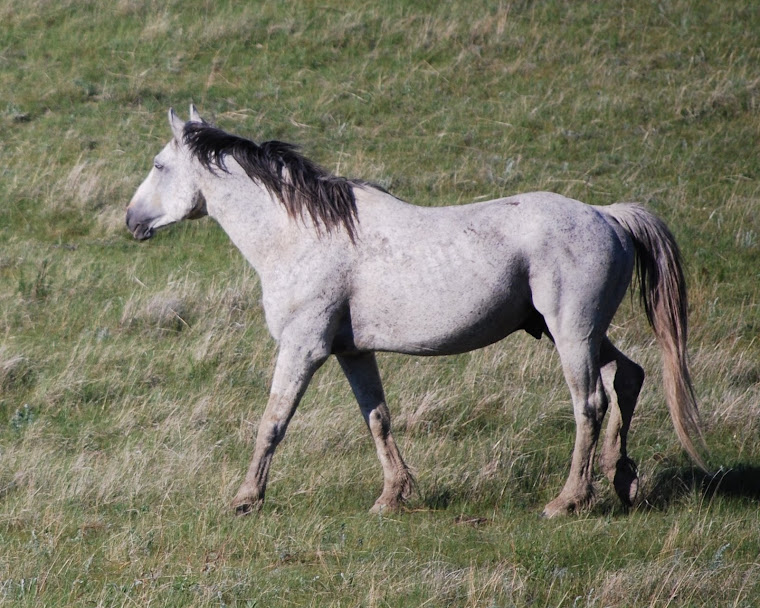
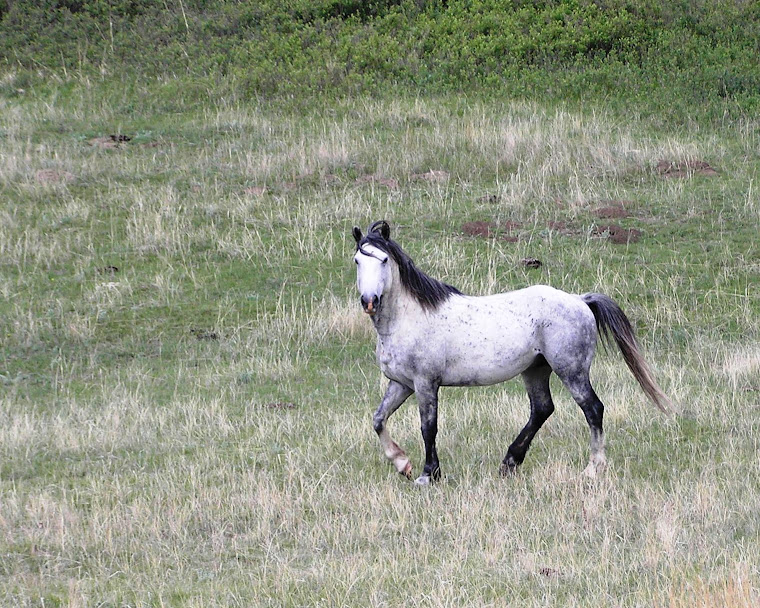
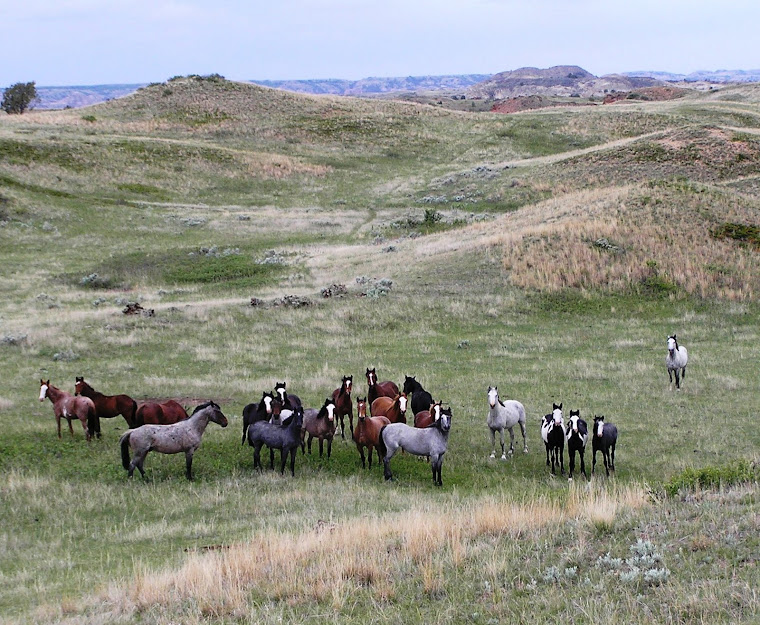
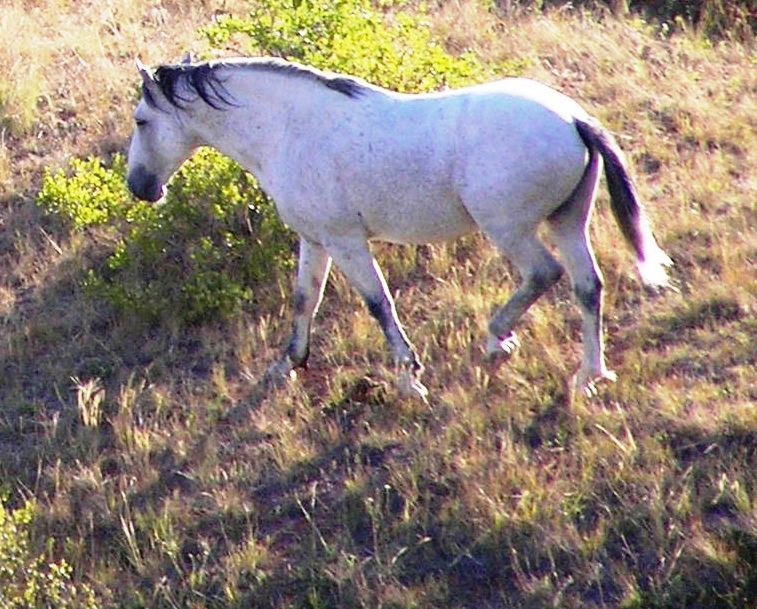
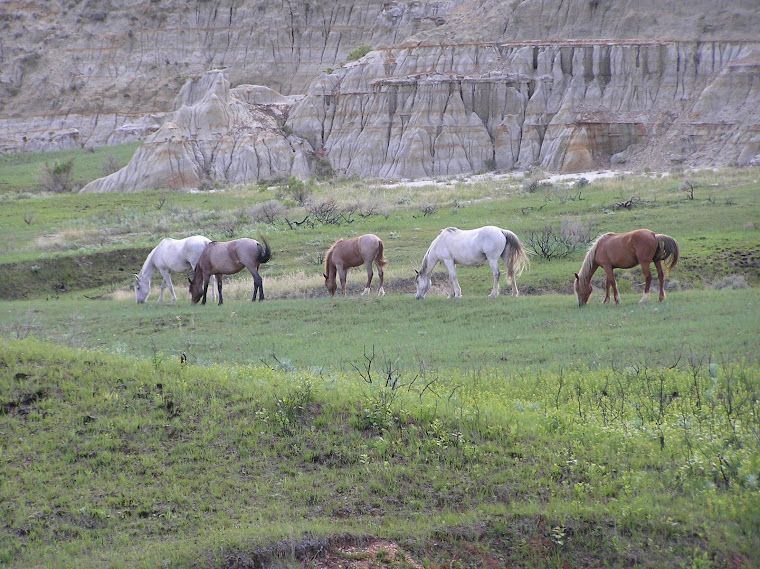
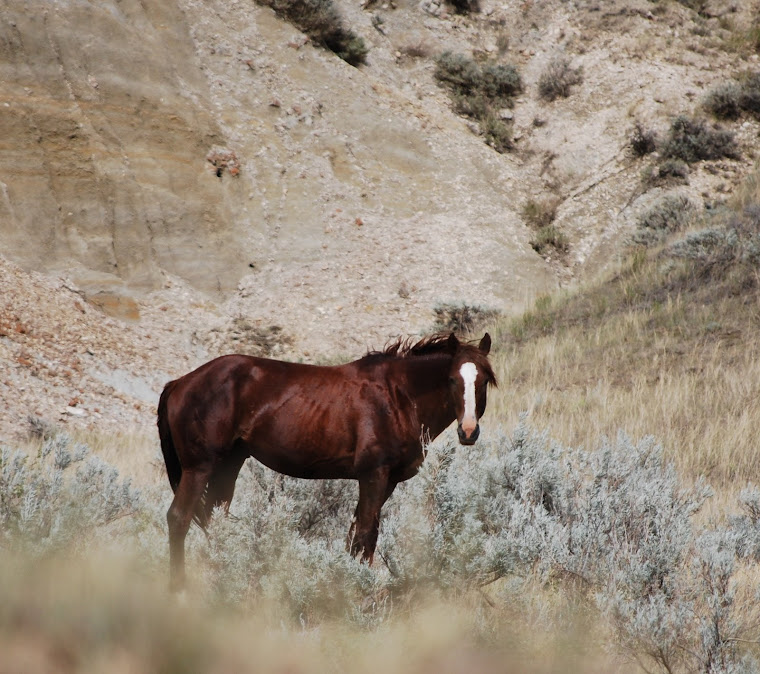
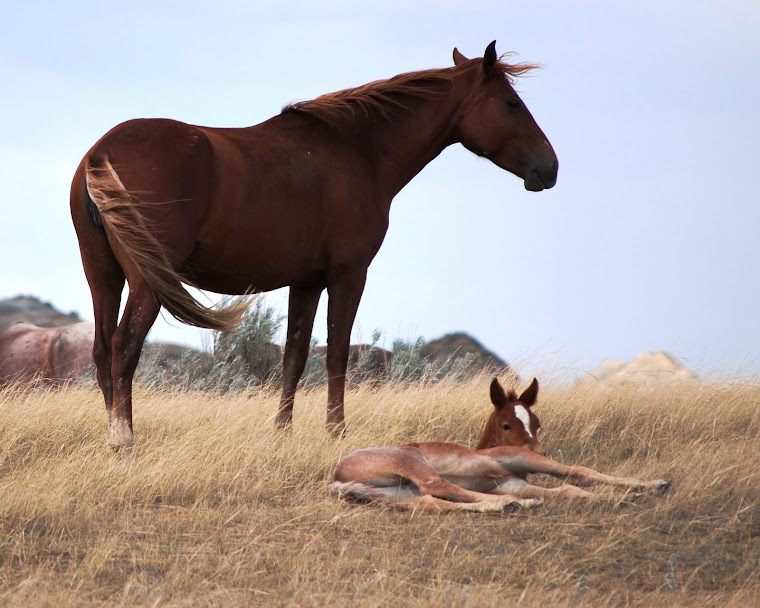
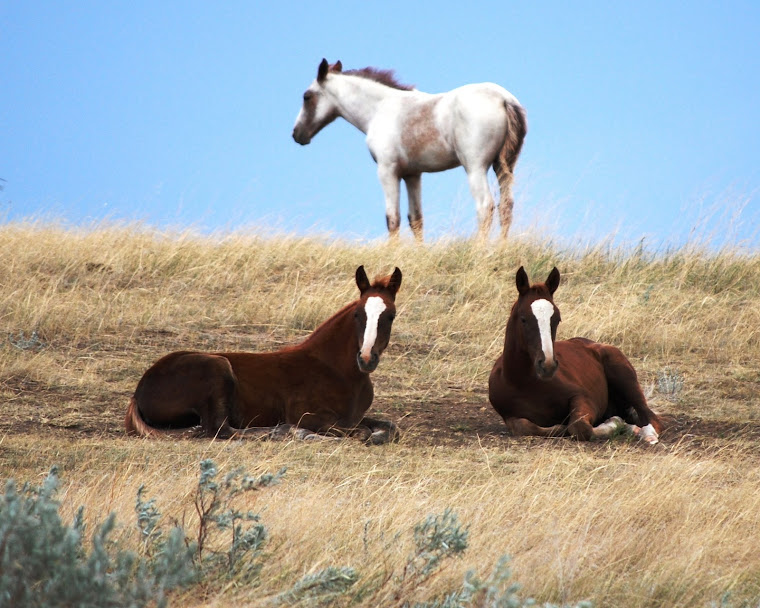
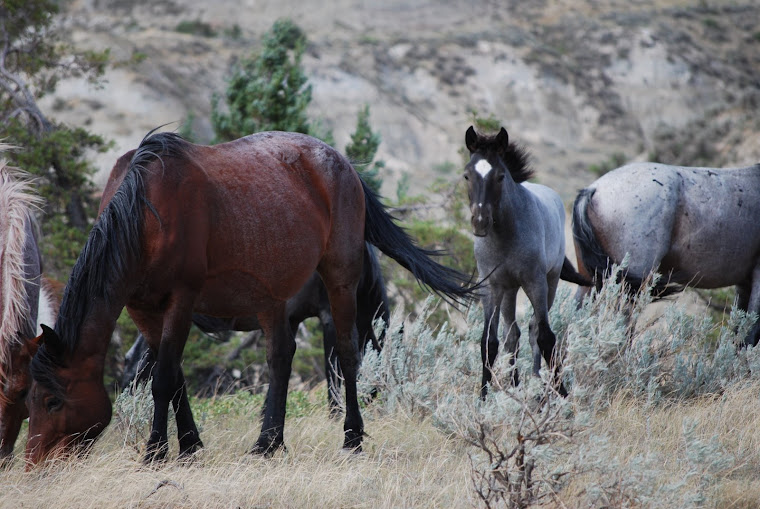
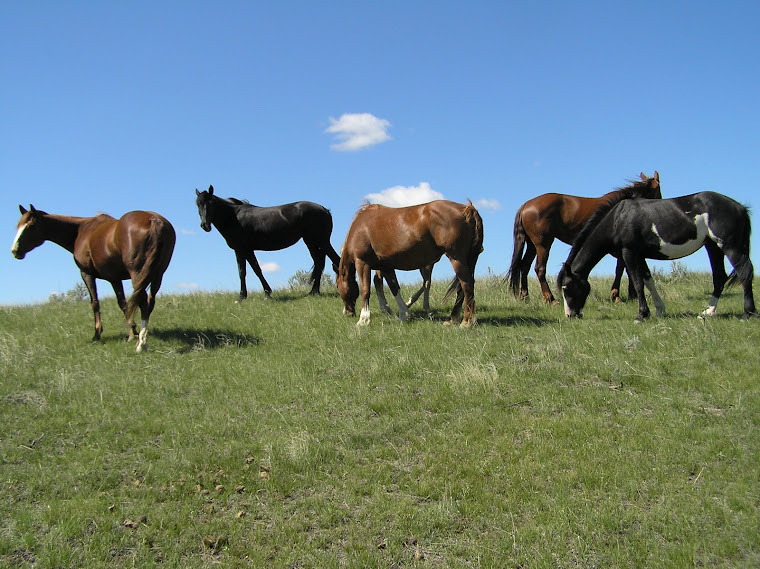
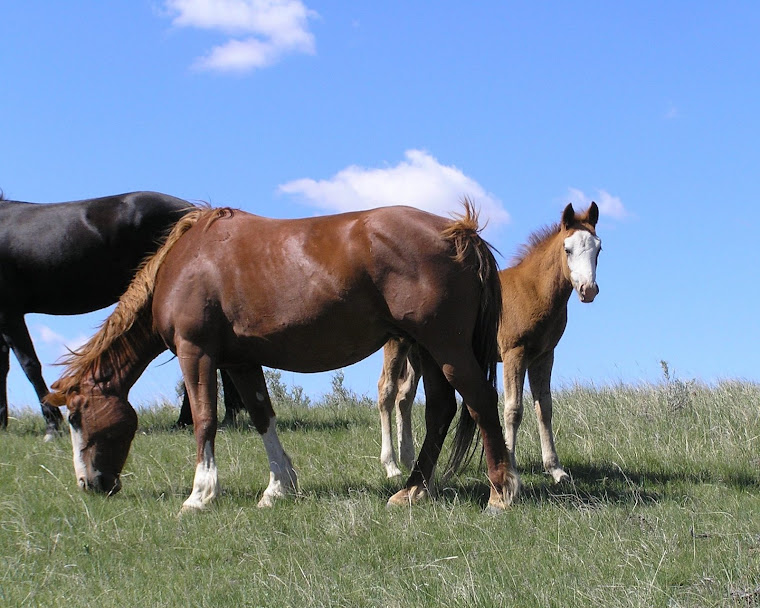
This blog has not been very active lately because most of the photos and comments about these horses have moved to the Facebook page, North Dakota Badlands Horse. Go to that site for more information and with questions.
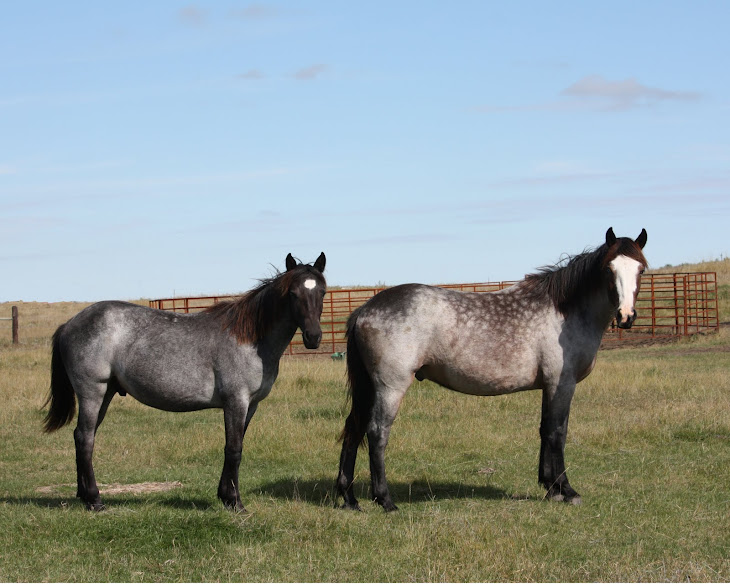
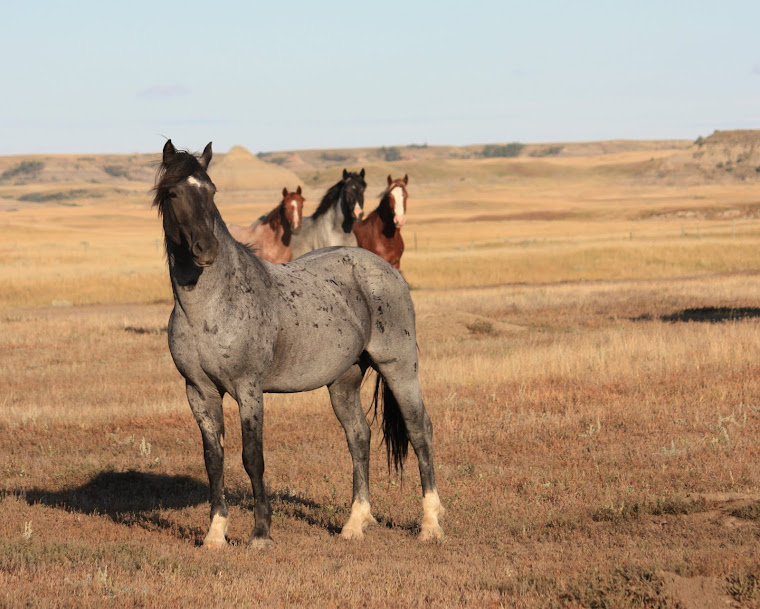
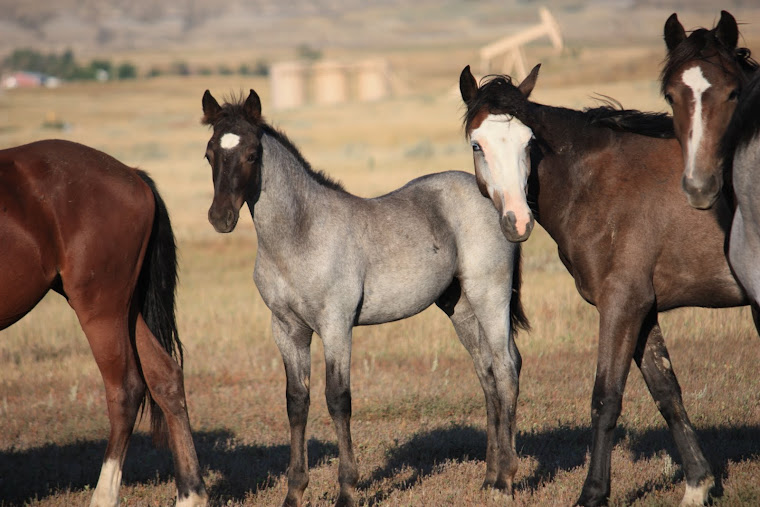
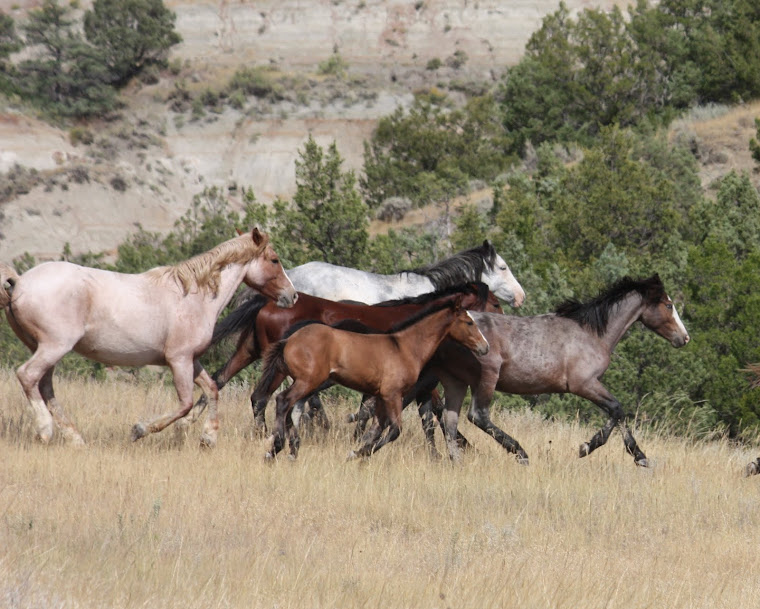
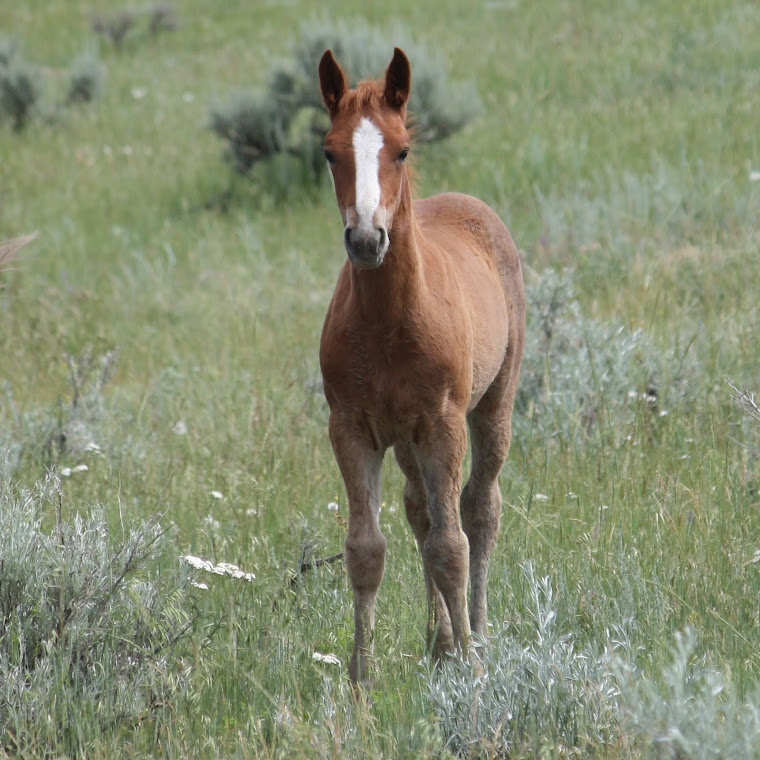
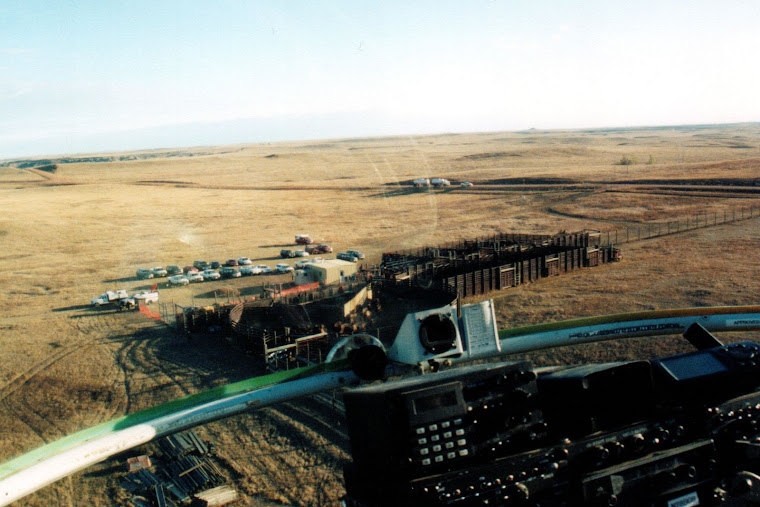
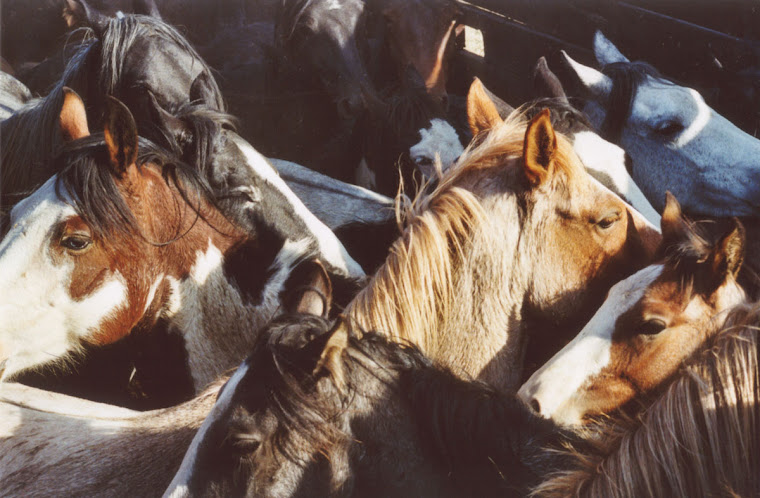
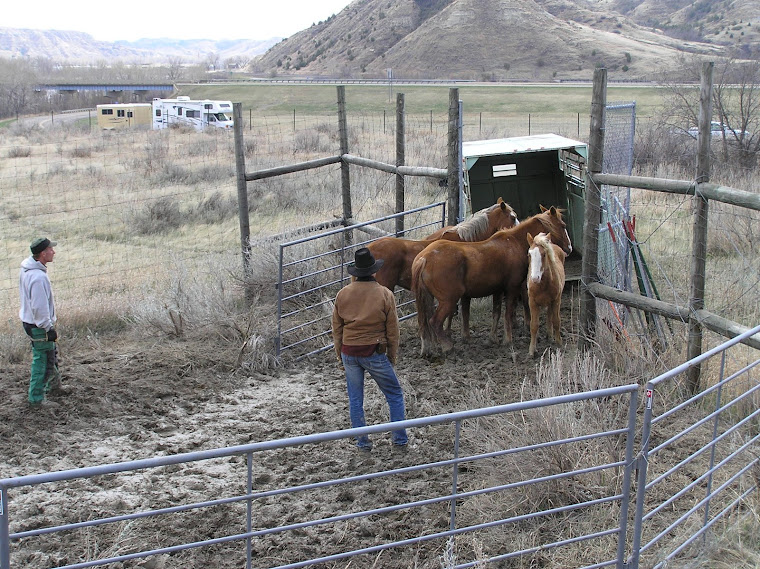
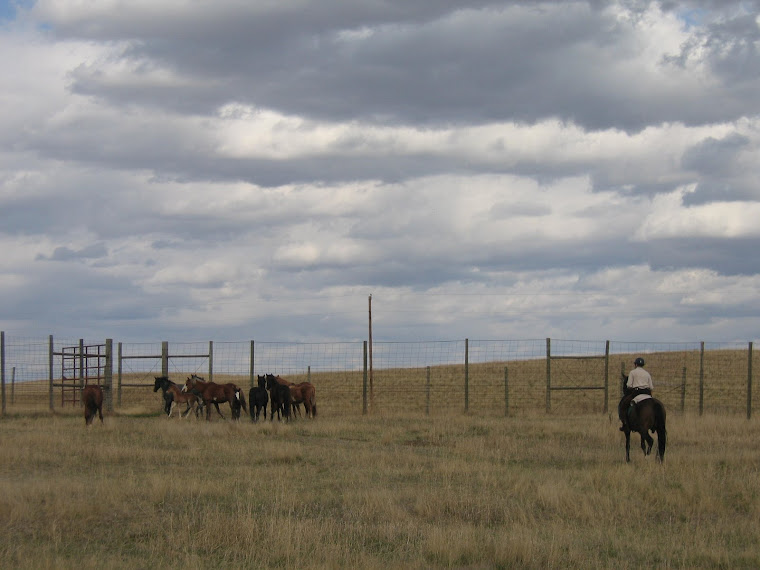
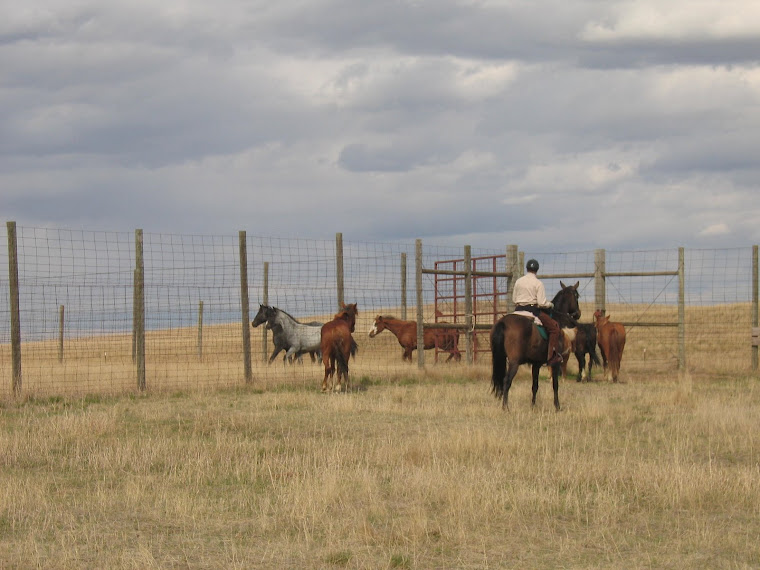
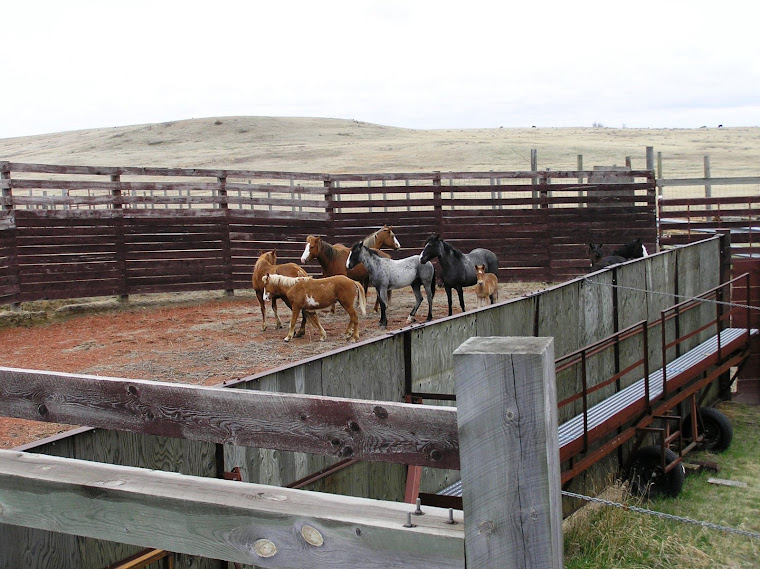
Theodore Roosevelt National Park will be reducing numbers of their wild horse herd this September 2013. The sale of horses will be held September 28, 2013 at 11:00am at Wishek Livestock Sales in Wishek North Dakota. Most of the younger horses three years and under will sell, however, final decisions on exact individuals cannot be guaranteed until the day of the sale. The park owns these horses and has complete control of management decisions. Our organization just helps in the advertising and promotion of the horses so that they all find good homes. The park does not name these horses but allows us to use names for the buyers' convenience.
Complete listings of sale horses will be available at http://trnphorses.phanfare.com
Again, availability of an individual is subject to capture and decisions made at the roundup. This site will be updated as new information comes in.
Contacts for North Dakota Badlands Horse are:
Marylu Weber marylu.weber@gmail.com or 605-341-2103
Deb Fjetland dlfwelch@msn.com or 651-388-3984
Contact number for Theodore Roosevelt National Park is 701-623-4466
Specific questions for the sale barn can be directed to Wishek Livestock Sales
Please share the above listing with all your horse loving friends so that we can reach all potential buyers for these wonderful, trainable horses. Thank you!
Saturday, July 20, 2013


Saturday, December 8, 2012
JUST A WALK IN THE PARK
Every year for the past three years I
have been involved in the feral horse fecal collection project in Theodore
Roosevelt National Park. It may seem
like a strange and nasty job, but it is the best way to determine if the
contraceptive used on 28 mares in 2009 is successful at preventing pregnancy,
since a fetus will produce enough estrogen after 90 days of gestation that it
will be very evident in the feces of the mare.
Therefore, every mid-November several of us, who have been working with the
Colorado State Feral Horse Reproductive Study and a few volunteers head out to
find every mare and collect two sample of fresh manure from each. The first two years we had plenty of help and
warm weather, so the collections went quickly, but in 2012 it had just snowed 3-5
inches and then started melting, which made spotting the horses very difficult
against a mottled black and white landscape.
Plus, we only had two of us who knew the horses, so we were limited to
two teams or sometimes one team and one single.
Maggie
went alone the first day finding several bands along the fence near the
Interstate. Sandy and I found a couple
small bands that were generally hard to locate, so we were short on numbers,
but glad to have found them without much searching. The second day, Dan and Maggie found all the
bands that usually hang along the Interstate and Sandy and I spied Cocoa and
Mystery from Buck Hill. We had to climb
up the north side of Buck Hill through the Cedars and the snow to find Cocoa
and confirmed that Busy Blue was still missing.
Though climbing down and up the steep muddy east side of Buck Hill was a
challenge reminiscent of a pyre trip to those same flats, we made it out to
Mystery and even had barely enough daylight to catch a sample from Ruby who,
along with her two fillies, had been taken by Granite’s Boy and were right
along the loop road. At the end of two days we were still missing about half
the mares. The third day, Dan and I
hiked a good ten miles and found a few horses, but none that we needed. We say Blaze’s band just north of Talkington
Trail but we were a long way from them and even farther from our vehicle so
opted to hurry back to the road where we could meet Maggie on her way by and
catch a ride back to our vehicle, then our hike in to Blaze wouldn't be so
far.
It was a great idea except that when
I got back to the road my phone was no longer in its pouch. In all my hopping and jumping over gullies
and sliding down slippery slopes, it had worked its way out and disappeared. I told Dan I would go back for it and he
could go get the Durango. After checking
all the pockets I had, off I went back across the meadow, up the hill, over to
where we had eaten lunch, saying a little prayer that God would help me find my
phone. Back I came, again tracking myself
through the mud and snow. I could hear
Maggie calling to me, so I tried to run the rest of the way to the road. Maybe they had found my phone in my bag. I wasn’t so lucky and neither were they; I
had the Durango keys in my pocket. Back
I went across the meadow. I knew I had
bent down to look at a skull and had not found it the first retracing of my
steps, so I was intent to find that skull this time. Finally after going almost to the hill, I was
able to look back and see the skull.
Back to the skull I trudged, but still I found no phone. I was beginning to wonder, but still had
faith the Lord was going to show me where to go. About fifteen feet farther, there it was, my
bright orange phone, facing up, but still showing its narrow orange frame. Thank you Lord! And, we still had enough light to head out
for Blaze. Out we went, my body feeling
like that of a marathon runner, but Blaze was nowhere to be found.
The next morning I volunteered to
scout. I took the big scope we call
Bruiser and climbed every high hill I could find to scout for horses. I scoured the park from Buck Hill, but could
not find Blaze. From the top of Horse Trap
Hill, I did see Coal with his new mare, Busy Blue and her filly. Climbing down again, I found them and spent the
next hour waiting for a sample. I headed
back to Buck Hill. Maggie and Dan called
that they had gotten a couple bands on the east side and had hiked in from
there to find Blaze, but had not found him.
Taking one more look through Bruiser, I saw movement north of
Talkington. It was Blaze. It was 3:00.
If I hurried, I would maybe have time to get to them and have about 45
minutes to collect before it got too dark to see. Since they had alluded us all week, I was
determined to get them.
After calling Maggie to let her know
where I was going, I almost ran the ¾ of a mile out to where I had seen them,
hoping to get most of the samples I needed.
When I got there, I saw that Blaze had Flame and Jud from Redface’s
band. Half of his mares were on one side
and the others, along with him, Flame, and Jud were on my side of a wide
gully. Flame was extremely agitated to
be held away from her band. I could read
the fear and anxiety in her eyes. Just
then Satellite and his family showed up over a nearby hill. I was about to try to get my camera out as
all the horses stood facing me when Flame made a break with Jud glued to her
side and Blaze close on their heels.
Flame broke directly toward me, since she had never had anything to fear
from me. Blaze was not so trusting of me
and hesitated, giving Flame and Jud a little head start. It did not last long;
Blaze was soon in front of them, driving them back at me toward his band. Flame would have none of it; she was
determined to go back to Redface and the rest of her family. They churned around in the cedars and breaks
for long minutes as I worried about delicate little Jud trying to stay out of
the way and keep up with his mother. His
eyes were huge with fright, but he would not leave his mother’s side. I momentarily lost sight of them in the
cedars. Just then Blaze’s mares on my
side of the gully took off across the gully to the rest of the band. That must have been what made Blaze give up
on Flame, because he came charging back, wheeling away when he almost ran up my
trail, and joined his band running off in the distance. I was so happy for Flame and Jud. Flame had been with Reface for at least six
years; that was where she belonged.
I followed Blaze’s band to a meadow
wondering if they would continue to run, since they were all so wound up by
now, but they settled to grazing and I settled among them to wait. The sun had set several minutes ago and it
was almost dark when Diamond gave me a sample.
That was it, I could still get it and get back before I lost all my
light. I hurried to the pile and plunged
my gloved hand into it to see if it was warm, proving it was the fresh sample I
needed. It was, but I had forgotten to
take my knit glove off that I had put on over the latex glove. Oh, Well, it was washable! I collected the samples quickly,
stuffed them into my pocket, put on my head lamp, and almost ran through the near
darkness back to the Durango. I thought
a little about what would happen if I got hurt or if I ran into some animal on
the way back. I was careful where I put
my feet, but thinking how stupid I was to be so stubborn. I guess the really good adventures never come
without a little risk.
Sunday, February 26, 2012
DNA TESTING
There has, for many years, been much controversy as to what is the ancestry and value of the Theodore Roosevelt National Park wild horses. Park personnel, not knowing what their breed origins are, just refer to them as feral. Since some feel that national parks are meant to be filled with truly wild species, they do not think the horses should remain in the park at all. After the Park was established, local ranchers began to buy and breed American Quarter Horses, a breed they considered much superior to the "Parkies," so the park horses became valued only for their carcasses. Even now, many of the local people consider the park horses to be inferior, grade horses that are not of much use as a riding animals.
Outside the park, wild horse purists do not want to accept feral horses as being as valuable as their Spanish Mustangs, though the word mustang means feral. Some park horse owners claim that the earlier horses carried the blood of Sitting Bull's ponies and highly value those horses removed before the early 80s over those born in the park since then. Many owners of Nokota horses tell this story and claim that horses now in the park and those removed after the 1980s are mostly Quarter Horse crosses and of less value than theirs. It is true that the current park horses are a combination of whatever was there before settlement of the area, farm and ranch horses brought to the badlands by settlers, and horses either purposely or accidentally introduced to those existing herds since then. Who really knows what the horses' ancestry is and does that affect the current value of the horses?
Most of us, who have worked with either North Dakota Badlands Horses, Nokotas, or park horses that have not been registered with any breed, do not need to know their ancestry to see the value in these horses as companions and riding horses. They have shown themselves to be very trainable, mellow, engaging equine partners, no matter what breeds they represent. However, there is a way to find out more about their ancestry and maybe that will help us educate others as to their value in the horse world so that horses sold from the park will find good homes.
Some of the ND Badlands Horse and Nokota owners have had their horses DNA tested in order to determine what bloodlines the horses from Theodore Roosevelt National Park carry. Only a few horses have been tested at this time, but as more owners join us in having their horses tested, we may discover some interesting insights into these horses lineage. Just having tested our three horses has been exciting as we see what bloodlines they have.
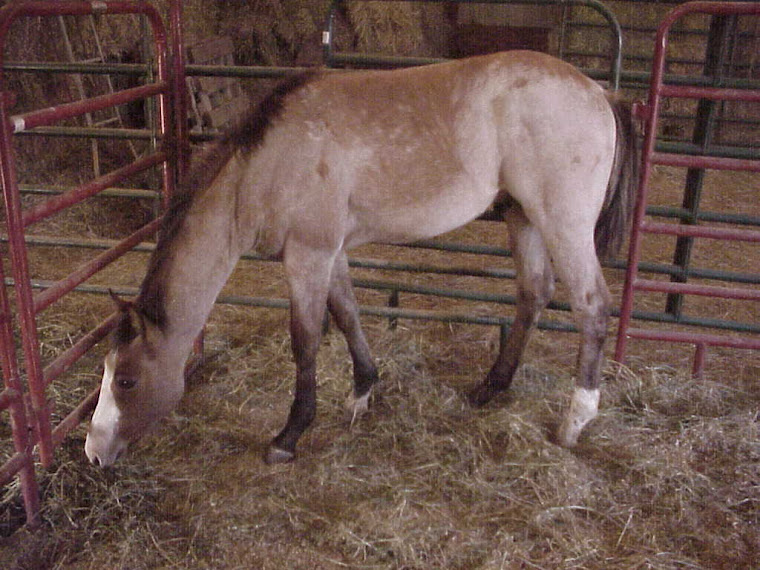
Fire, Henry's 9 year old North Dakota Badlands Horse, has been determined to have strong, but not direct Thoroughbred influence with Irish breeds 1st, and Eastern and Western European Warmblood as 2nd and 3rd. Hail, our 2 year old NDBH has heavy draft, (Shire, Clydesdale) as 1st, Irish breeds 2nd, and non-Arabian Oriental as 3rd. Hawk, the 3 year old NDBH that I have featured here, is called "mainly Spanish," with South American Criollo 1st, Eastern European Warmblood as 2nd, and Brazilian breeds as 3rd. Irish and European Warmblood seems to be the most common in those few who have been tested with only one NDBH showing much, if any, Quarter Horse blood.
If for no other reason, it is very interesting and exciting to find out what bloodlines our horses carry, but we also plan to make up a data base of the results of tested horses. Therefore, we are encouraging anyone with a horse that can be proven to have come from the park or whose lineage goes directly to horses from the park, to have their horse tested and get the results back to us. Go to FaceBook, North Dakota Badlands Horse Registry to get details.
Sunday, January 22, 2012
FACEBOOK PAGE
I will continue to use this blog for longer stories about the wild horses, stories about those who have been gentled, and about some of the owners, but since Facebook is so popular and easier to use as far as adding photos and comments, I and some of the others who follow the horses, will be using the North Dakota Badlands Horse Registry Facebook site for publishing more information and photos of the horses. Please join us there and help up spread the word of the beauty and value of the horses of Theodore Roosevelt National Park.
Saturday, January 14, 2012
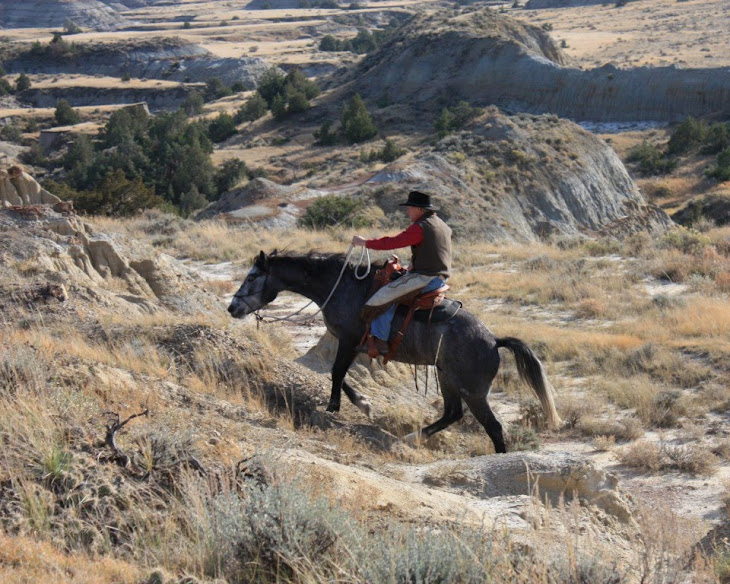
HAWK, THE SADDLE HORSE

Difficulty accessing this blog has, for some time, kept me from reporting on the wild horses or those being trained, but I have recently fixed the problem and will try to post some updates before the next season starts.
I will get to updates of the bands remaining in the park, but first must share more of Hawk's story, because I am so excited at the progress he has made.
By spring of 2011, Hawk was doing everything he needed to do to be ready for his under saddle training. He was obedient and gentle with every part of his handling and enjoyed each new aspect of his training. It was time to start the riding. Since I have not started a horse since my 11 year old gelding, and since Hawk has always been extremely timid and sensitive, I had decided to find a natural horsemanship trainer to start his under saddle training. Birgit Schwartzenberger had bought one of the stud colts from the park; in my many conversations with her, I had decided she was the perfect trainer for my sensitive boy.
We took Hawk to Birgit on one of our trips to the park so that he would have company in the trailer for such a long trip. He seemed to accept his new, temporary home very well that first day. I was wondering how he would accept a new leader in his life since I had been his only handler for his first 1 1/2 year in captivity. Birgit had told me that she starts every horse as if it had never been touched so that she would know how it would respond to her and so that there would be no holes in it's education. I was pretty confident in the things I had taught Hawk, but was not surprised that he would struggle to accept and trust this new person. The first report Birgit gave me was that he was unwilling to give her 100% of his trust. She said some horses took months, even years to fully trust, but she would not skip this vital step in his training. She was hoping he would one day yield himself completely, especially his right side, to her patient persuasion; it might be the next day or several months down the road. The good news was that what he knew, he knew well. She was amused at how much he liked to play games and play with obstacles. He had also gained a friend, a goose; they became unlikely buddies and playmates.
After a few more weeks, Birgit called to report again on Hawk's continuing education. This time she was delighted to report that he had began to trust her and give his whole body to her. She was not riding him because, at first, he would not stand perfectly still with nothing on his head and allow her to saddle him. Even though he had been fine with my English saddle and small western one, he wasn't sure he wanted her big western saddle with all it's attachments. More time, patience, and determination on Birgit's part convinced him that it was easier to let her saddle him than have to run around the round pen. She was planning to ride him the following weekend, when her husband would be home to pick up the pieces if there was a wreck, though she knew Hawk would be fine.
I was anxious to hear how the first ride had gone, but waited for Birgit to call because I knew she would when she had time and something to tell me. The next report was again a bit of a downer for both of us. Birgit was pleased that Hawk did not attempt to buck, but he also did not want to move. It seemed pretty logical to him that he should stand still no matter what she did with him. We had both been teaching him that for the last 20 months, so why would she suddenly change the rules? Actually, he knew very well how to move away from pressure when his leader was beside him, but he could not seem to transfer those cues to having her on his back. Birgit is not one to use spurs or whips, so it took a little longer, again, for him to understand that she wanted him to move forward, but he eventually got it and began to walk around the pen. She had hoped again that the light would go on and he would start feeling OK with moving forward with her on his back, but he seemed confused or unwilling to accept this new arrangement, so each day was a challenge. Having trained wild horses before, Birgit found that they were more comfortable and willing to move out when they were out in the open, so Birgit took him out to the yard and into a field. What happened next surprised even her; he ran. Well, that was not in the plan, so she stopped him and took him back to the pen for more training.
Weeks went by with less progress than Birgit wanted to see. He was starting, stopping, turning and backing, all on light cues, but he just did not seem to enjoy having her on his back nearly as much as he liked having her next to him. It was soon time for me to pick him up, and Birgit was still not satisfied with where he was in his training, but she assured me that he had no holes in that training; he just needed time to get used to the riding. When I came to pick him up, we spent a couple hours working with him so that I could see what he had learned. He was timid and unsure, but he did what she asked. Again she reassured me that I could take it from there or, if I just wasn't comfortable with riding him, just give him more time to grow up and bring him back the next year.
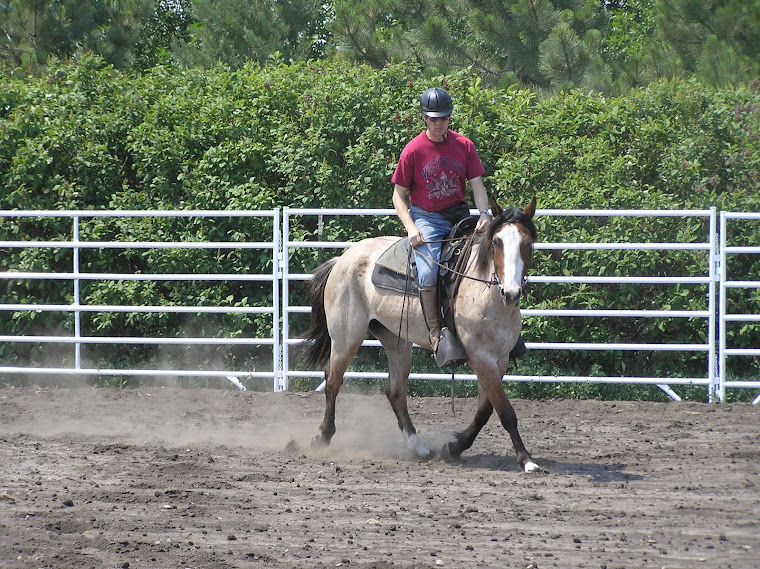
Well, even though Henry was gone most of the fall, Hawk and I did "play" as much as we could in the round pen. I took him back to the beginning too, going through all the steps before stepping up on him. At first, he was uneasy; he even took a little frightened jump once in a while, but just one jump at a time and not too hard to sit, even with the English saddle. We started by having Henry ride Fire around the pen so that Hawk could follow him. That worked well, so that by the time Henry was gone to SD, Hawk knew he was supposed to walk forward. Sometimes he would get stuck and I would have to bend his neck around the side until he stepped forward. It also helped to walk beside him and give him the verbal cues as well as the pressure on his side. He was pretty good with verbal cues when free lunged in the round pen. Little by little he became more comfortable with the riding around in the pen. I slowly added cones, a rail, and the bridge. He began to enjoy walking around and over the obstacles. One day it was time to ask for the trot. Since I knew he would be startled if I asked too much, I just used the verbal cue to trot. He trotted! Then he realized he was trotting with me on his back; it freaked him out a little and he stopped, but I just reassured him and asked him again. Each time got easier for him.
When Henry got home again in December, it was time to move to the big arena. He was fine with that and seemed to enjoy having more space. He still wasn't completely comfortable with the trot and only wanted to trot in a straight line. That was OK. Again, I started adding obstacles to give him something to think about. It worked well for him. He became more and more interested in trotting, even trotting over the rails and around the cones. He was like a kid at an amusement park with the cones, rails, chair. Oh, and best of all, the bridge. Hawk loves the bridge; he thinks he should go over it every time around the arena.
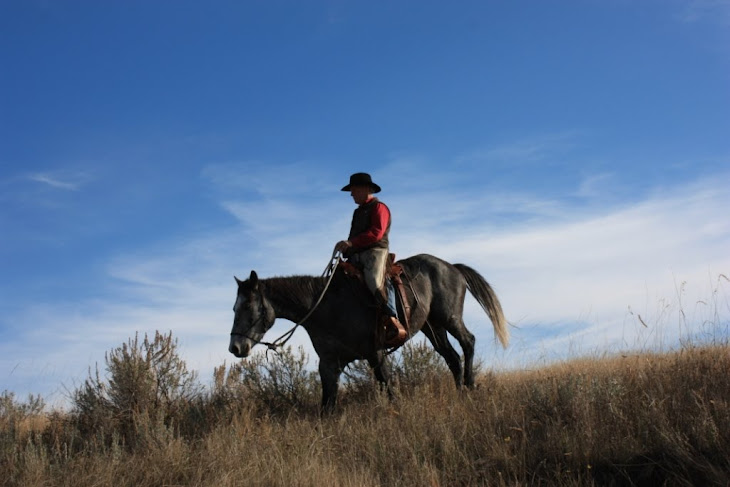
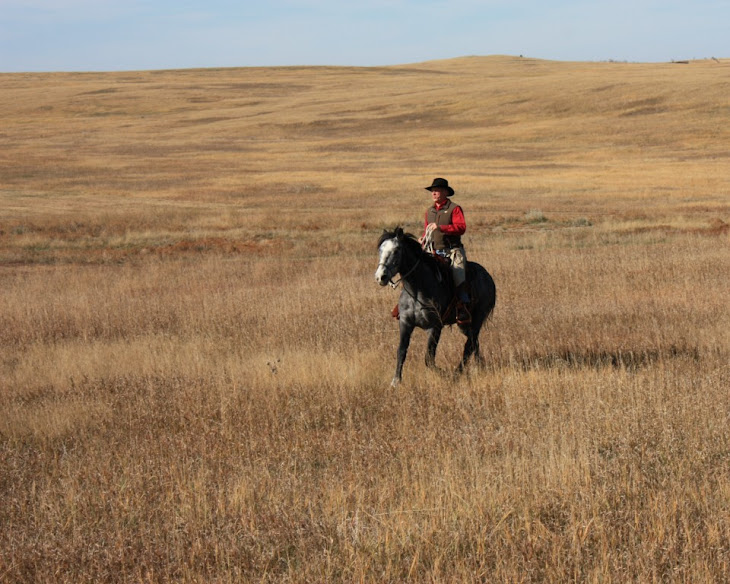
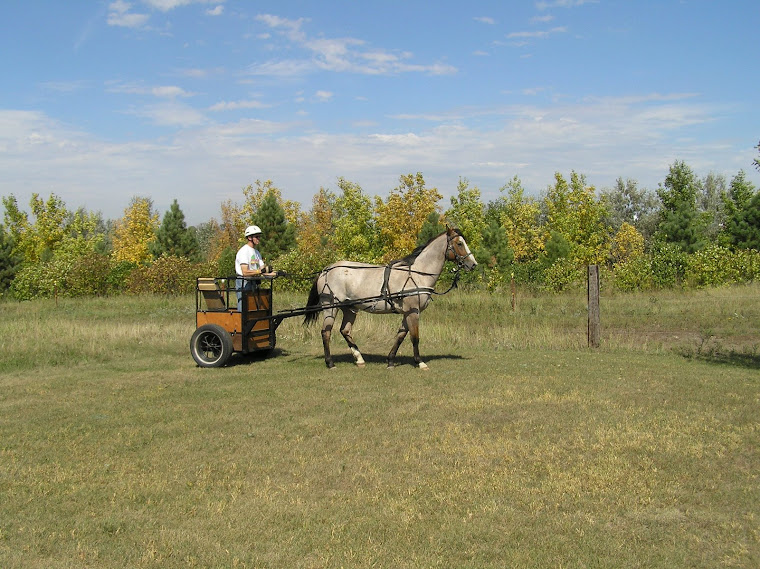
I may not have made what some would think was a lot of progress with riding Hawk. We are still not cantering. He isn't doing fancy figure eights, roll backs, and sliding stops like some three year olds, but he loves to "play". He hangs his head over the gate after I have let him go because he isn't done playing yet. He has been an unusual horse all along in that trust came slowly, he had to have each new aspect of training introduced slowly and carefully. I believe that, if I or the trainer had pushed him too hard and too fast, he would have rebelled or become a horse that would tolerate something for a time and then blow up. Because we took our time and allowed him to use his own timetable, he is a happy, curious, interested horse who develops an incredible bond with those he knows. I could not ask for a more enjoyable riding partner. I think he looks forward to our sessions as much as I do.
Wednesday, June 1, 2011
2011 INTERESTING OBSERVATIONS
Though, because of the weather and unexpected budget cuts, the 2011 observations have been a challenge for all involved, I have seen some rewarding behaviors with the bands. Thunder and his mares are most often a challenge to get close enough to evaluate for condition and pregnancy. They have been coming up on the flats on the east side of the park quite regularly, so it pays to be patient and wait for them to appear on top and avoid having to search for them in the breaks below. On a warm morning in April, I found them grazing near the southeast corner. Not wanting to disturb them, I walked in to about 200 yards and sat down with my scope to get a behavioral observation. It is impossible to see them on the upper flats without them seeing you, but even though they had seen me come in, they were OK with me watching from that distance. The mares quietly moved along as they munched what they could find of the new green grass just poking through. Though I was sure Thunder had seen me walk in and sit down, after about 20 minutes, he decided to check who this new intruder was. We don't like to see any reaction to our presence, but it was not to be avoided that morning. Thunder trotted around me to the north to get down wind of me and get a better look. Usually, if he approaches, he comes alone, but this time the mares and yearlings started to follow. In family groups they trotted past me and formed a semi-circle east of me about thirty feet away. I just sat on the ground snapping pictures as they, all lined up side by side, looked at me as if the question what I was up to sitting out in their new grass. After a few minutes they walked away and resumed their grazing. It was a rare visit by some of the most skittish mares in the park and I relished the gift they had just given me.
One of my other challenges earlier this spring was to find Sidekick to record any new foals. Sidekick and his band had been hanging in the area east and southeast of Buck Hill most of the last month. Generally a team would go in on horseback since it is a long hike from anywhere, but I didn't have my horse with me this trip. Earlier, one of the Biologists had seen Bella from afar and determined that she was close to foaling. I wanted to check on her so started in from the east side. Sidekick saw me, but was unconcerned, but when Bella saw me, she moved off to the west with her new foal. I sat down and started a study with them. They were moving among the breaks and sagebrush, so it was difficult to see them all from my distance. I had to get a little closer. Sidekick had moved to the bottom of a clay butte to the left while his mares grazed on either side of a butte to the right. My only way to see them all was to try to get on higher ground. Since Sidekick was paying no attention to me, I headed for a rise beyond him. Bella, by that time had settled in to grazing. I was able to get to the small rise and sit down to wait for the other mares to come over the top and join Bella. As I hoped, the other mares gradually came my way over the small butte to graze with Sidekick and Bella on my side of the butte. I was now committed to stay where I was because I did not want to frighten them. I was able to start a new observation while Bella and her new foal laid down and slept about 60 feet from me. Still not wanting to frighten them and needing to determine the sex on the foal, I waited until the foal rose to nurse. The little filly pestered her dam until Bella stood and allowed her to nurse. Bella then turned and brought her week old filly within 30 feet of me as if she knew I wanted to get a photo of this pretty little bay. After they had moved off and Mist had allowed me to determine that she was close to foaling, I walked back out the way I had come, marveling at how trusting these horses are of me. I truly think they remember those who have tracked them in the past and sometimes even welcome us into their herd. The little filly's name is Larkspur.
On that same trip, I saw Sidekick and his band from Buck Hill one cold snowy morning. There was a new foal, so I had to slide down Buck Hill to check out this new baby of Mist's. They were in the exact place where Eileen and I had been caught in the terrible storm that had damaged 100 home in Dickinson a couple years earlier. This time the ground was sloppy with melting snow. I didn't take time for a study this time but walked in so they could see me and know I meant no harm. To my surprise, I realized it was Ember's Girl who had foaled, not Mist. The little foal was very new and miserably cold. Every time it tried to lay down, it would immediately get up again because of the cold snow. I was able to get close enough to get a photo by kneeling in the snow, but since it was a dark, cold day and a dark foal, I was having trouble telling the sex. After Sidekick had come by to check me out, I finally got on my stomach to get a shot of the little one's under side. Having me flat on the ground upset Embers' Girl and she uttered a strange alarm, so I popped back up again. She was fine with me again as long as I stayed upright. Checking my photos confirmed that the new foal was a colt. I thanked Embers' Girl for her patience and headed back to the top of Buck Hill through the muck and up the slippery slope to the car. We called the colt Hawthorn.
Another week, after our riding team had covered the whole area by horseback and never seen them, I walked to the east rim with a scope was lucky enough to find them on top of a flat butte. Al had ridden on that butte the day before, but no ones knows where they were hiding. Again I took off on foot for the bottoms southeast of Buck Hill. This time I could see them from quite a distance without them seeing me, so I started a study while walking in. I could see that the expected foal from Mist had been born and Mist was already in her foal heat. I was struggling to see all of them so decided to move around the south to higher ground and have a better angle on them. Unfortunately, by the time I got to my vantage point, they were coming down for water. I had to retrace my steps and get an advantage from another small butte. Mist and Snip's Gray were uneasy seeing me there, but there was nowhere else for me to go where I could see them. I sat down to east my lunch and wait them out. I was finally able to get my 30 minute observation just before they moved behind another small butte. Knowing I didn't have time to find any other bands that day, I decided to go in to determine the sex of Mist's foals and maybe get a photo. I carefully crawled onto a tiny outcropping and watched as they grazed. Eventually they were on all sides of me, seeing me, but now not caring that I was close enough to photograph the foals. I was able to photograph tiny Primrose, one of Ember's last foals, a cute bay roan filly.
In all of these instances, the horses accepted me when I was patient and allowed them to see and smell who and what I was. These experiences are gifts that I will never forget. There is nothing like the feeling of acceptance by these marvelous animals.
One of my other challenges earlier this spring was to find Sidekick to record any new foals. Sidekick and his band had been hanging in the area east and southeast of Buck Hill most of the last month. Generally a team would go in on horseback since it is a long hike from anywhere, but I didn't have my horse with me this trip. Earlier, one of the Biologists had seen Bella from afar and determined that she was close to foaling. I wanted to check on her so started in from the east side. Sidekick saw me, but was unconcerned, but when Bella saw me, she moved off to the west with her new foal. I sat down and started a study with them. They were moving among the breaks and sagebrush, so it was difficult to see them all from my distance. I had to get a little closer. Sidekick had moved to the bottom of a clay butte to the left while his mares grazed on either side of a butte to the right. My only way to see them all was to try to get on higher ground. Since Sidekick was paying no attention to me, I headed for a rise beyond him. Bella, by that time had settled in to grazing. I was able to get to the small rise and sit down to wait for the other mares to come over the top and join Bella. As I hoped, the other mares gradually came my way over the small butte to graze with Sidekick and Bella on my side of the butte. I was now committed to stay where I was because I did not want to frighten them. I was able to start a new observation while Bella and her new foal laid down and slept about 60 feet from me. Still not wanting to frighten them and needing to determine the sex on the foal, I waited until the foal rose to nurse. The little filly pestered her dam until Bella stood and allowed her to nurse. Bella then turned and brought her week old filly within 30 feet of me as if she knew I wanted to get a photo of this pretty little bay. After they had moved off and Mist had allowed me to determine that she was close to foaling, I walked back out the way I had come, marveling at how trusting these horses are of me. I truly think they remember those who have tracked them in the past and sometimes even welcome us into their herd. The little filly's name is Larkspur.
On that same trip, I saw Sidekick and his band from Buck Hill one cold snowy morning. There was a new foal, so I had to slide down Buck Hill to check out this new baby of Mist's. They were in the exact place where Eileen and I had been caught in the terrible storm that had damaged 100 home in Dickinson a couple years earlier. This time the ground was sloppy with melting snow. I didn't take time for a study this time but walked in so they could see me and know I meant no harm. To my surprise, I realized it was Ember's Girl who had foaled, not Mist. The little foal was very new and miserably cold. Every time it tried to lay down, it would immediately get up again because of the cold snow. I was able to get close enough to get a photo by kneeling in the snow, but since it was a dark, cold day and a dark foal, I was having trouble telling the sex. After Sidekick had come by to check me out, I finally got on my stomach to get a shot of the little one's under side. Having me flat on the ground upset Embers' Girl and she uttered a strange alarm, so I popped back up again. She was fine with me again as long as I stayed upright. Checking my photos confirmed that the new foal was a colt. I thanked Embers' Girl for her patience and headed back to the top of Buck Hill through the muck and up the slippery slope to the car. We called the colt Hawthorn.
Another week, after our riding team had covered the whole area by horseback and never seen them, I walked to the east rim with a scope was lucky enough to find them on top of a flat butte. Al had ridden on that butte the day before, but no ones knows where they were hiding. Again I took off on foot for the bottoms southeast of Buck Hill. This time I could see them from quite a distance without them seeing me, so I started a study while walking in. I could see that the expected foal from Mist had been born and Mist was already in her foal heat. I was struggling to see all of them so decided to move around the south to higher ground and have a better angle on them. Unfortunately, by the time I got to my vantage point, they were coming down for water. I had to retrace my steps and get an advantage from another small butte. Mist and Snip's Gray were uneasy seeing me there, but there was nowhere else for me to go where I could see them. I sat down to east my lunch and wait them out. I was finally able to get my 30 minute observation just before they moved behind another small butte. Knowing I didn't have time to find any other bands that day, I decided to go in to determine the sex of Mist's foals and maybe get a photo. I carefully crawled onto a tiny outcropping and watched as they grazed. Eventually they were on all sides of me, seeing me, but now not caring that I was close enough to photograph the foals. I was able to photograph tiny Primrose, one of Ember's last foals, a cute bay roan filly.
In all of these instances, the horses accepted me when I was patient and allowed them to see and smell who and what I was. These experiences are gifts that I will never forget. There is nothing like the feeling of acceptance by these marvelous animals.
Friday, April 22, 2011
THE STUDIES AND STRUGGLES OF 2011
The feral horse studies of 2011 have been difficult and frustrating with the weather and ground conditions in the Park this spring. Though we were supposed to began the study in March in order to find all the foals, we were held back by storm after storm. It would be safe to say that there has been a snow storm at least once a week since our target date of March 15. With only one full time person, our new tracker and office manger, Maggie, it has been a daunting challenge to even find all the bands. If not for the help of the Biologists, Mike and Wade, we would still be looking for some of the more remote bands, since it has been so wet that even Al and his horses were prevented from getting out.
With the hard work of the biologists, Maggie, Al, Jennifer, Henry and me all the bands have been accounted for and, to date, 12 foals have been found. Most of the bands were as they had been when we finished the 2010 observations in November, but there have been some changes, as there always are. Embers, the oldest stallion in the park, has lost his two mares, Bella and Mist, to the younger stallion, Sidekick. Bella has already dropped a pretty bay filly, Larkspur, that should roan like her sire, and Mist was about to pop the last time I saw her. Sidekick's mare, Embers' Girl has a new colt named Hawthorn.
Some of the red roan mares appeared to be trying to play some tricks on our trackers early this spring. There was a red roan mare with Mystery that they assumed was Shale, who had a yearling filly with a star with her, but the red roan mare from Gray Ghost's band, Ginger, was missing her yearling filly with a star and Nordie, the red roan mare from Little Sorrel's band, was nowhere to be found. They also had seen a few horses that didn't seem to fit the description of any of the bands. Maggie had never been able to get close enough to them to identify who they were, but they had a new dark foal with them.
When I was finally able to get out, we were able to figure out the puzzle. The unknown band turned out to be Smokey and Shale from Mystery's band along with Shale's yearling filly, Teepee. Smokey had a new foal that we called Crocus. Then who were the red roan mare and yearling filly with the star now in Mystery's band? Finding them again that day, we were able to determine that they were Ginger and her filly, Whiskey, from Gray Ghost's band. There was only one more piece of the puzzle to figure out; the red roan mare with Gray Ghost had to be the missing Nordie!
With all of that mix up straightened out, we were able to determine that we had only lost one horse over the long, cold winter. The broken, Randy, who had been badly injured in stallion fights, had finally succumbed to the draining task of digging for grass through the deep snow. It was a blessing for him to finally die.
It wasn't long before the horses started playing their tricks again, but this time Maggie was on to them. Nordie somehow found her way back to Little Sorrel and was replaced in Gray Ghost's band by the dark red roan mare, Tanker. It must have been a pretty intense fight between Little Sorrel and Gray Ghost, because Tanker was Little Sorrel's darling who stuck to him like glue. One day I was watching Gray Ghost's band and thinking how boring they were making my job; the next day he had taken the two mares Mystery had lost. I had seen Mystery running from the area, but the emaciated Gray Ghost had been strong enough to win the mares. By then, Shale also had a new foal, a bay filly we called Lupine, but Smokey's foal turned out to be a colt, not a filly, so we had to change his name to Prairie Smoke.
We gave the name Crocus to a beautiful flaxen chestnut foal out of Flame until I saw the foal up close and found out that Crocus was also a colt! We named him Flax! Two other foals in the Double band are Frosty's Fool, a cute black filly born on April 1st, and Indian Paintbrush, a bay filly out of Pretty Girl.
The two latest foals hadn't been named yet but our very first foal was out of Raven, the pretty little Esprit. Another one of Mystery's mares, Cheyenne, had an extremely active little bay filly, Sumac. Copper continued passing his color on in his new filly, Buttercup, out of River.
I will soon add photos at the bottom of this blog, but 10 of the foals are up on the North Dakota Badlands Horse Registry page on Facebook.
With the hard work of the biologists, Maggie, Al, Jennifer, Henry and me all the bands have been accounted for and, to date, 12 foals have been found. Most of the bands were as they had been when we finished the 2010 observations in November, but there have been some changes, as there always are. Embers, the oldest stallion in the park, has lost his two mares, Bella and Mist, to the younger stallion, Sidekick. Bella has already dropped a pretty bay filly, Larkspur, that should roan like her sire, and Mist was about to pop the last time I saw her. Sidekick's mare, Embers' Girl has a new colt named Hawthorn.
Some of the red roan mares appeared to be trying to play some tricks on our trackers early this spring. There was a red roan mare with Mystery that they assumed was Shale, who had a yearling filly with a star with her, but the red roan mare from Gray Ghost's band, Ginger, was missing her yearling filly with a star and Nordie, the red roan mare from Little Sorrel's band, was nowhere to be found. They also had seen a few horses that didn't seem to fit the description of any of the bands. Maggie had never been able to get close enough to them to identify who they were, but they had a new dark foal with them.
When I was finally able to get out, we were able to figure out the puzzle. The unknown band turned out to be Smokey and Shale from Mystery's band along with Shale's yearling filly, Teepee. Smokey had a new foal that we called Crocus. Then who were the red roan mare and yearling filly with the star now in Mystery's band? Finding them again that day, we were able to determine that they were Ginger and her filly, Whiskey, from Gray Ghost's band. There was only one more piece of the puzzle to figure out; the red roan mare with Gray Ghost had to be the missing Nordie!
With all of that mix up straightened out, we were able to determine that we had only lost one horse over the long, cold winter. The broken, Randy, who had been badly injured in stallion fights, had finally succumbed to the draining task of digging for grass through the deep snow. It was a blessing for him to finally die.
It wasn't long before the horses started playing their tricks again, but this time Maggie was on to them. Nordie somehow found her way back to Little Sorrel and was replaced in Gray Ghost's band by the dark red roan mare, Tanker. It must have been a pretty intense fight between Little Sorrel and Gray Ghost, because Tanker was Little Sorrel's darling who stuck to him like glue. One day I was watching Gray Ghost's band and thinking how boring they were making my job; the next day he had taken the two mares Mystery had lost. I had seen Mystery running from the area, but the emaciated Gray Ghost had been strong enough to win the mares. By then, Shale also had a new foal, a bay filly we called Lupine, but Smokey's foal turned out to be a colt, not a filly, so we had to change his name to Prairie Smoke.
We gave the name Crocus to a beautiful flaxen chestnut foal out of Flame until I saw the foal up close and found out that Crocus was also a colt! We named him Flax! Two other foals in the Double band are Frosty's Fool, a cute black filly born on April 1st, and Indian Paintbrush, a bay filly out of Pretty Girl.
The two latest foals hadn't been named yet but our very first foal was out of Raven, the pretty little Esprit. Another one of Mystery's mares, Cheyenne, had an extremely active little bay filly, Sumac. Copper continued passing his color on in his new filly, Buttercup, out of River.
I will soon add photos at the bottom of this blog, but 10 of the foals are up on the North Dakota Badlands Horse Registry page on Facebook.
Subscribe to:
Posts (Atom)