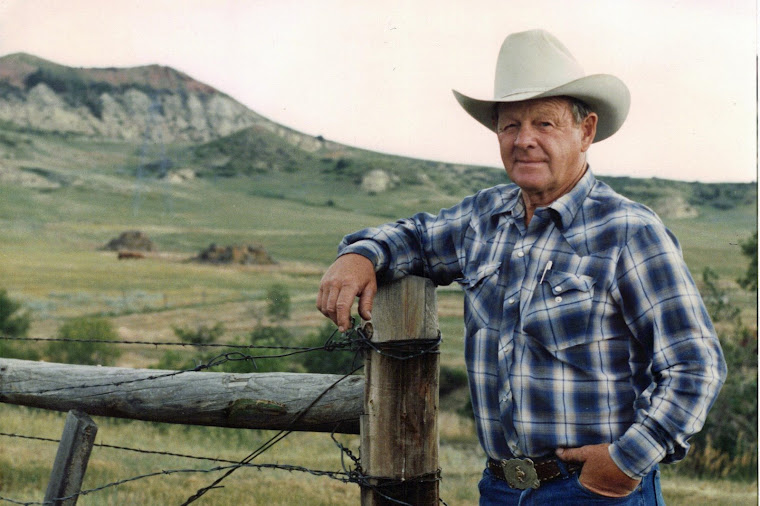
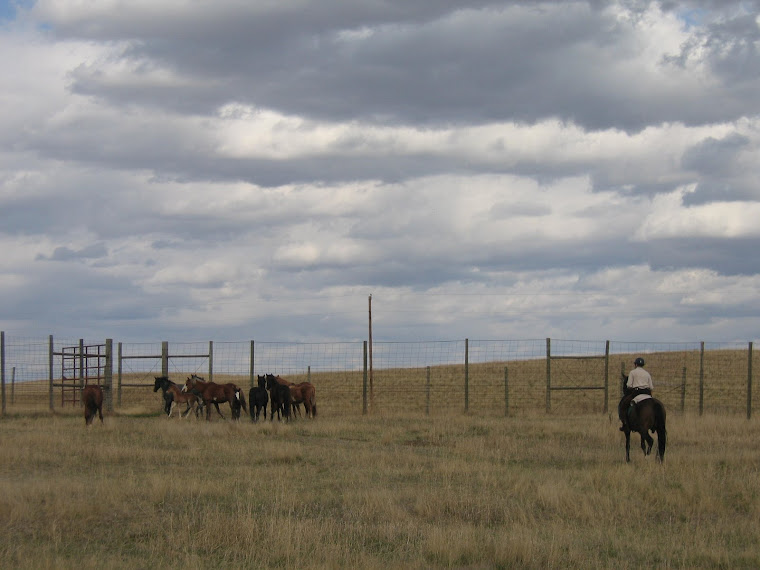
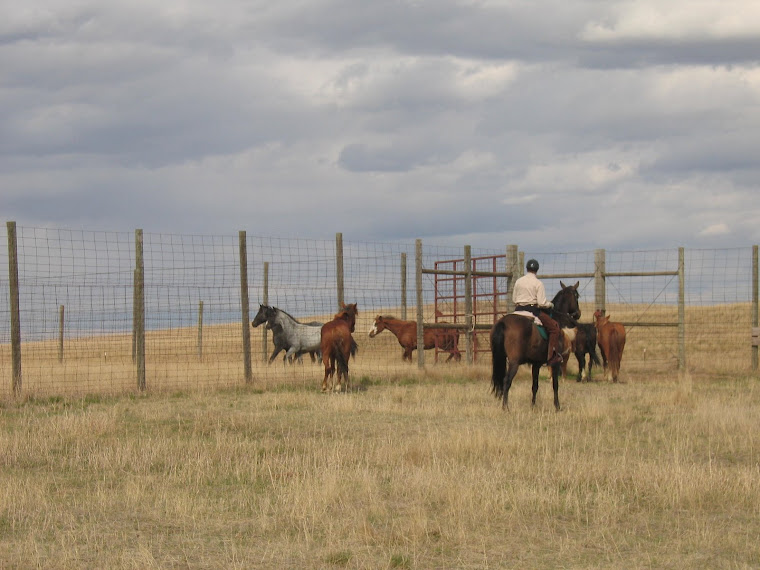
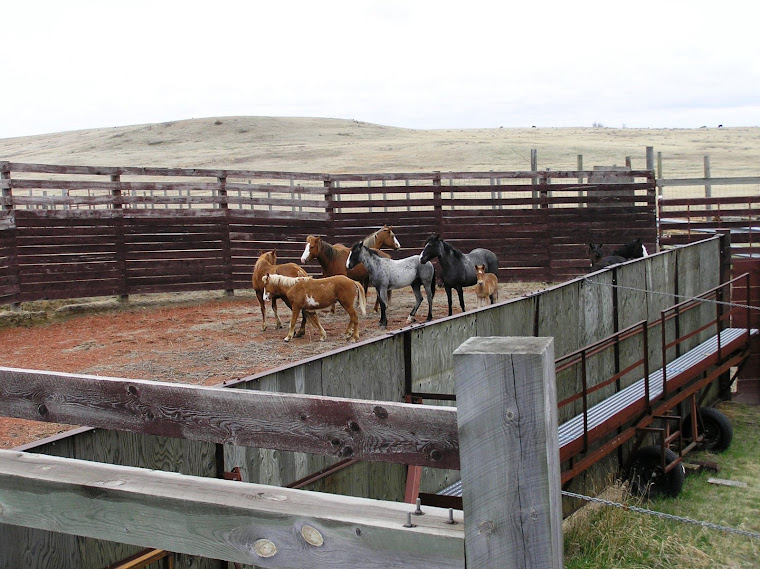
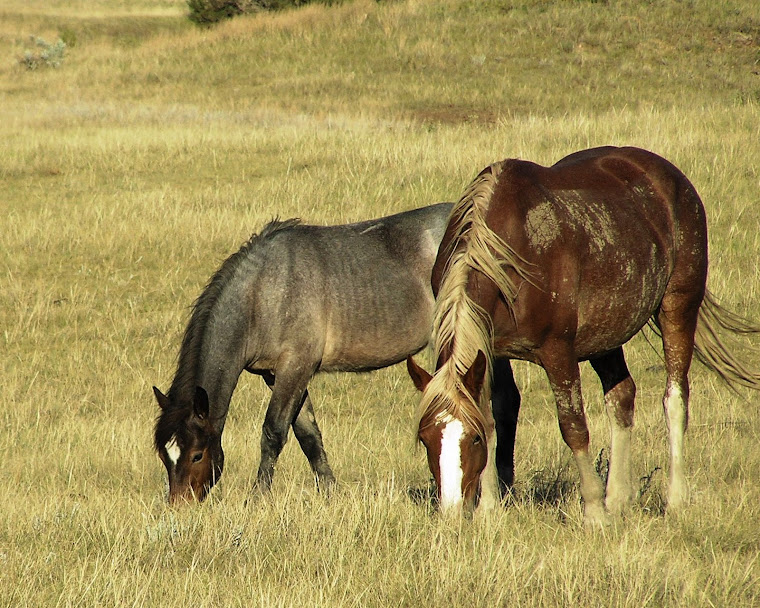
Welcome to the blog by Marylu Weber

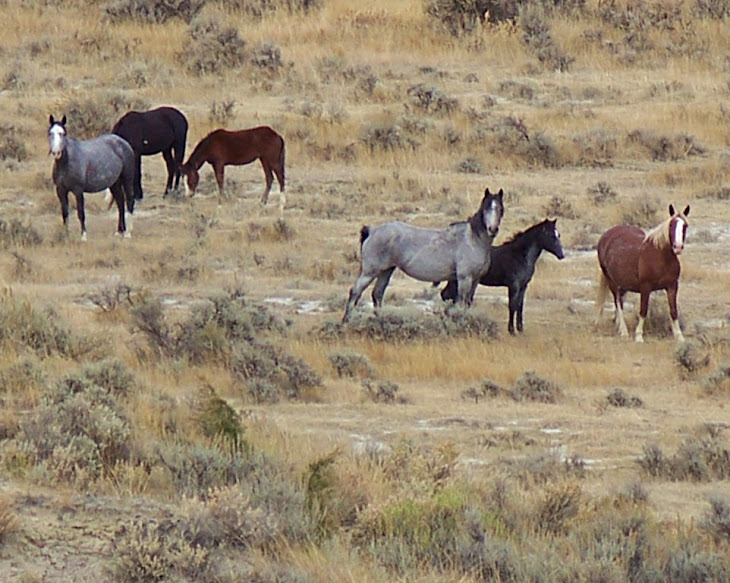
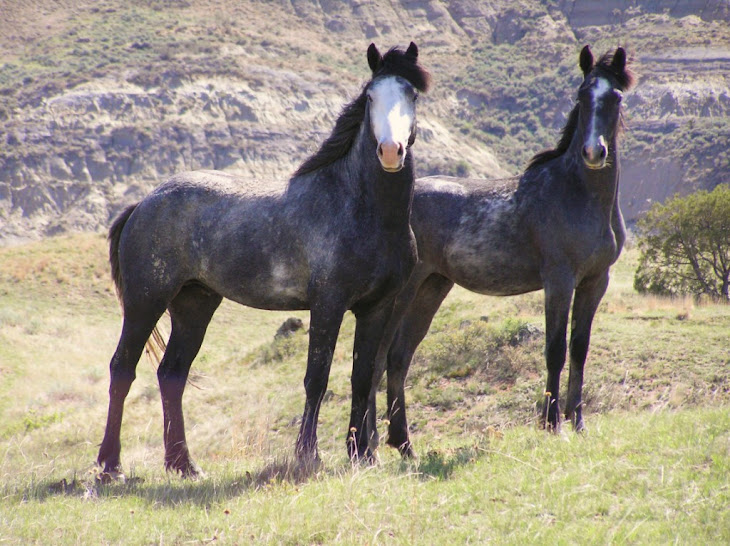
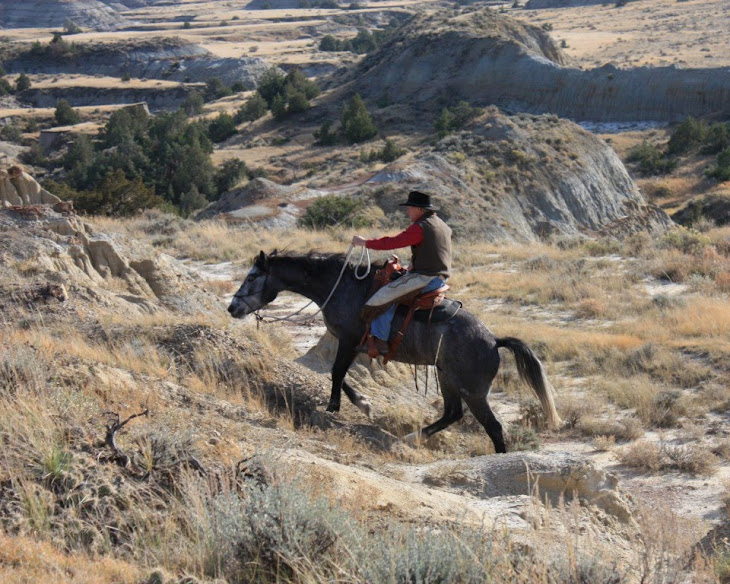
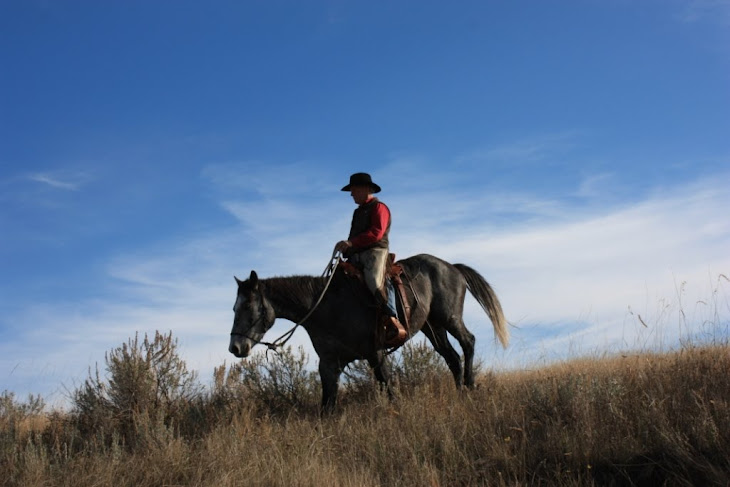
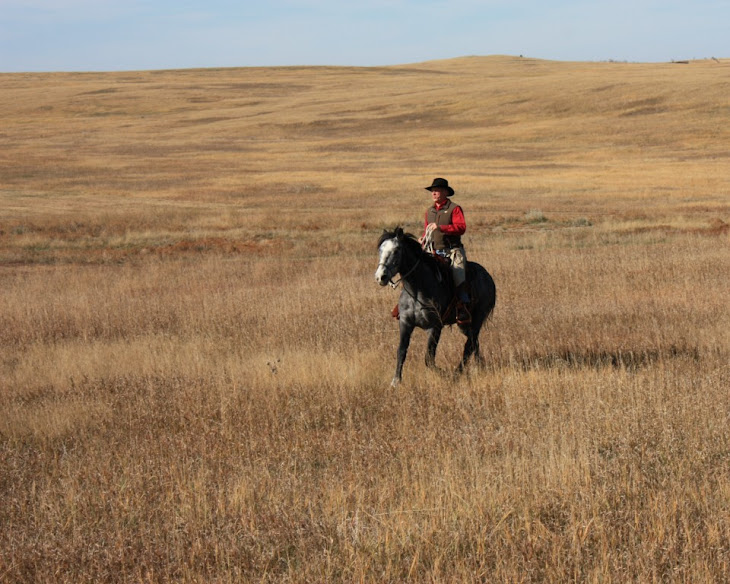
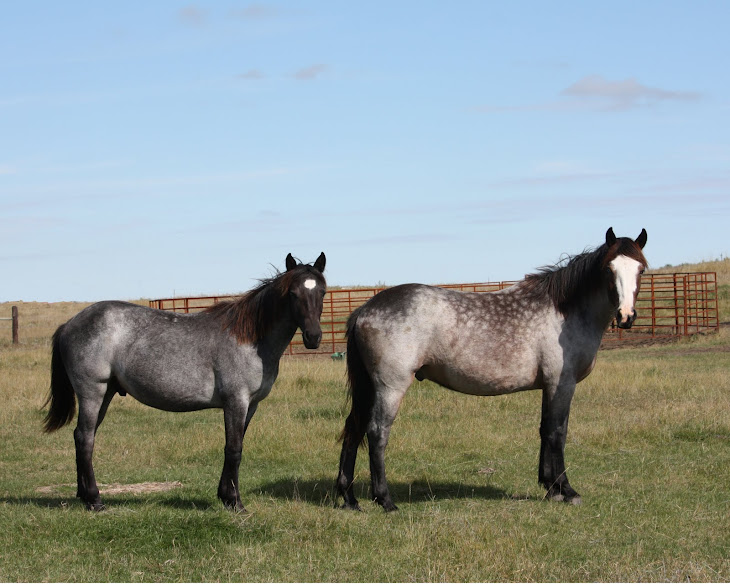
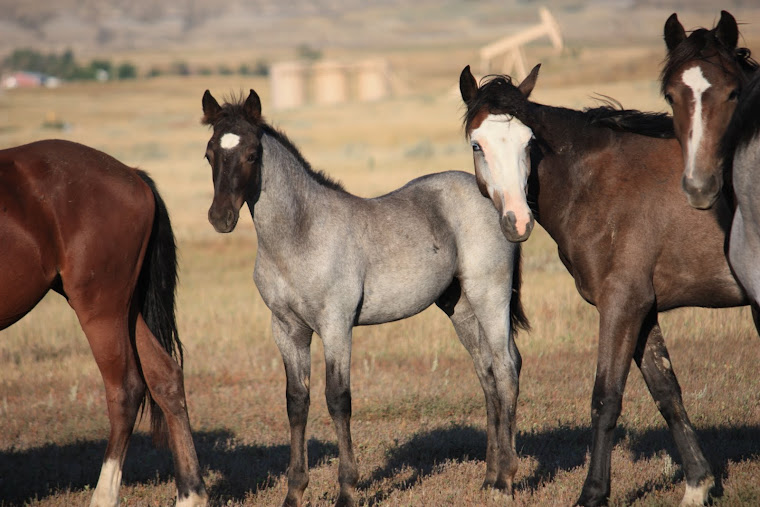
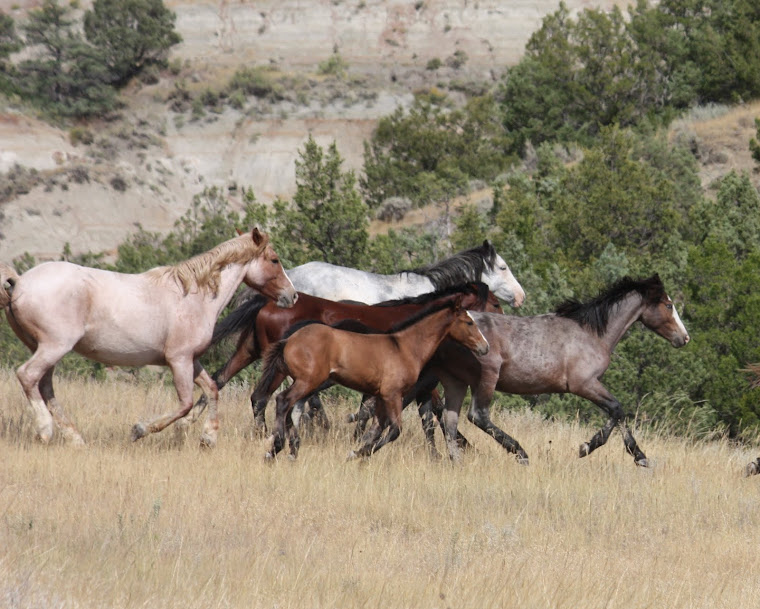
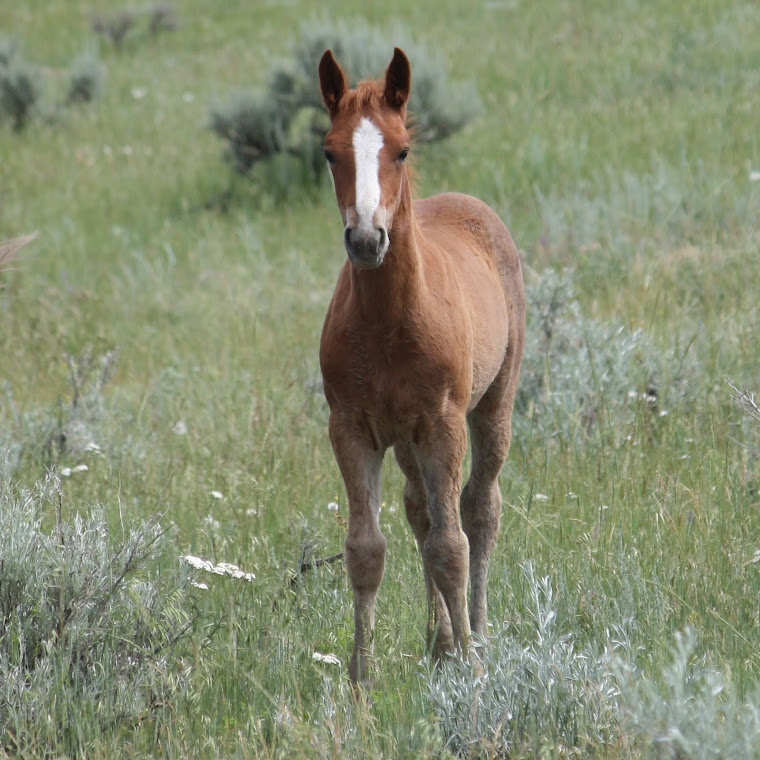
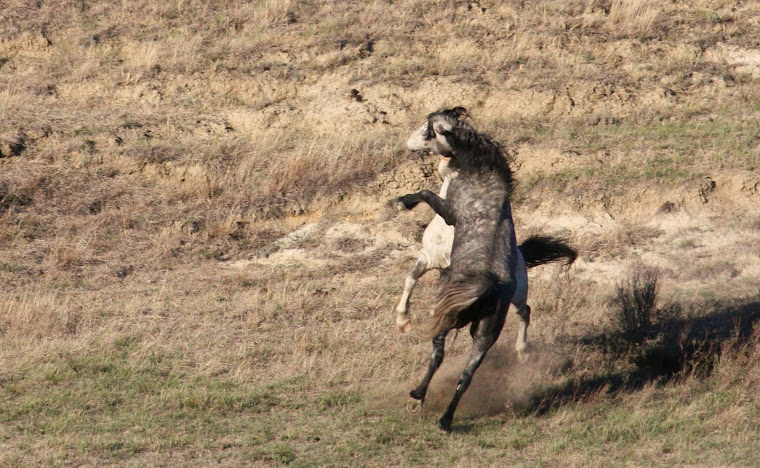
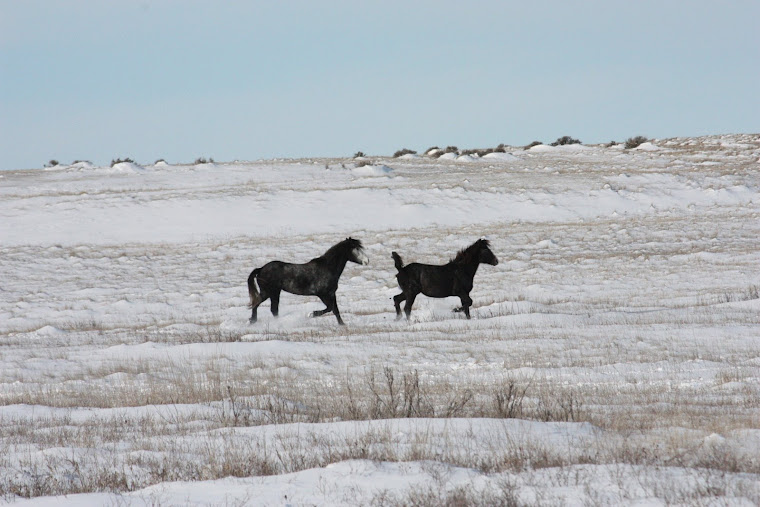
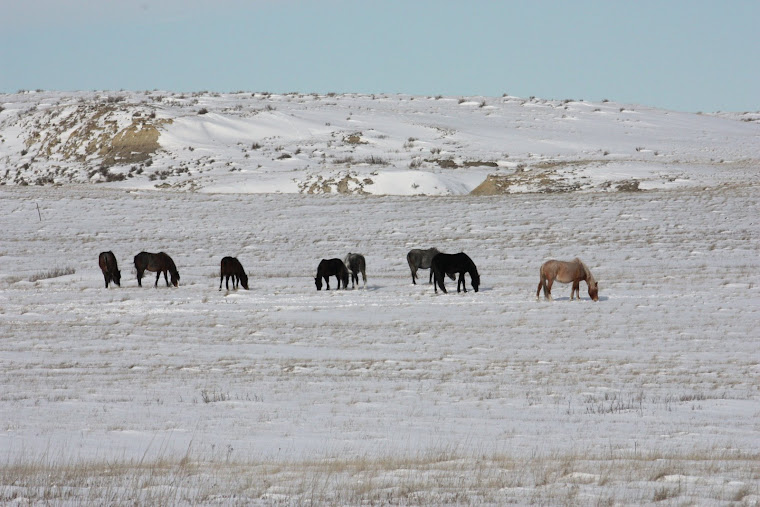
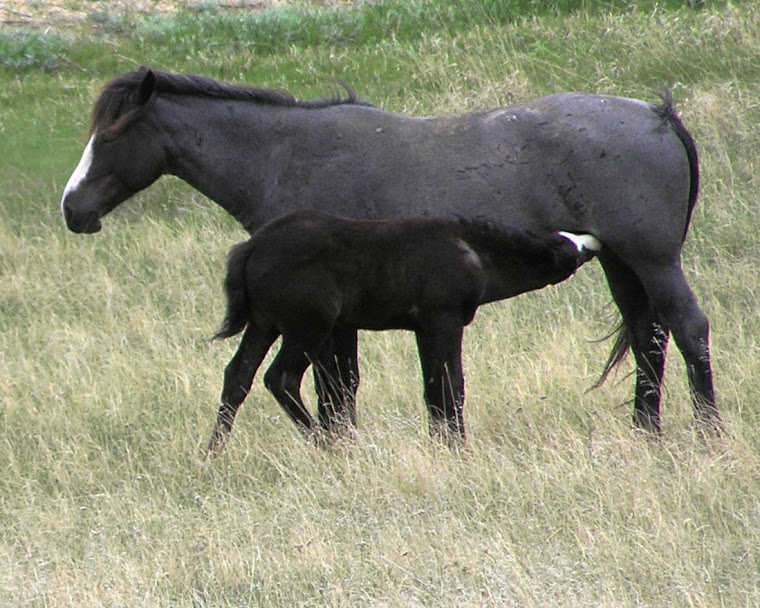
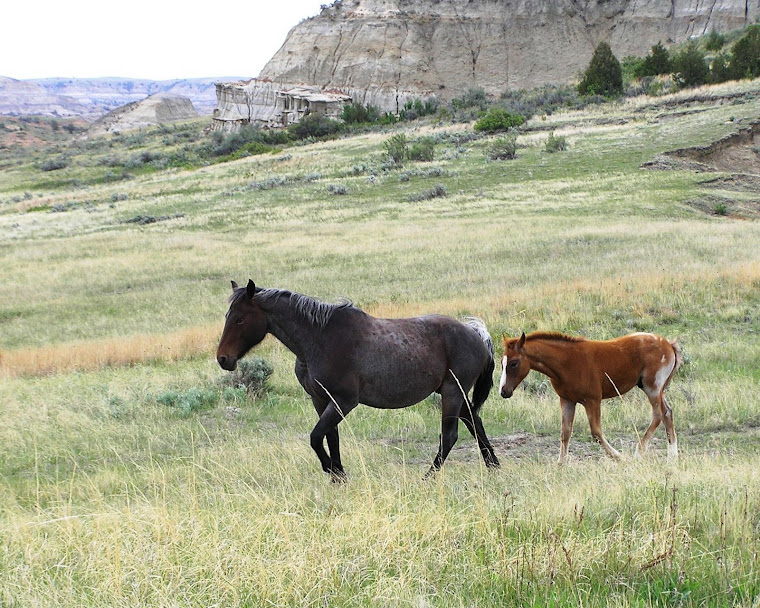
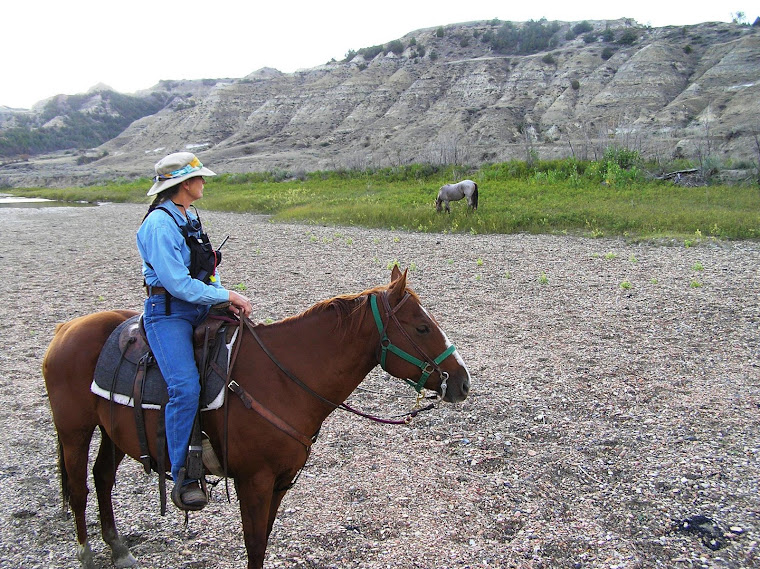
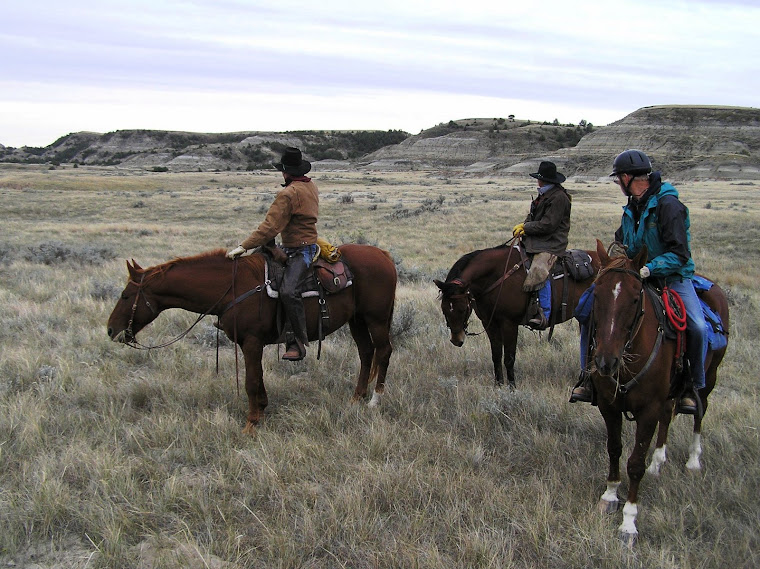
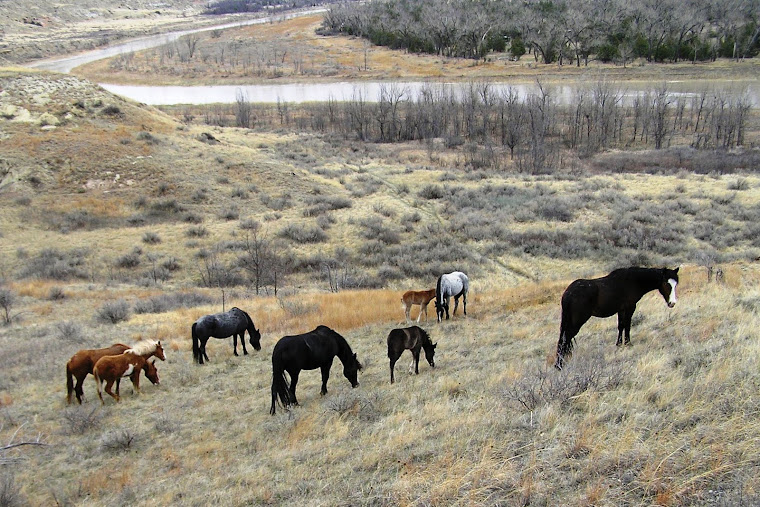
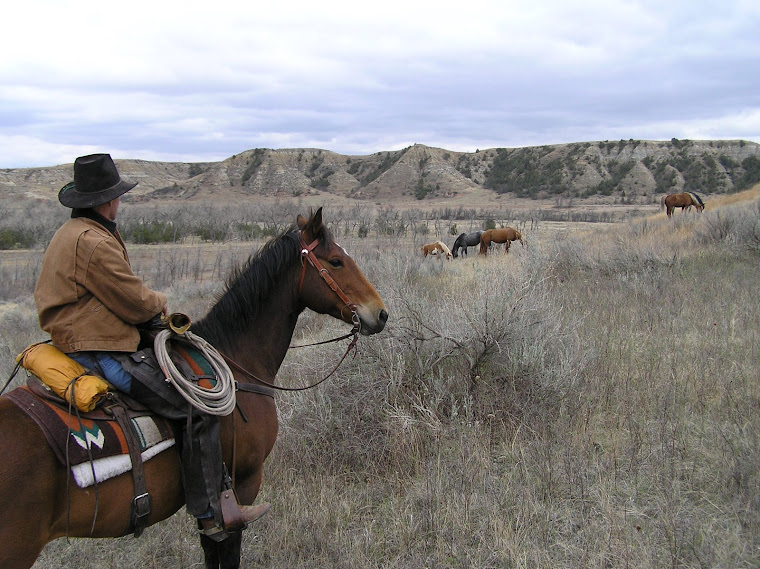
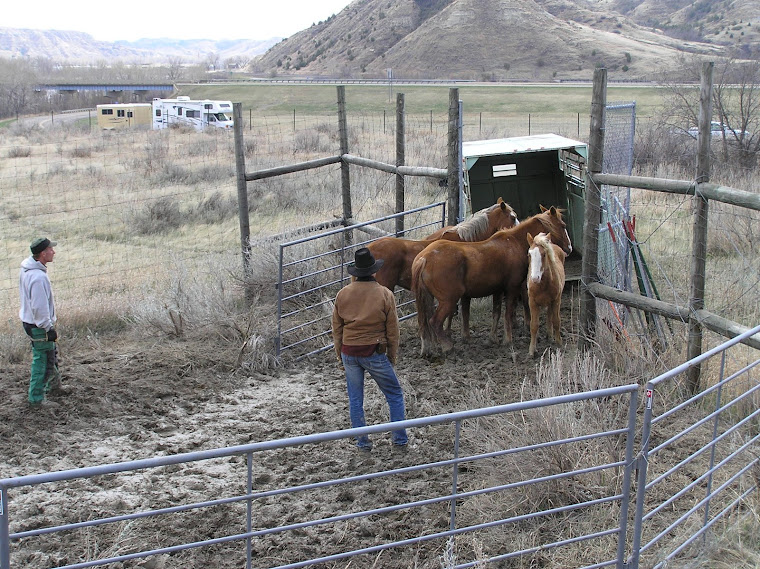
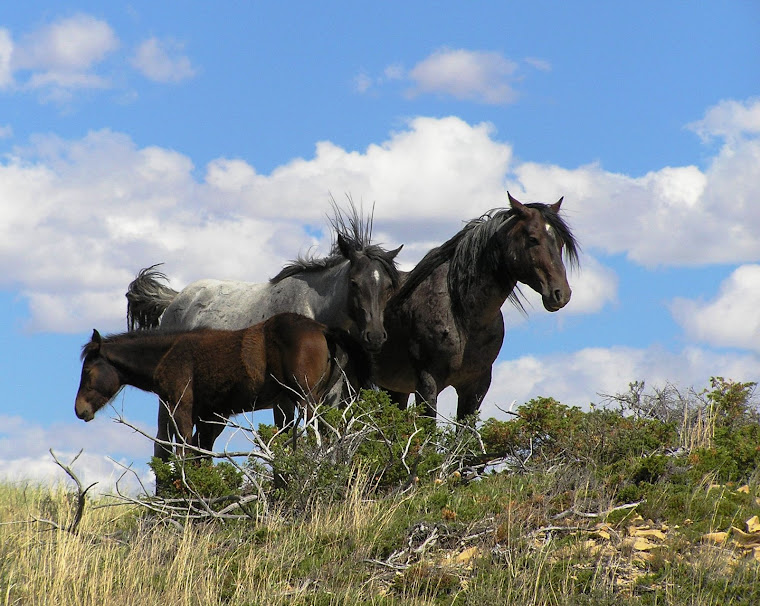
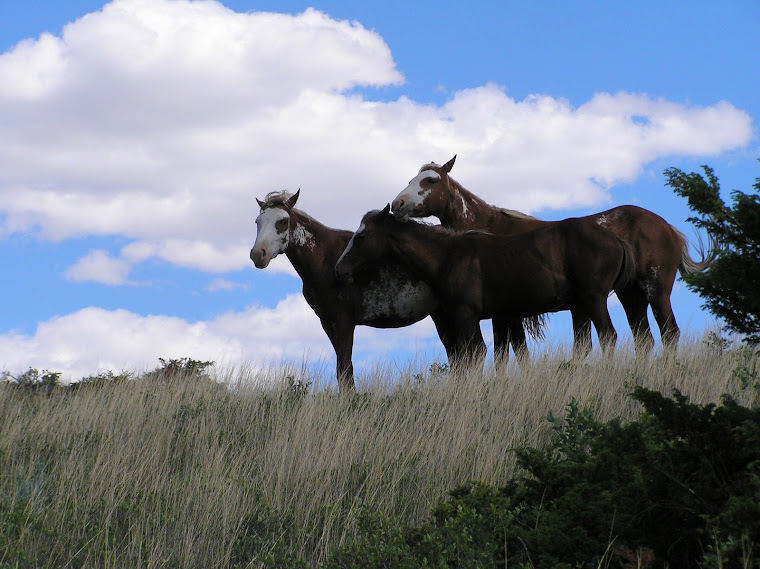
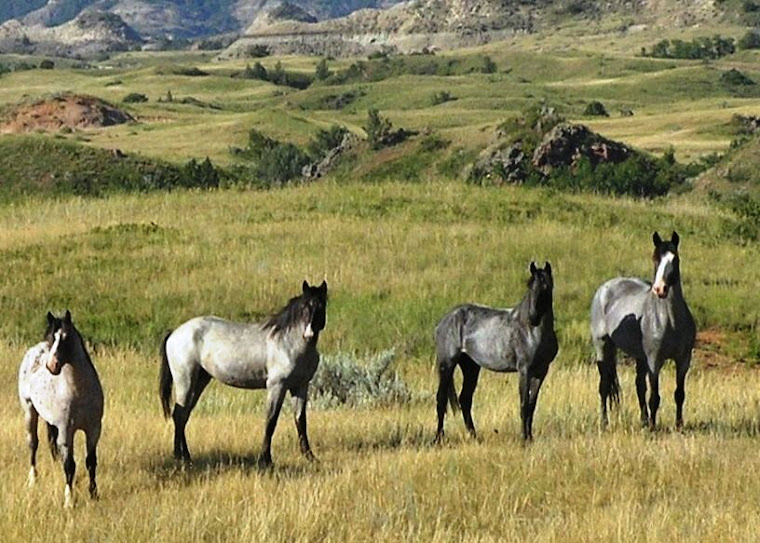
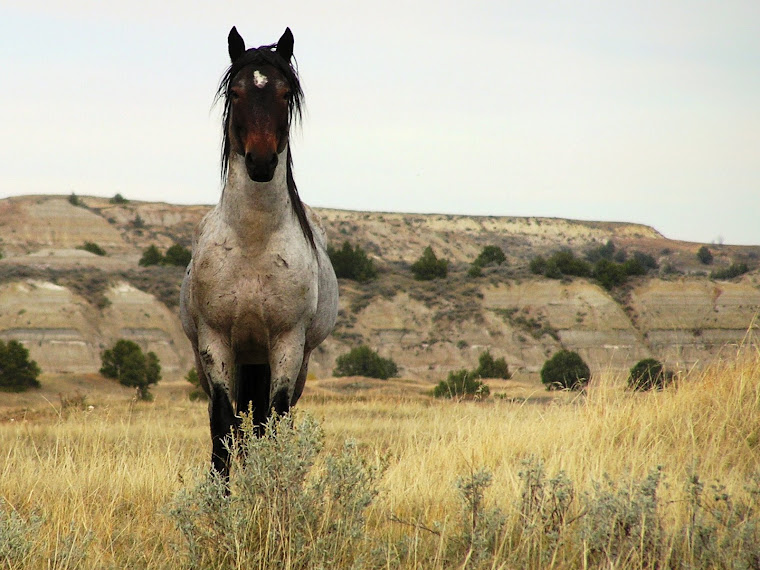
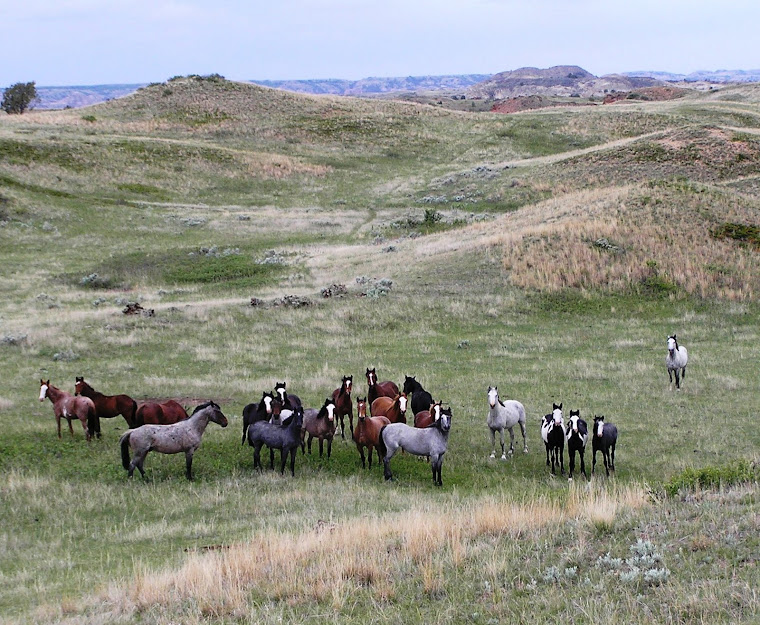
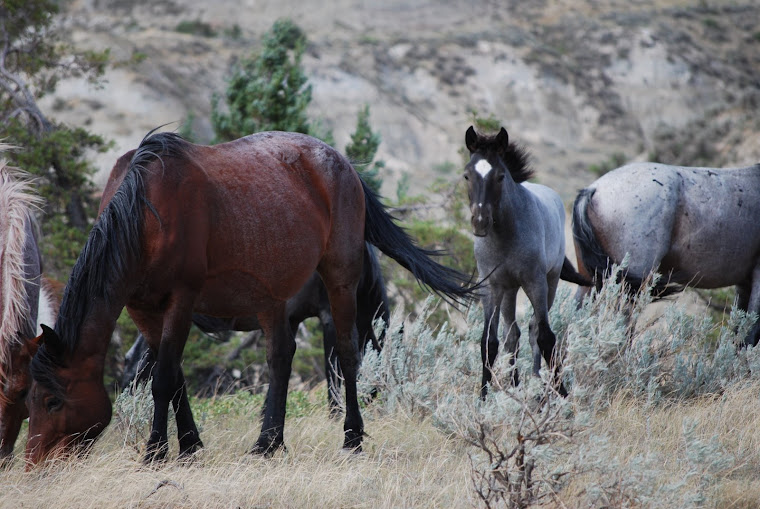
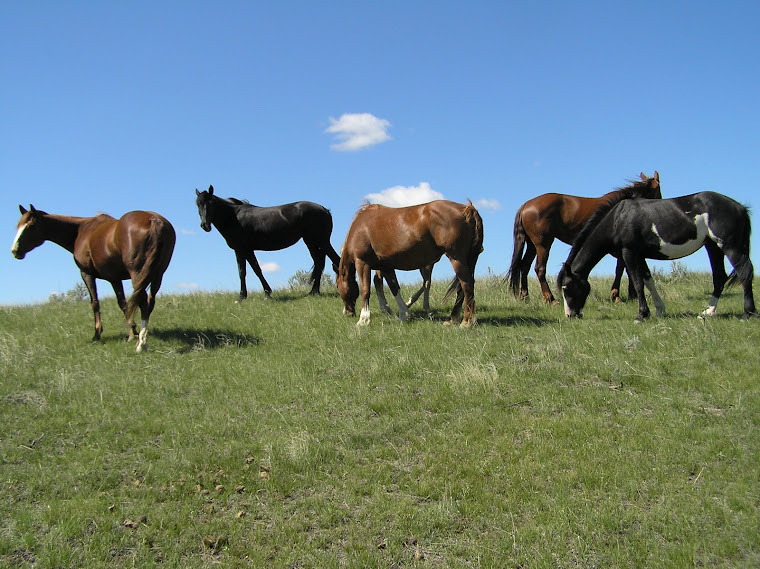
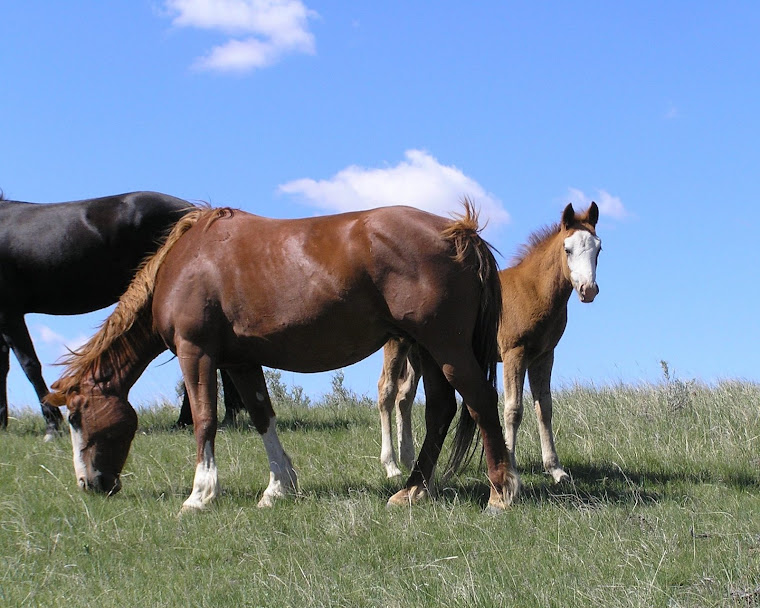
This blog contains dozens of posts and photos of the wild, feral horses from the park and some of the people involved with them. These horses are owned by the park and not managed by the BLM. To see most of the photos, scroll to the bottom of this page. To find earlier posts of interest go to Blog Archive on the right and follow this guide:

For some of the history of the horses and people involved:

2008
Wild Horses of Theodore Roosevelt National Park
2009
Tom Tescher's Story
The Boicourts
The Roundup

The Sale

For some of the special horses' stories:
2008
Fire's Story
Whisper's Story
2009
Our Boys Come Home
Dancing with a Wild Horse
Whit's Story
2010

The Dance Continues
Training Update

More Dancing with Hawk
More Training for Hawk
Bashful, the Steps of His Life

Post of Interest:
2009
Four Stallion Fight
Hazards, Did I Mention Hazards?

Sunday, January 24, 2010

THE DANCE CONTINUES


It has been three months since we brought home the colts, Hail and Hawk. We have learned a little about wild horses and a lot about patience in our journey to communicate with these once wild animals. It has become apparent in visiting with many other owners of the wild horses, that each horse has his own individual personality which immensely affects the rate at which he accepts human touch and develops a trust in his human captors. It is our responsibility to learn the horse's language in order to win his trust. Time seems to be extremely important in the quest for communication as well as figuring out what motivates the horse to seek human attention. The horses are not on the same time table as we are and have not read the training books. It seems some young horses have been immediately approachable and others are still very wary. Some owners have reported an almost overnight change in the horse's acceptance of human presence and touch while many of the horses are still not convinced that there is any benefit from letting their humans near.

Our little Hail, always a more accepting individual, has become quite tolerant of touching all over his body when he is in the "play pen," the round pen. He knows that pen is where he gets rubbed and scratched. Before the storm hit this weekend, he was letting me rub him with ropes, pick up his feet, and halter him. He should be fairly easy to progress to leading once our weather improves.

Hawk continues to be my fascinating dance partner. He has now progressed to allowing me to approach him and rub his left cheek as soon as he enters the round pen. Since he had been a little sore on his right front from playing too hard with his little buddies, I am trying not to move him around the pen too much. I found that approaching him with the rhythmic forward and back swing of my hand rewarded me and him in a scratching session. When I stop scratching he still nods his head as if to say, "I like it; keep it up!" It has been important to change hands when petting him, but this was too much for him to tolerate at first. He would jump away when I reached for him with the other hand, so I made it part of our dance to pet him with one hand and then the other. If he jumped away, I would shoo him away and then invite him back. Since he craves the attention, he is usually quick to return, but if he is hesitant to approach me again, I give his hind feet the predator look and he moves them. Moving the hind feet always gets the front feet moving, and he soon returns for more scratching.

The left side has been easier to approach for some time, but it is necessary to teach both sides to allow approach and touch. I could scratch the right cheek and neck from the front, but he would move away to keep me from going to his right side. Some times we would circle in the center of the pen for several minutes, him backing away and me following, seeking to touch the right side. When he stopped, I stopped. It was here that I realized that Hawk already knows almost all of the Parelli games, the "friendly game," the "driving game," the "Yo-yo game," the "circling game," and the "squeeze game." What a smart horse! It's too bad his owner didn't catch on to "horse language" sooner.

When one of the wild horse owners discovered Winter Ticks on the horses, we were all concerned that our poor babies should have parasites feeding on them even in the dead of winter. I treated each boy with a spot insecticide, but Hawk still has them. This weekend I have discovered that the ticks are actually my allies. The ticks leave small swellings that itch, which causes Hawk to love to be scratched. When the warm still weather of Saturday's break in the storm allowed me to remove my gloves, I was able to work my fingers through Hawk's coat, starting at his head and working back all the way to his tail on the left side and back to his hip on the right. It was the first I had been that far back on his right side since I road the saddle horse in the pen with him. The rhythmic scratching and rubbing lulled Hawk into a more relaxed state than he has ever been with me. Once in a while he would seem to wake up and realize I was standing on the side he had never let me touch before; he would jump and move away but soon come back for the gentle massage. His head dropped and he did a lot of sighing and chewing, which showed that he was accepting and enjoying the whole procedure.

Hawk is an excellent teacher in the art of patience, him of me and me of him. I am able to dream about the times when he will completely trust me. Though this dance takes place in a snowy round pen in the middle of rural North Dakota, no ballroom gala could be more exciting or rewarding.

Monday, January 11, 2010

A NEW REGISTRY


Because of all the enthusiasm of people who have supported us in the work with the wild horses of Theodore Roosevelt National Park, the unique heritage of the park horses, and our and others' desire to preserve that heritage when the horses leave the park, we have organized a new registry specifically for the park horses.


We are excited to officially introduce the


North Dakota Badlands Horse Registry


This registry will be available to all horses born in Theodore Roosevelt National Park, their future offspring, and any other horse with at least one parent with 100% Theodore Roosevelt National Park horse blood. As far as I know, there is no other registry available to the horses recently removed from the park, so their history and bloodlines would be lost without an organization designed to maintain their records outside the park. For new readers I will briefly review the history of the wild horses found in the park today.


These horses date back to the 1800's, before North Dakota became a state, when Native Americans, explorers, and immigrant settlers first came to the vast prairies of North America. They brought with them their horses of various breeds. Mixed with the feral horses that migrated north from Mexico, the escapees from those early people and the farmers and ranchers who followed them, ran free in the North Dakota Badlands long after the bison and other indigenous species became extinct. Their beauty, strength, and resilience were recorded by many of the early visitors to the Badlands, including Theodore Roosevelt, himself. Over the years, particularly after horses were replaced by vehicles for transportation and farming, and due to droughts of the 30's and the practice of open range grazing, other domestic horses found their way to the rough breaks of the Little Missouri valley, which became the last refuge for the wild horses of western North Dakota. However, even those deep ravines and rugged canyons could not protect the horses from those who wanted them gone from the rich grazing land; hundreds were run down and destroyed during the mid 1900's. Only those inadvertently enclosed within the boundaries of the national park survived, and those, only after public outcry forced the NPS to recognize them as a "historical demonstration herd."


Since then the horses have been managed so that they would not over populate the park. In the 1980's, inbreeding was showing in some bands in the form of crooked legs and backs, so some of the more prolific sires were removed and a total of seven domestic and BLM colts and one filly were released to add fresh blood to the gene pool. All but one of the introduced stallions had limited success and most of their offspring have since been removed. Less than a half dozen of the park horses still have some Tyger II Arabian and TVP Quarterhorse blood. The only successful domestic breeding stallion, the Brookman, a Shire/Paint stallion, left his mark on the horses running in the north and eastern areas in the form of larger size and bone. Several of the wild horses still carry his blood and, in my opinion, it has not been detrimental to the integrity of the wild horses. In reality, no one really knows the origins of the blood that courses through the veins of these magnificent horses, but they have become a symbol of the old west and of the will of both man and beast to survive in a harsh land.

Therefore, because the wild horses of the North Dakota Badlands hold a unique place in the history and settlement of North Dakota, the North Dakota Badlands Horse Registry was established to register, promote, appreciate, and preserve the wild, feral horses of Theodore Roosevelt National Park.

Anyone who owns a horse meeting the requirements of registry will be able to register their horse, recieve a five generation pedigree, and be invited to join a Facebook group where they will be able to share progress reports, training tips, photos, and other information regarding these horses. Anyone interested in the horses may join. For more information, please contact me at:
horsetracks@btinet.net

Monday, December 14, 2009

DANCING WITH A WILD HORSE

I have lived a lot of years and trained a few horses, but none are more fascinating than the wild horses from the park. They are essentially blank slates with very little, if any, close up experience with humans. Oh, they've seen us in the park and had the unpleasant experience of being pushed though chutes, sales rings, trailers, and pens, so they have had some good and not so good experience with us, but horses are generally very forgiving and oh, so curious.

We've found that a year in the life of one of these horses makes a lot of difference. Most of us who have weanlings are petting them and getting them to trust us. Some owners report having their babies halter broken already. A lot depends on the temperament of the individual and the amount of time one is able to spend with the little newcomer.

A weanling is always very curious, but also frightened of these two legged predators who have captured him and seemed bent on putting their paws on him. Working a baby is much different from working an older horse. One does not want to push him very fast or very long, as he can injure his delicate legs. I recommend John Lyons' book, Bringing Up Baby. It gives step-by-step lessons for training a foal in it's first year without injury to either the foal or the handler.

Our little Hail has been a joy to work with. He was, at first, very frightened, but careful, patient work in the round pen soon paid off. First teaching him that I was dominant yet trustworthy, I was able to get him to walk, turn, stop, face me, and eventually let me touch him. At first it was less frightening to touch with a training stick, but that led to being able to scratch and pet him with a hand. He now lets me touch him all over from both sides. It is very important to train both sides. Little Hail now comes to me for his scratches, as he has learned that the two legs can be pretty good friends. Recently, I was working with Griggs, the other weanling we are keeping; I had put Hail in a smaller round pen to wait his turn to "play." It soon became clear to me that Hail wasn't being so patient for his scratching. He was running around the little pen bucking and kicking alternately with pawing at the fence between us and trying to stick his head through it. Once I let Griggs out of the big pen and opened the gate to Hail's pen, he went right in and waited for his scratches!

As much fun as the little guys are, they do not compare with the older ones. Hawk, our yearling, has taught me so much in the few weeks we have had him. I feel so privileged to have this exquisite wild creature in my barnyard. I literally can't wait to get to work with him every day and I think he is beginning the enjoy our sessions as much as I do.

The extra year in his life had made him more convinced that this predator was out to get him. At first he jumped and ran to the other side of the pen every time he saw us or heard our footsteps in the gravel. The first couple weeks were spent just getting him used to having people around him. We would sit near his pen and near his feed, walk around on the outside of the pen, and finally clean it with him in it.

He was so frightened of me every time I walked into the pen that I had to try something else. My friend had said to put a gentle horse in with him so that he could take his cues from that horse. I tried working a gentle horse in the same pen, but that really freaked him out, so I had to think of some better plan that would help him relax. Finally, I hopped on my big, gentle dressage horse with no saddle or bridle and road him around in the round pen with Hawk. Maestro was so relaxed that Hawk soon accepted him and me on his back. I was able to work the youngster around the pen, pushing him when he ran from us and stopping and taking the pressure off him when he stopped. The pen was a little too small to get him to face us, so I just took advantage of the stopping and standing. I used the training stick to get him used to having me moving around on the other horse. Before long, I was able to swing the stick around, up and down and slap it's string against the ground and the rails. With rhythmic movements, I could make it approach and retreat from him until I could finally touch him and scratch him with it. Maestro's ability to side pass made it easy to slide up to Hawk without frightening him. Within a week of taking Maestro into the pen, I was able to go through the ritual of moving him, stopping him, snapping the whip around, touching him with it and ending with scratching him with my hand. A couple weeks of this along with cleaning his pen twice a day helped Hawk adjust to having me closer to him, so it was time to try it on foot again.

The minute I would walk into his pen without the wheel barrow, he would began to circle the pen with his head in the air. That was good, because one of the first things I wanted to teach him was that I could make him move his feet. He soon learned that I could move his feet at any speed, in any direction. I had to speak his language to get him to understand what I wanted him to do. As I learned his response to body language, he learned what I was asking of him. I could just lift an hand to make him move, walking in a small circle with him, focusing my energy on his hip. Stopping my energy while stepping back a bit would stop him. Pointing in the other direction would send him off again in that direction. When I rewarded him each time he turned to the inside by turning away from him, he learned that I wanted him to face me.

That was when the dance became even more fun. He learned that he was to face me wherever I went in his pen. If I stared at his hind feet from one side, he would move them to the other. Soon by moving his hind feet I could get him to move his front feet. Taking a step forward earned him a big reward of having me turn away, taking all the pressure off of him. The closer he got to me, the more curious he became. Touching the end of the training stick was a huge step for him. I always made sure to stop the lesson on a positive note when he had made a move to trust and before he lost his confidence.

In the dance, it is so very important to know when to step forward and when to step back. One must know ones partner and what he is thinking in order to step back, taking the pressure off just before he wants to run. Rhythm in the approach and retreat builds the horse's confidence as he begins to sense the predictable nature of the dance. Moving, stopping, turning, coming forward, backing up, touch, release, reward, these were the things Hawk already knew from his band in the wild and he was learning that I could be his leader in his new world.

Now he too looks forward to his "play" in the round pen. He readily leaves his little buddies and goes to the round pen, immediately interested in what will happen this time. I move him around to establish the fact that I am leading this dance. I invite him in and he acknowledges me by touching my hand. I remove the hand before he removes his nose and rhythmically stroke his shoulders with the training stick. I stop. He bobs his head as if to say, "I like this dance; let's do it again." We repeat the dance getting closer and closer until I can brush him with my hand. then I walk away before he does. He comes again, forward and back, in and out, all the while we look into one another's eyes. I wonder at the sun shining through his blue eye and the softness and vulnerability I see in his brown one; he looks to me hoping he can trust me, but still not sure, so the dance continues. I hope it never ends.

Monday, November 30, 2009

OUR BOYS COME HOME

More photos below of some training sessions

Monday, November 9, 2009

OUR BOYS COME HOME

Tracking the horses in a roundup year is difficult when you don't plan to buy any at the sale, but this year was particularly emotional knowing we did plan to take some home. I didn't want to get attached to any one for fear the youngster may not make it until fall with all the perils in the park. Then there was the worry that they might be injured during the roundup or at the sales barn. I tried to keep an open mind, not deciding on any particular horses until I knew they were safe, but it didn't work. We had decided we could take as many as four if need be, but would definitely want as least two so that we would each have a backup for the horses we ride for the tracking.

By mid-summer I had a few favorites. The first to snuggle his way into my heart was Marquis. I had always loved his sire, High Star, and his dam, Pale Lady. Little Marquis was just too cute with his wispy soft dun color and noble blaze. He was well built and fine featured like his sire and though not representative of the characteristic colors of the park, I could see him fitting in just fine in our pasture. In order to keep him company he needed a brother from the same band. His full brother, Sage, had always been a favorite of mine, but I didn't think we had the skills to deal with a two year old stallion. The yearling, Hawk, had caught my eye as well. Yearlings are notoriously homely and Hawk was no exception, but he had an unusual bay roan coat, the characteristic bald face, and a flashing blue eye. He's the kind of color people either love or hate; I grew to love him.

I had always thought I would like to have a foal from Thunder's band. He is powerful, one of the larger stallions in the park, short coupled, and nicely balanced. He had two nice colts from last year, but we already had a yearling on the wish list, so wondered what he might have this year. His is one of the most illusive bands, claiming their territory on the bottoms west of the far eastern rim, but finally, at the end of June, we saw the band from Buck Hill and watched them with the scope as they climbed the butte onto the flats on the east side of the park. Could we get there to see them before dark? We had to try since we could make out the form of a very small foal with them. We got to the east side just as the sun was setting, but it was light enough to see the band and get a few shots as they swirled around us in the near darkness. There was the foal with Rain, a tiny dark colt with a large round star perfectly placed in the middle of his forehead. Henry and I had been caught in a rain storm and hailed on the day before. The colt's sire was Thunder Cloud and his dam was Rain; he had to be Hail!

We didn't see Hail again until the end of September. Fortunately for us, they were on Lindbo Flats with dozens of others. Again is was nearing sunset, but it was unseasonably warm and quiet. Red Face and Singlefoot were off to the east, but Blaze and several bachelors were near the fence where we slid under to get a better look. Thunder eyed us cautiously from a small butte a few hundred yards to the south as we enjoyed the antics of the bachelors. Finally, determining we we no threat to him and his family, Thunder paraded them right to us. We watched as he sparred with a couple bachelors with his son, Clipper, closely following him. I marveled at the chance to see Thunder so close, and along with him, little Hail, three months old and stunningly beautiful! His dark coat had turned to blue, just like his daddy's and his legs were long and strait. He went to the top of the list with Marquis.

With Blaze was little Talkington, also a handsome blue roan. He would be smaller than Hail, but a good match for color. The thought of a team of blues crossed my mind. I also loved little Griggs from Red Face's band. He was an adorable bay roan with an engaging temperament. When High Star unexpectedly disappeared, my thoughts went back to his band and little Barnhart, another blue roan with a tiny star. I would have to see them come in and make my final decisions then.

At the roundup, we were successful in bringing in all the mares and foals; that is, all but Pale Lady and Marquis. Pale Lady slipped away from the choppers when they brought in the rest of her band. Though they were just south of the handling facility when the last run was made, it was too rainy to see them and they were missed again. It was meant to be that Marquis would stay in the park. One day he will be a strong band sire like his father and brother.

All the others came in safe and strong. Since there were so many people coming to buy, we decided to buy two or three. Hail, Hawk, and Talkington were on the list. My friends were there to support us and had agreed to bid for me, since I was to be up in the box with the auctioneers, still IDing horses. At first I told Joan to buy them for whatever it took. It didn't take long to realize I was being foolish; I had Henry give her a limit. The foals were first and bringing unbelievable prices. I swallowed hard as Hail entered the ring. Joan bid like a pro. I could just see her over the head of one of the auctioneers. The bidding was lively and the price crept up. It was up to my limit; I nodded to Joan to keep bidding. Crazy or not, I wanted that colt. Joan made another bid with my nod; the auctioneer went on and on begging for another bid. Enough, enough, I cried to myself as he seemed to try too hard to outbid me, but Joan had prevailed and Hail was mine! Takington was next; I had fallen in love with the little tyke when he stood so quietly to have his blood drawn for the Coggins test. Again the price crept up and up. I knew Hawk was waiting with the other yearlings. I really wanted him too. I finally let Talkington go. I didn't know who was bidding at the time, but found out later that a very nice lady from MN had bought him and would give him a wonderful home.
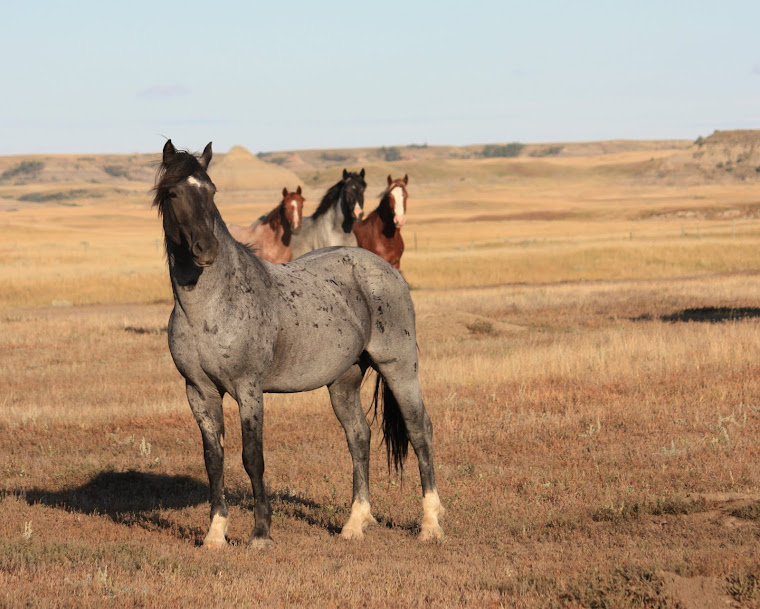
Hawk was next. For all his wild looks, he was handsome and proud. Though he was extremely frightened, he kept his cool in that noisy foreign place. Joan was watching as the bidding started, but didn't want to seem too eager, so hung back a bit. My other friend jabbed her in the ribs with an elbow, thinking she was preoccupied and missing out on the colt. Joan nonchalantly lifted her number. Up and up the bid climbed, but stopped below my limit. The other colt I wanted so badly was mine. Now I could relax.

Now with only two boys, I could take my time with them and spend more time with Whisper, the filly. I would not feel the pressure to sell her too soon. As it turned out, we are keeping sweet little Griggs for a friend, so he is Hail's new buddy. The training will be fun!

Wednesday, November 4, 2009

THE SALE, 2009

The adrenalin rush of the roundup was over and relief washed over us as we looked back on a very safe, successful roundup. Now it was time to concentrate on those animals who would be hauled to the sales barn in Dickinson and sold to the highest bidder. My friends and I had worked tirelessly to get the word out about these beautiful wild horses. I had been hearing from a lot of prospective buyers, and it seemed as if we were going to have a good crowd at the sales barn Friday, so there was nothing more we could do now but wait.

This sale would be different from those in the past. Now all the horses had names and those names would be the way the buyers who had seen our fliers, articles, and photos would know them. Thursday afternoon we were lucky enough to watch the horses come in and be unloaded. I prayed none of them would be injured here at this strange place. They all seemed to settle in very easily and were not alarmed as a few early arrivals tried to figure out which one matched the names they had picked out. By the next morning more people were pouring into the parking lot. Mike had filled in all the hip tag numbers with the appropriate horses and brought the sale lists that morning. Excited potential buyers moved from pen to pen spotting their favorites and discussing each one's potential in hushed tones. Some buyers were on the phone describing horses for others who could not be at the sale, but wanted to buy. Most of our group headed into the auction area early to get good seats. I would be up in the auctioneer's box so that I could identify those whose hip tags were either missing or too crumpled to read, so I had a little time to get my head together. Then the bidding began.

There were a few domestics sold first. Prices were low; a nice Quarter Horse foal went for $7.50. Then, the first TRNP foal came into the ring. It was Sheila, the pretty filly from Blaze and Little Brother's Girl. The bidding began, and as amazed murmurs rippled through the crowd, the bidding continued, bringing a respectable amount for the chestnut filly. As each weanling appeared, the bidding picked up. The auctioneers burst into giddy grins as the auction took on a festive nature. Cheers broke out as buyers won the baby they had hoped to buy. Badlands Bill, the beautiful red dun with a bald face and four high stockings, that I had predicted would bring the highest price, was finally won by our good friends for $1450. Several other foals brought very good prices with the weanlings averaging $361. The yearlings, lanky and thin, struggling to grow into their limbs, also sold very well, averaging over $200 each. The handsome blue roan, Full Moon, brought $575 from some more good friends from MN.

Two and three year old studs came next and experienced horsemen vied for the chance to gentle a young stallion, born in the wild and already testing his power among the bachelor bands. They too were going well until the blue gray two year old, Bashful, ran timidly into the ring. At first he froze when bombarded with all the light and noise in the auction ring. Another friend from ND had the bid and they were about to let him out, when a ring man pressured him too much. He stood to his hind legs and easily launched himself over the 6 foot, double ring fence into the seating; only his right hind leg hanging up on the fence prevented him from running headlong through the scattering crowd! Screams irrupted as frightened onlookers ran from the building. A quick thinking horseman jumped into the ring and wrapped the frightened horse's tail around the ring rail and another tied the hind leg to the rail with his own belt.

An older gentleman with a walker had been unlucky enough to be right in front of the horse when he cleared the fence with his entire front end. The man was under the frightened stallion as it pawed to be free of the biting fence. The man's wife and a brave cameraman were able to drag him to safety before he was mortally injured. Once the man was safely outside along with the majority of the crowd, the sales barn staff was able to deal with the horse, who was thrashing and raging at anything he could reach. A man's jacket, the chair the old man had been sitting on, anything he could get his teeth into was a target of the hurting stallion's wrath, since he could no longer run from his pain. Miraculously the men were able to sedate him, remove him from the fence, and walk him down the stairs and out the door to the freedom of a quieter place! He stood quietly, lost in the fog of the sedative, but relieved to be rid of the noise and the monster that had held his leg.

People milled around outside on the warm, sunny day, shaken and not sure what to do next. An ambulance came to take the injured, but alert man to the hospital. Thoughts of fresh ownership of horses were momentarily forgotten while prayers were said for the man and the horse. When both had been dealt with in a proper manner, the owner announced that the rest of the horses would be sold in the pens inside the barn where they had been waiting to enter the ring. Though it was announced that only buyers were to enter the barn, the alleyway was soon filled with the curious along with the serious buyers. Unfortunately, the young stallion's behavior had frightened off all but a few tough trainers and some horse traders. Prices dropped to under $100 on the last few horses. I had a lump in my throat as I indentified those older horses for the auctioneer, not knowing what would be the fate of these unsuspecting animals.

All were soon sold except Bashful, the groggy, bloodied two year old who had just been pushed more than his young mind could handle. What was to happen to him? Earlier, just before the auction had resumed, a tall young man , the son of my dear friends, whom I had known since he rode his little black pony with us in the badlands, slipped in beside me and said in a determined voice, "I want that horse!" Just as quickly, he slipped away into the crowd and I lost sight of him, but when the bidding started for Bashful, there he was; he bought the frightened young stallion. Bashful was safe!

To follow his progress, go to: http://ahorsenamedbashful.blogspot.com

Monday, October 26, 2009

THE ROUNDUP

Monday, October 19th dawned cold and overcast with the threat of rain for the afternoon. Stomping our feet to keep them warm, the 50+ NPS employees and feral horse study team gathered for the 7:00 am briefing. It was emphasized that the task at hand needed everyone's full attention, with an emphasis on safety. The goal was to capture and work as many of the 164 horses as possible while remaining calm, quiet, and respectful toward them and one another.

As the briefing broke up, all eyed turned upward to the windsock high above our heads. Slight winds and a high enough ceiling meant the gather was on. Mike intended to bring the horses in band by band as much as possible with no more than 20 being brought at one time. With a pulsing roar the two choppers took to the sky. Mike was in one and another NPS man in the other. A student of the low stress livestock handling method, Mike was determined to use that method throughout the operation.

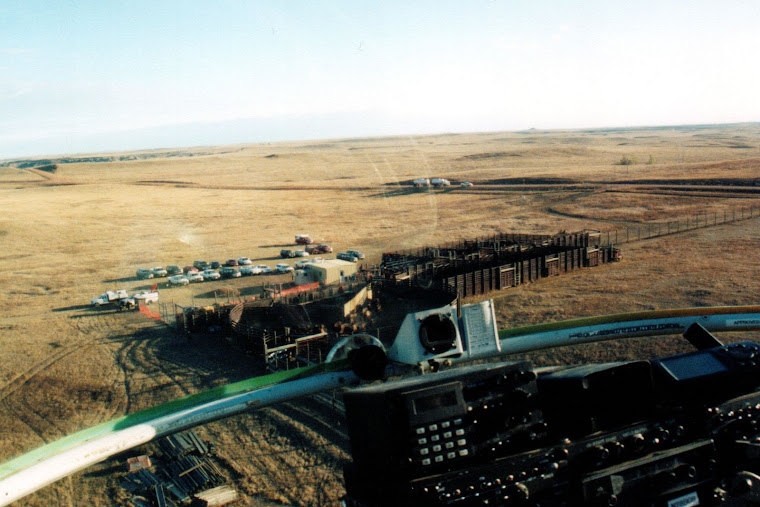
Everything was ready at the handling facility on the far east side of the Park when we heard the throbbing of the chopper engines in the distance. Mike radioed that they had their first band of horses moving toward the capture pens about a half hour out. When the choppers rose above the buttes south of the wing fence, all personnel reported to the safety zone north of the high wooden pens. Only the gate keepers would be allowed out of that area until the helicopters left for another gather. Only after letting the horses settle in the fist large capture pen, did personnel walk into that grassy area and on foot bring the first band of horses into the corrals for processing. Henry's and my job was to identify each horse as it came in and follow it through the chutes so that no mistakes would be made as to which horse was getting which procedure.

Animals to be sold all had blood drawn for their Coggins test for EIA, a requirement to cross state lines. Project stallions had blood drawn and all mares had fecal samples, blood samples, palpation, and ultrasound to determine pregnancy. Most of the horses submitted amazingly well for wild animals. The Doc. was able to draw blood from little Talkington with just a hand on his neck. The Veterinarians did an amazing job of making the procedure as quickly and low stress as possible.

Since all the necessary procedures for the contraceptive study took a little longer, the choppers continued to fly, bringing horses into the pen slowly and carefully. Friends watching in the Park were amazed at how slowly the pilots brought the horses in, often at a walk. Because the horses were not so stressed when they came in, they came though the chutes much more relaxed. Less than a half dozen mares had to be sedated.

Over the two and a half days of the roundup, 154 of the 164 horses were brought in and processed. A kick to the front leg of a yearling filly was the only significant injury and she was moving well by the sale three days later. Sale horses were sorted by age and the older ones by sex so that they would not injure one another in the pens. The "keepers" were turned into another large grassy area to band up again before being released.

The afternoon of the last day, after a celebratory finishing briefing, everyone walked out to watch as a few people encouraged the horses to exit though a large gate into the Park. Dolly was the first one to find the open gate, but soon others, realizing the gate was open, walked out to freedom. They momentarily settled to eating just north of the handling facility while stallions fretted over their harems to make sure they would not be stolen by another band stallion. Quietly several stallions rounded up their mares and headed for their home range; topping the last hill they disappeared into the horizon.